

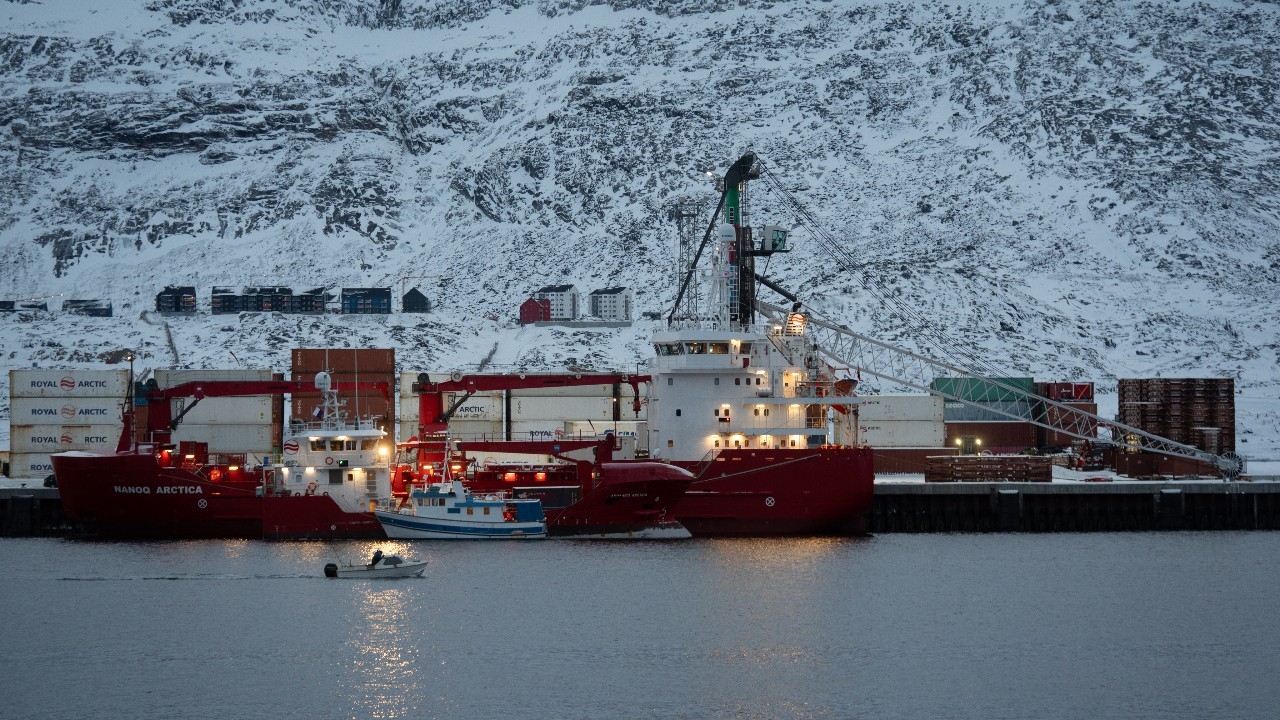
The Japanese government, working with the private sector, is preparing to send a delegation to Greenland this summer to evaluate the potential for rare earth mineral exploration. These rare earth minerals are essential for advanced technology industries. The initiative aims to reduce dependence on supply chains from China after China tightened its export controls.
According to Nikkei news agency, the Japanese government plans to begin studying the feasibility of mining rare earth minerals and other critical elements in Greenland this summer. This effort aims to encourage domestic companies to invest in mining projects in this Arctic region.
This move follows China's announcement last year to strengthen export controls amid diplomatic tensions with the United States. China controls about 70 percent of global rare earth mineral production. This situation has forced Japan to accelerate the search for new raw material sources to ensure supply chain security.
Previously, in November, a joint public-private Japanese delegation visited the feldspar mine, also known as the unicorn stone mine, in Greenland. They concluded that mining operations are feasible even under extremely cold weather conditions.
Next, the Japanese government will send a team of geologists from the Japan Oil, Gas and Metals National Corporation (JOGMEC) to Nuuk, the capital of Greenland. They will meet with local government officials and survey mining sites preparing for rare earth mineral drilling. The team will study the size of underground mineral deposits and conduct a detailed cost assessment of mining operations.
Japanese officials anticipate that Greenland's mineral deposits will contain important elements such as dysprosium, used in electric motor production; graphite, for the battery industry; and possibly tantalum and niobium, which are key materials for semiconductor and advanced processing chip manufacturing.
Data from the U.S. Geological Survey (USGS) indicates that Greenland holds about 1.5 million metric tons of rare earth mineral reserves, ranking eighth worldwide. Located in the Arctic region, Greenland has attracted significant interest, including from former U.S. President Donald Trump, who seriously considered purchasing the island. Additionally, global warming has caused ice melting, making drilling easier than in the past.
Currently, rare earth mineral mining in Greenland is still in its early stages, with companies from the U.S. and Europe preparing operations. Japanese firms may join these international partners in investment.
However, a major challenge is the "process of exporting minerals back to the home country" because Greenland lacks smelting and processing plants. Therefore, the Japanese government plans to build supply chains with allied countries, such as establishing refining and processing plants within the European Union.
Greenland's local government has shown openness to cooperation with Japan. Jens-Frederik Nielsen, Greenland's Prime Minister, told Nikkei late last year that Greenland is willing to collaborate with Japan, the U.S., and the European Union in resource development. He added, "Any country seeking to reduce dependence on supply chains from China should consider partnering with Greenland."