

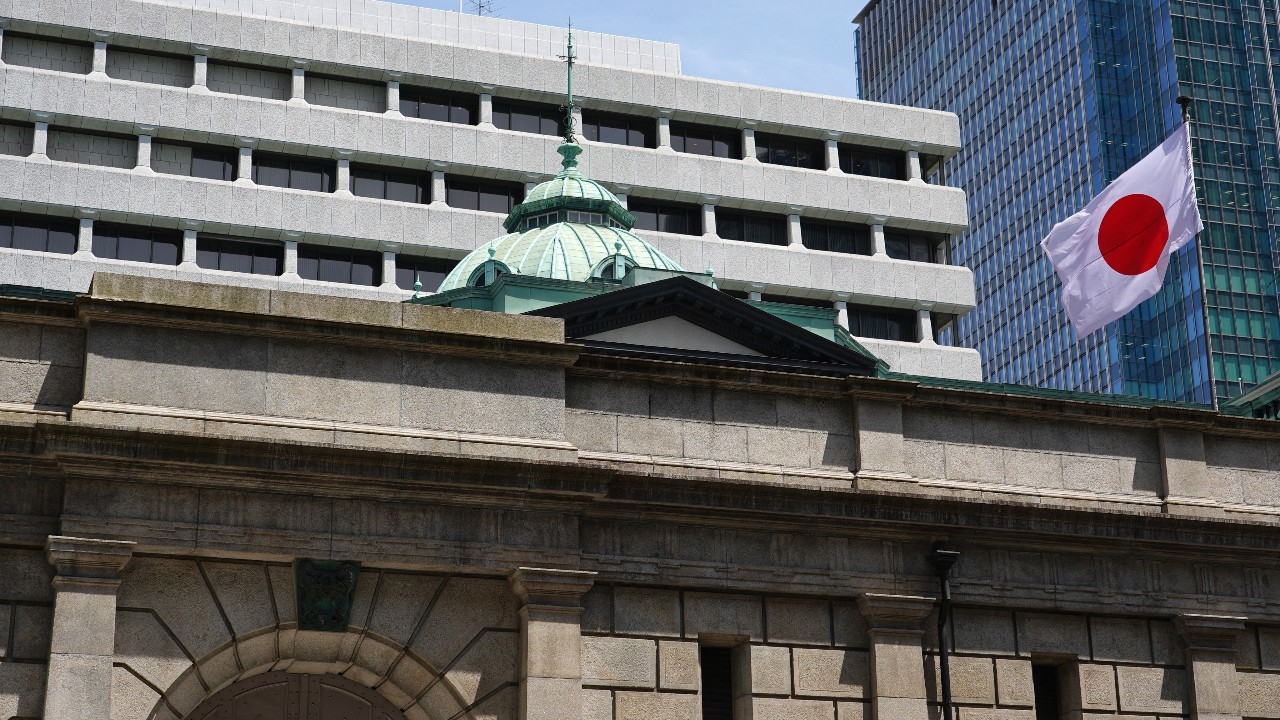
The Bank of Japan (BOJ) announced an increase in its policy interest rate to 1%, the highest level in 31 years since 1995, aiming to control inflation and support the yen following a surge in global energy prices caused by the effects of war, despite the recent agreement between the U.S. and Iran to end their conflict.
The Bank of Japan decided to raise its policy interest rate by 0.25%, moving it from 0.75% to 1.0%, marking the highest level in 31 years since 1995 and the first rate hike since December of last year.
Japan’s move follows the trend of several central banks worldwide, including the European Central Bank and Bank Indonesia, which have previously raised interest rates to address the cost-of-living crisis and sharply rising commodity prices triggered by the war in the Middle East.
Although the U.S. and Iran reached an agreement over the weekend to end their three-month-long war and plan to reopen the Strait of Hormuz—an important global oil shipping route—with a formal signing scheduled in Switzerland, experts believe global trade and energy transportation systems will take considerable time to return to normal.
Jesper Koll, an economist specializing in Japan’s economy, said, “After facing deflation for over 20 years, Japan is now fully entering an inflation cycle. Ultra-loose monetary policy to manage the crisis is no longer necessary, and the BOJ seeks to normalize monetary policy.”
In the 1990s, Japan sharply cut interest rates to combat the bursting of real estate and stock market bubbles and kept rates near zero for over two decades until it began gradually raising rates in March 2024, marking the first increase in 17 years at that time.
Japan’s heavy reliance on Middle Eastern crude oil—up to 90% before the war—means it inevitably suffers from global energy price spikes. Japan’s wholesale price index rose over 6% year-on-year in May, the fastest growth in three years, while general inflation in April was 1.4%, still below the BOJ’s 2% target.
Besides inflation concerns, another key reason for the rate hike is to curb the sharp depreciation of the yen, pressured by interest rate differentials with major economies like the U.S. and the U.K., where rates exceed 3%.
Previously, the Japanese government spent as much as 11.7 trillion yen to intervene and support the yen after it fell to 160 yen per U.S. dollar. Following the rate hike announcement, the yen temporarily strengthened but later gave up gains. Shigeto Nakai, chief Japanese economist at Oxford Economics, noted that the BOJ can no longer delay rate increases, as failure to act would disappoint markets further and weaken the yen more.
This decision comes as BOJ Governor Kazuo Ueda is hospitalized for an infection in a liver cyst and could not attend the meeting. Deputy Governor Shinichi Uchida addressed the media instead. However, Ueda and most executive board members had clearly signaled support for rate hikes in recent months.
However, the BOJ faces a dilemma since higher interest rates, while helping control inflation and support the yen, also increase borrowing costs for businesses and the government.
Moreover, an overly aggressive policy could conflict with the government under Prime Minister Sanae Takaichi, who took office last year and supports increased public spending. She has previously expressed opposition to rate hikes, although she has not publicly criticized the BOJ directly since assuming office.
Despite the increase to 1%, Japan’s interest rates remain very low compared to other major economies. Professor Ulrik Schedde of the University of California, San Diego, views this as a possible sign of a "slow global economic rebalancing." Investors worldwide are expected to closely monitor the BOJ for indications on future rate hikes and plans to reduce government bond purchases.