

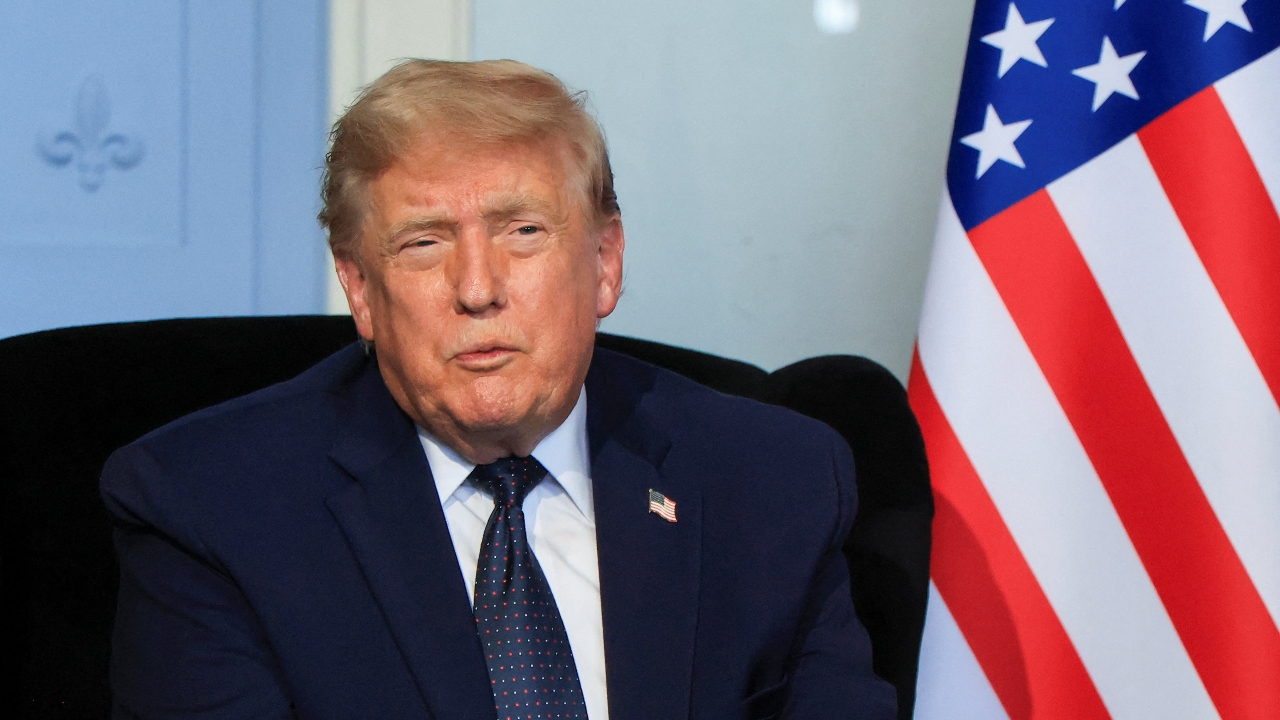
Donald Trump may reveal details of the preliminary agreement with Iran before this Friday, after announcing the deal has been signed. The document serves only as an initial framework and requires further negotiations.
US Vice President J.D. Vance stated that President Donald Trump might decide to disclose the preliminary agreement details with Iran before Friday. The document is merely a preliminary framework, with key details still to be negotiated.
Vance revealed that the memorandum of understanding (MOU) between the US and Iran is only about one and a half pages long and outlines a broad framework for cooperation between the two parties.
Senior US officials have begun revealing some details of the agreement, stating that the Strait of Hormuz, a critical global oil shipping route, will reopen for navigation on Friday—the same day the agreement is officially signed in Geneva.
This development comes as Trump attends the Group of Seven (G7) summit in France, where a special meeting on the Iran situation is scheduled for Tuesday, with leaders from Egypt, Qatar, and the United Arab Emirates participating.
Earlier, during talks with French President Emmanuel Macron, Trump said he was pleased to announce the agreement had been signed, referring to the preliminary deal with Iran.
US officials indicated that the document was electronically signed today by Trump, Vance, and Mohammad Bagher Ghalibaf, Speaker of the Iranian Parliament.
Under the agreement, technical negotiations on Iran's nuclear program are expected to begin this week, with sanctions relief or release of frozen assets contingent on Iran's compliance with the deal's terms.
Vance told NBC News that nuclear inspectors from the International Atomic Energy Agency (IAEA) will be allowed to return to Iran for inspections under the agreement.
He stated that a core element of the agreement is that the US and the IAEA will assist Iran in destroying its stockpile of highly enriched uranium, a point explicitly mentioned in the document.
Vance also revealed that the MOU includes Iran's commitment to peace and regional stability, ending support for terrorist groups, and verifiable pledges not to develop nuclear weapons.
However, the US Vice President emphasized that many details still need to be defined during future technical negotiations.
The agreement extends the ceasefire by an additional 60 days, allowing both sides to discuss a permanent deal.
Pakistani Prime Minister Shehbaz Sharif, who acted as a mediator in the talks, said the agreement covers ending military operations on all fronts, including Lebanon.
However, Israel remains cautious. Prime Minister Benjamin Netanyahu stated that Israel will maintain its military presence in strategic areas of Lebanon, Syria, and Gaza as needed, and reiterated that Israel will not allow Iran to possess nuclear weapons, regardless of any agreement.
Previously, Trump announced an end to the naval blockade of Iranian ports, stating that the Strait of Hormuz would reopen once the preliminary agreement takes effect, claiming that several oil tankers have already begun passing through the strait.
Meanwhile, Iran's Foreign Ministry said that despite the agreement, Tehran still harbors deep mistrust of the US and views the deal as only a first step toward easing tensions.
Key contentious issues remain between the two sides, including Iran's uranium enrichment program, its demand for sanctions relief, and unfreezing billions of dollars in oil revenues. It remains to be seen whether both parties can successfully resolve these outstanding problems.
. BBC
Click to read related news aboutInternational news