

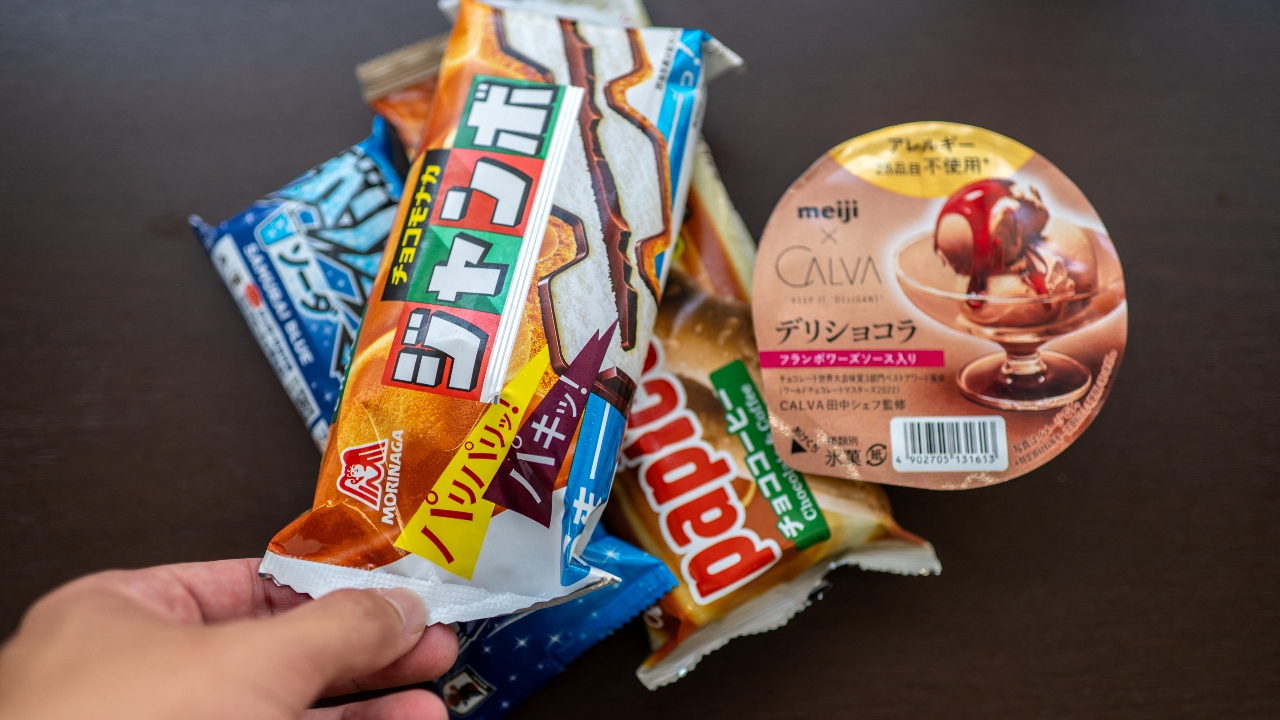
Japan's Fair Trade Commission (JFTC) launched raids on the headquarters of six major ice cream manufacturers, including Meiji, Lotte, and Glico, after uncovering suspicious emails and meetings that locked in prices and timing for ice cream price hikes over several years. The companies allegedly used inflation as a pretext to gain excessive profits during a record-breaking ice cream market worth over 135 billion baht.
The Japan Fair Trade Commission (JFTC), the regulatory body overseeing monopolies and market competition, dispatched officials on Tuesday (16 Jun) to raid the headquarters of six major domestic ice cream producers amid suspicions of collusive price fixing at the retail level, a violation of antitrust laws.
Sources close to the matter revealed that the six major ice cream manufacturers targeted in the raids are:
Meiji Co.
Morinaga Milk Industry Co.
Lotte Co.
Ezaki Glico Co.
Morinaga & Co.
Akagi Nyugyo Co.
Reports indicate the six companies are suspected of exchanging internal information via email and holding secret joint meetings over several years to coordinate and set schedules and proportions for recommended retail price increases on ice cream and other frozen desserts. Local media noted that since 2022, these companies have simultaneously raised ice cream prices annually. This investigation marks the first time the JFTC has probed collusion in Japan's ice cream market.
Beyond price fixing, Kyodo News reported that the JFTC is expanding its investigation to determine whether these companies exploited inflation to raise recommended retail prices above actual increases in raw material costs, aiming to secure additional profit margins.
Although the "recommended retail price" is not legally binding and retailers can set their own prices, most stores and supermarkets in Japan typically use these recommended prices as the main basis for shelf pricing.
Following the raids, a representative from Ezaki Glico acknowledged, "It is true that our company is under investigation by the Fair Trade Commission, and we are fully cooperating." Similarly, four other companies issued statements in the same direction, while Natsuyo Suzuki, a representative of Akagi Nyugyo, told AFP that the company will closely work with investigators after the site inspection.
If the JFTC concludes the investigation and finds these companies guilty of monopolistic collusion, the antitrust agency will order immediate reforms to their business practices and impose hefty fines on all involved.
The Japan Ice Cream Association disclosed that the total market value for ice cream and frozen desserts in Japan for the fiscal year ending March 2025 soared to a record high of 663 billion yen (approximately 135 billion baht).
This sales growth, breaking records for six consecutive years, was partly driven by price increase strategies and a climate crisis that brought Japan its hottest and longest summer since records began in 1989, greatly boosting ice cream consumption. Unfortunately for producers, this profitable period is now disrupted by the major investigation.
However, this is not the first time Japan's ice cream market has come under scrutiny. Back in 1997, the JFTC ruled that Haagen-Dazs Japan violated antitrust laws after the brand used its influence to pressure retailers not to promote discounts below the recommended retail price.