

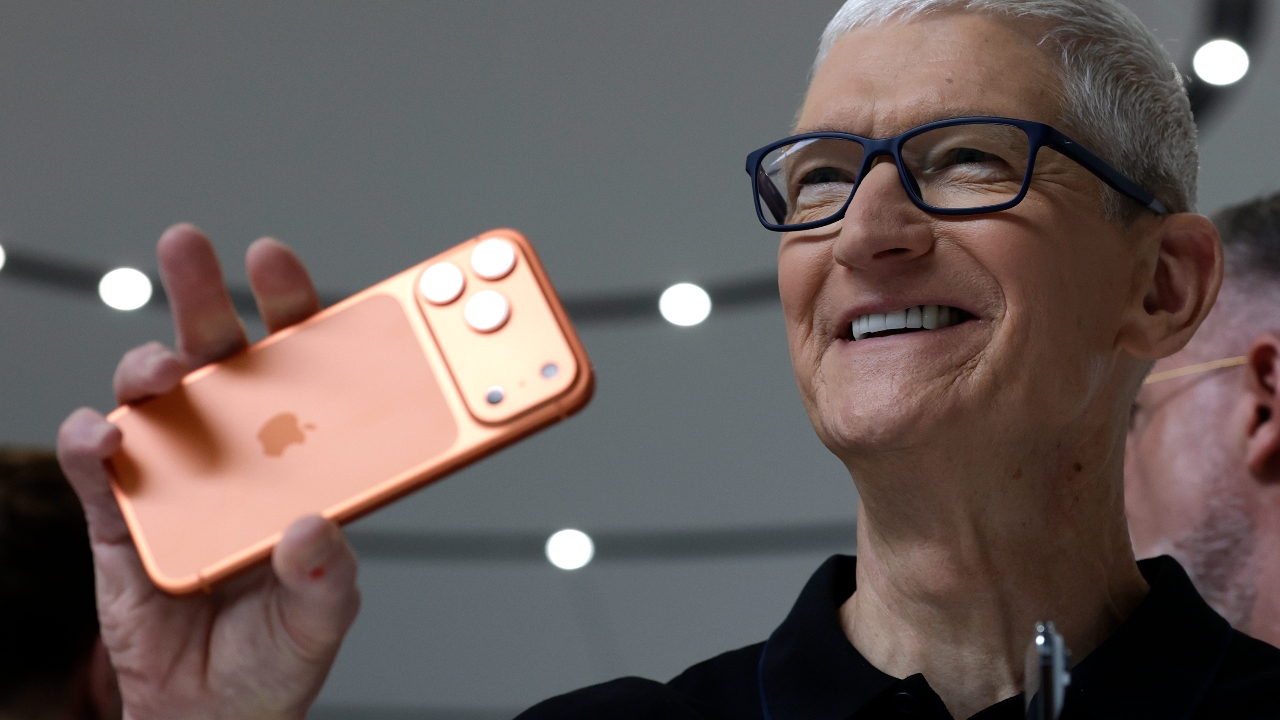
Apple CEO Tim Cook revealed the company plans to raise product prices after memory and storage chip costs have steadily increased due to the global competition for production capacity driven by artificial intelligence (AI) industry demand.
In an interview with major media outlet The Wall Street Journal, Tim Cook disclosed that Apple intends to raise product prices to offset sharply rising memory and backup storage chip costs, describing the current situation as "unsustainable."
This crisis stems from soaring demand for data center chips to support rapidly growing AI systems, forcing electronics companies worldwide into fierce competition for limited memory chips, especially DRAM. Chip manufacturers have shifted production capacity toward high-bandwidth memory (HBM) chips essential for AI servers, causing RAM prices, a basic component, to more than double since October 2025.
The problem has been worsened by the war in Iran affecting the helium gas supply chain—a critical gas in semiconductor manufacturing—further driving up global computer chip production costs.
"Unfortunately, price increases are unavoidable," Tim Cook told the WSJ. "We've done everything possible to mitigate the impact of rising costs passed on to us and to protect our customers from price hikes, but the situation has become unmanageable. Chip supply is dwindling just as consumers demand devices, and chipmakers are passing enormous cost burdens onto us. The key is to restore reasonable pricing and availability of memory chips for consumer products."
However, Tim Cook, who will hand over leadership to John Ternus as the new CEO in September, did not disclose a timeline or the scale of price adjustments, nor specify which products will be first affected. It remains unclear whether this price increase will directly impact the iPhone 18 Pro, iPhone 18 Pro Max, or Apple's first foldable iPhone set to launch in September.
Earlier in early 2026, Apple raised prices on portable computers like the Mac Mini by about 200 US dollars (approximately 6,500 baht). Meanwhile, rival Samsung had previously warned that chip shortages would drive up electronics prices, as did Taiwan's TSMC—the major chipmaker supplying Apple, Nvidia, and AMD—which has not ruled out raising chip prices due to inflationary pressures.
Asked about solutions, Tim Cook stated Apple is willing to use its substantial cash reserves to support increased memory chip production capacity but denied plans to invest its own capital and silicon expertise in building its own memory and backup storage chip manufacturing facilities.