

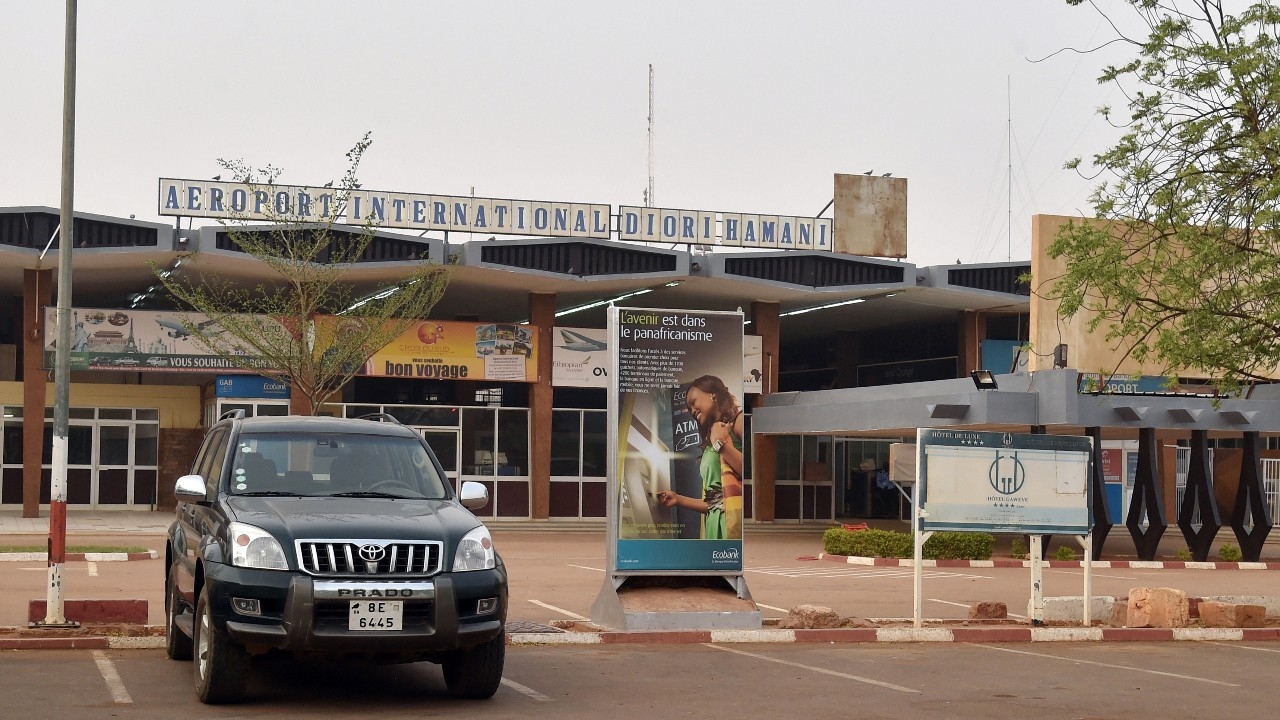
Armed assailants launched an attack on the international airport in Niamey, Niger's capital, killing at least 35 people, including soldiers, civilians, and the attackers themselves. An armed group linked to Al-Qaeda claimed responsibility, while the military government intensified efforts to hunt suspects and increase security measures.
Niger's Ministry of Defense issued an update on the terrorist attack at Diori Hamani International Airport in Niamey during the early morning of 18 June local time. The assault triggered intense clashes lasting several hours. The latest reports confirm at least 35 fatalities, including 22 attackers, 11 Nigerien soldiers, and 2 civilians. Additionally, 4 people were injured and approximately 20 suspects have been arrested.
Local witnesses said the attack occurred around 05:50 after many residents, most of whom are Muslim, had just finished morning prayers. Explosions and gunfire erupted near the airport checkpoint. Sources reported that the attackers arrived by taxi before opening fire, facing fierce retaliation from security forces. Later, the "JNIM" (Jama'at Nasr al-Islam wal Muslimin), an Al-Qaeda affiliated armed group in the Sahel region, claimed responsibility for the suicide operation.
Reports state that after being countered, some surviving attackers tried to disperse and blend into nearby communities, prompting authorities to seal off the area and conduct strict vehicle searches. Meanwhile, angry local residents armed with machetes and sticks joined security forces in pursuit and self-defense, ready to confront unfamiliar individuals. However, witnesses noted that officials tried to prevent civilians from risking harm.
The military seized a large cache of weapons from the attackers, including RPG-7 rocket launchers, AK-47 rifles, hand grenades, explosives, communication devices, and thousands of rounds of ammunition. Although the Ministry of Defense confirmed the airport was secured and remained operational, data from Flightradar24 indicated many inbound flights to Niamey were rerouted or delayed.
This is the second attack on this airport in under five months. In January, ISIS militants attacked the airport and an adjacent military drone base. Nigerien forces and Russian military allies repelled that assault, killing 20 attackers. Analyst Hasret Karkin from intelligence firm Mintel World noted that the attackers' ability to strike at the same time and sustain prolonged combat reveals Niger's security measures remain ineffective and that the militants may have inside information.
This airport is a highly sensitive strategic site, serving as a civilian aviation hub, military base, and a link to the Sahel Alliance (AES). It also previously stored concentrated uranium ore awaiting export. The military government under General Abdourahmane Tiani, who seized power in 2023, demolished thousands of illegal slums and homes around the airport fearing jihadist hideouts, expanded fencing, and installed over 350 CCTV cameras, but these measures failed to prevent the attack.
The Nigerien military government condemned the attackers as "armed mercenaries funded by the French government under President Emmanuel Macron," accusing France of financially supporting jihadist groups to destabilize the country. Paris vehemently denied these claims. Since Niger severed ties with France, its military government has turned to security assistance from Russia, Iran, and Turkey to combat the decade-long terrorist insurgency.