

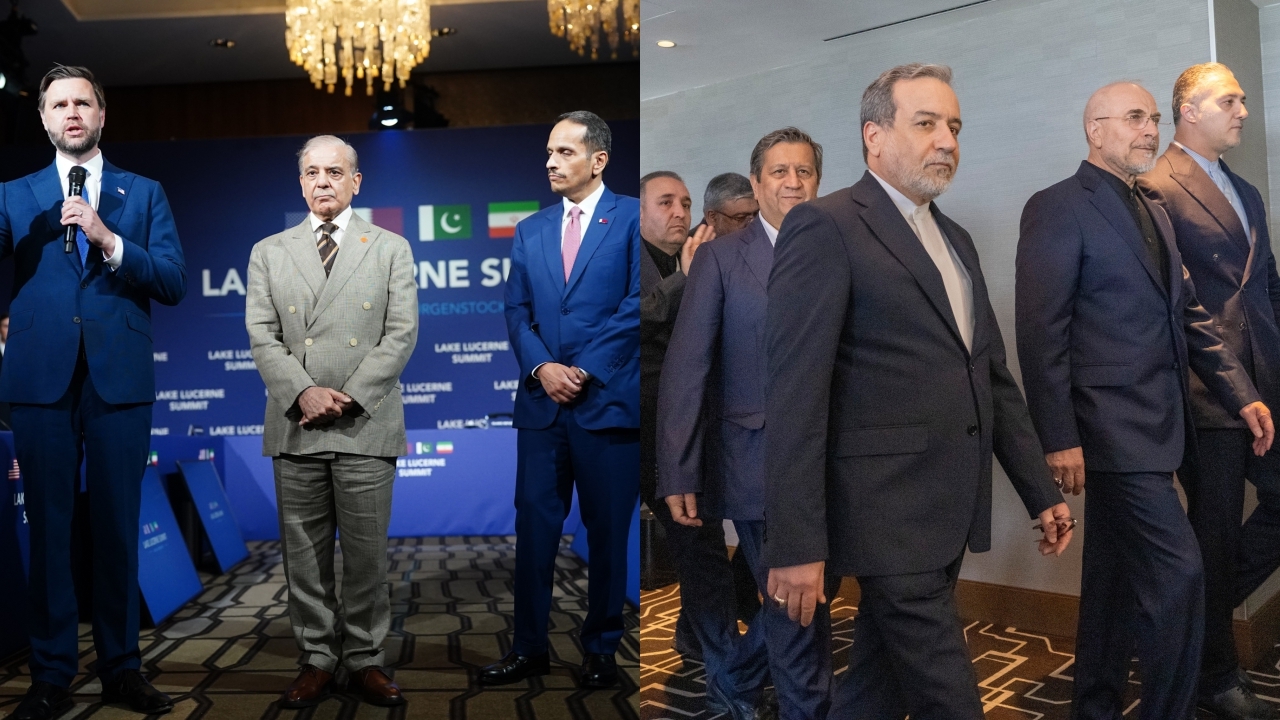
Negotiations between the United States and Iran to reach a ceasefire agreement concluded on a positive note in Switzerland. Qatar and Pakistan, serving as intermediaries, stated that both parties agreed to develop a roadmap aiming to finalize the agreement within 60 days, along with establishing a "direct communication line" to prevent accidents and miscommunication, ensuring the safety of commercial vessels transiting the Strait of Hormuz.
A joint statement from Qatar and Pakistan, acting as mediators, said the "high-level committee" of both sides reached a consensus to set a roadmap toward a final agreement within 60 days. This aligns with the memorandum of understanding (MOU) signed by the presidents of both countries last week, aiming to end fighting on "all fronts," including Lebanon, and to safely reopen shipping routes through the Strait of Hormuz.
A key development in this negotiation was the establishment of a "direct communication line" to prevent accidents and miscommunication. Its purpose is to guarantee the safety of commercial vessels passing through the Strait of Hormuz, a strategic chokepoint transporting about 20 percent of the world’s oil and natural gas. This follows Iran’s announcement last Saturday of closing the strait. However, MarineTraffic website data still shows some oil tankers and cargo ships transiting the area.
Additionally, the meeting agreed to set up a joint "conflict de-escalation unit" involving the U.S., Iran, and Lebanon, with mediator countries facilitating efforts to end military operations in Lebanon. Iranian Foreign Minister Seyed Abbas Araghchi confirmed that these talks "have made significant progress" in resolving the conflict in Lebanon.
Despite the positive talks, tensions on the ground remain high. Since the MOU signing, there have been intense clashes between Hezbollah and the Israeli military in southern Lebanon. Israeli airstrikes have killed at least 67 Lebanese civilians, while Israel has lost 5 soldiers. This prompted the U.S. to announce a new ceasefire agreement between Israel and Hezbollah last Friday.
Israeli Prime Minister Benjamin Netanyahu affirmed that the Israeli military will maintain its presence in southern Lebanon as long as necessary to protect northern Israel. Meanwhile, Hezbollah leader Naim Qassem rejected the continued Israeli military presence and vowed to continue self-defense efforts.
During the talks in Lucerne, President Donald Trump issued a stern warning to Iran, stating they "must order their representatives in Lebanon to stop causing trouble immediately" or the U.S. would "strike Iran harshly again." Iran’s chief negotiator Mohammad Bagher Ghalibaf countered the threat, saying, "If their threats were effective, they would not be in such a desperate situation today. Whatever they say or how much they say it... we are the ones taking action."
U.S. Vice President and chief negotiator J.D. Vance, attending the meeting in Bergünstock alongside Jared Kushner, Trump’s son-in-law, and Steve Witkoff, said Trump wants both countries to "turn a new page in history." He stated that if Iran’s leadership is willing to stop "being a destabilizing force in the region" and abandon long-term nuclear ambitions, the U.S. is ready to completely redefine relations with Iran. Iran, however, continues to insist its nuclear program is purely peaceful.
Regarding the preliminary agreement previously signed by both leaders, the U.S. agreed to lift the military blockade on Iranian ports and remove all economic sanctions. It also proposed a $300 billion plan to rebuild Iran. Nevertheless, the nuclear deal issue—the main source of conflict, which Trump withdrew from during his first term—is slated for further discussions later.
The war began on 28 February when the U.S. and Israel launched attacks on Iran, drawing Lebanon into the conflict after Hezbollah retaliated with rocket fire on Iran’s behalf. Since 2 March, this crisis has claimed over 4,057 lives in Lebanon and at least 34 Israeli soldiers. The international community hopes the 60-day roadmap will restore peace to the Middle East.