

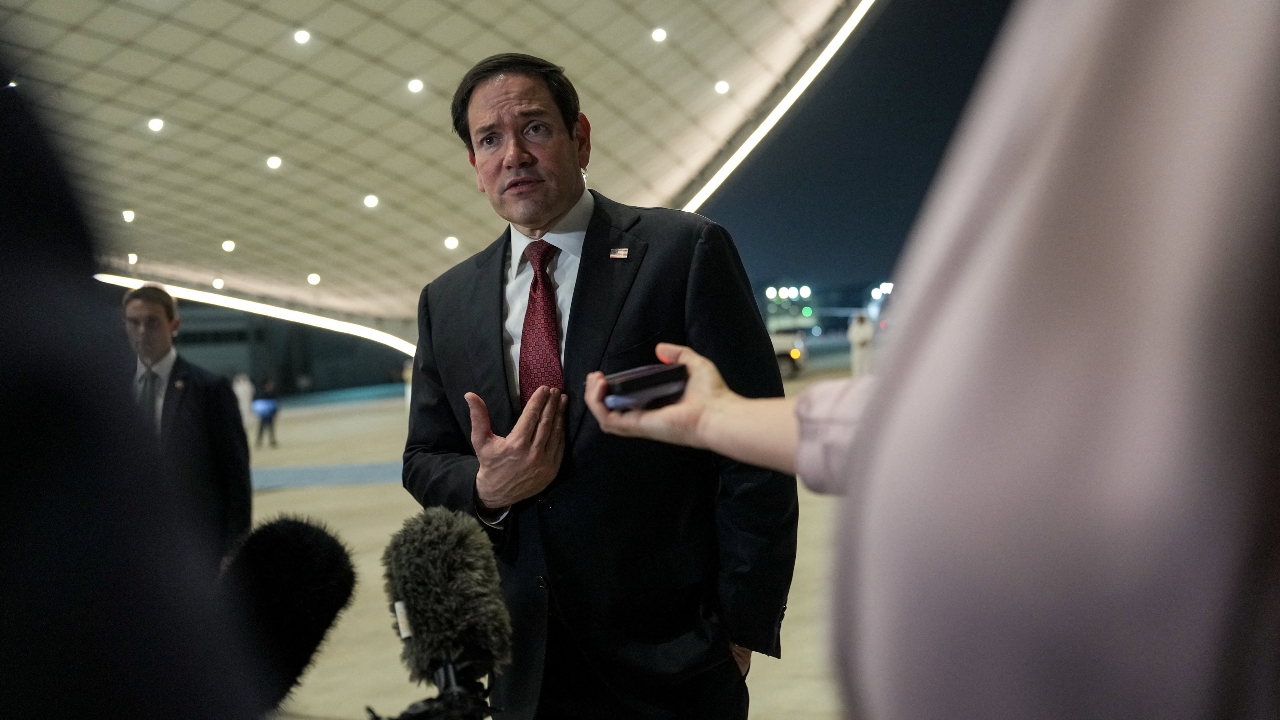
U.S. Secretary of State Marco Rubio affirmed that the United States will not accept any taxes or toll fees from Iran in the Strait of Hormuz, emphasizing that this is an international shipping route and no country has the right to charge tolls.
U.S. Secretary of State Marco Rubio announced that the United States will reject Iran's attempt to impose tolls or fees on vessels using the Strait of Hormuz, a crucial global energy transportation route. Divergent views on this issue, along with nuclear inspections and missile programs, have begun to expose vulnerabilities in the Middle East peace negotiation process.
This development follows a preliminary agreement signed between the U.S. and Iran to de-escalate conflicts and the completion of the first round of talks in Switzerland. This initiated a 60-day negotiation period to resolve issues concerning sanctions relief, Iran's nuclear program, and the future of the Strait of Hormuz. However, Iran and Oman jointly issued a statement expressing intent to explore management and fee collection methods for the strait, claiming sovereignty over the area, which has greatly displeased Washington.
At the start of the conflict, Iran's blockade of shipping routes caused maritime transport disruptions and a spike in global oil prices. However, after the agreement was signed, navigation through the strait began to increase, though it remains only about 40 percent of normal levels during peacetime.
Iran continues to assert its authority over the Strait of Hormuz. The governments of Iran and Oman issued a joint statement declaring their intention to study management models for trade routes and associated service costs, while reaffirming sovereignty over the area.
Rubio, who began a visit to the United Arab Emirates before traveling to Kuwait and Bahrain to consult with members of the Gulf Cooperation Council (GCC), stated that the Strait of Hormuz is an international waterway and no country has the right to impose tolls. He expressed confidence that regional countries share this principle.
Meanwhile, Mohammad Bagher Ghalibaf, Iran's senior negotiator, stated that the Strait of Hormuz will not revert to its pre-war condition, even though both sides agreed to establish communication channels to maintain navigation routes.
The International Maritime Organization revealed plans to evacuate over 11,000 crew members stranded due to blockade measures, coordinating with Iran, Oman, and the United States under security assurances.
Another key issue is Iran's missile program, which Tehran has clearly indicated will not be included in the final agreement. Iranian President Masoud Pezeshkian, during a visit to Pakistan, said that national defense capabilities are not negotiable and reaffirmed that Iran will not compromise on military capabilities under any circumstances.
Pakistan's Prime Minister Shehbaz Sharif confirmed that the preliminary agreement between the U.S. and Iran does not address missile issues, adding that there should be no double standards regarding countries' possession of weapons.
Additionally, Iran denied U.S. claims that it agreed to allow inspectors from the International Atomic Energy Agency (IAEA) to return to inspect nuclear facilities attacked last year, stating that no decision has yet been made on this matter.
On another front, the U.S. Treasury Department has temporarily eased sanctions, allowing Iran to produce and export crude oil until mid-August. According to Iranian state media, the U.S. also agreed to release $12 billion in frozen funds to Tehran.
However, the agreement has raised concerns among several Gulf countries because it places no restrictions on Iran's missile program, includes a proposed $300 billion reconstruction fund, and may allow Iran to increase its influence in the region, including over key energy transport routes.
Although negotiations continue, many observers believe that differing views on security and geopolitical influence may pose significant challenges to the success of this Middle East peace agreement.