

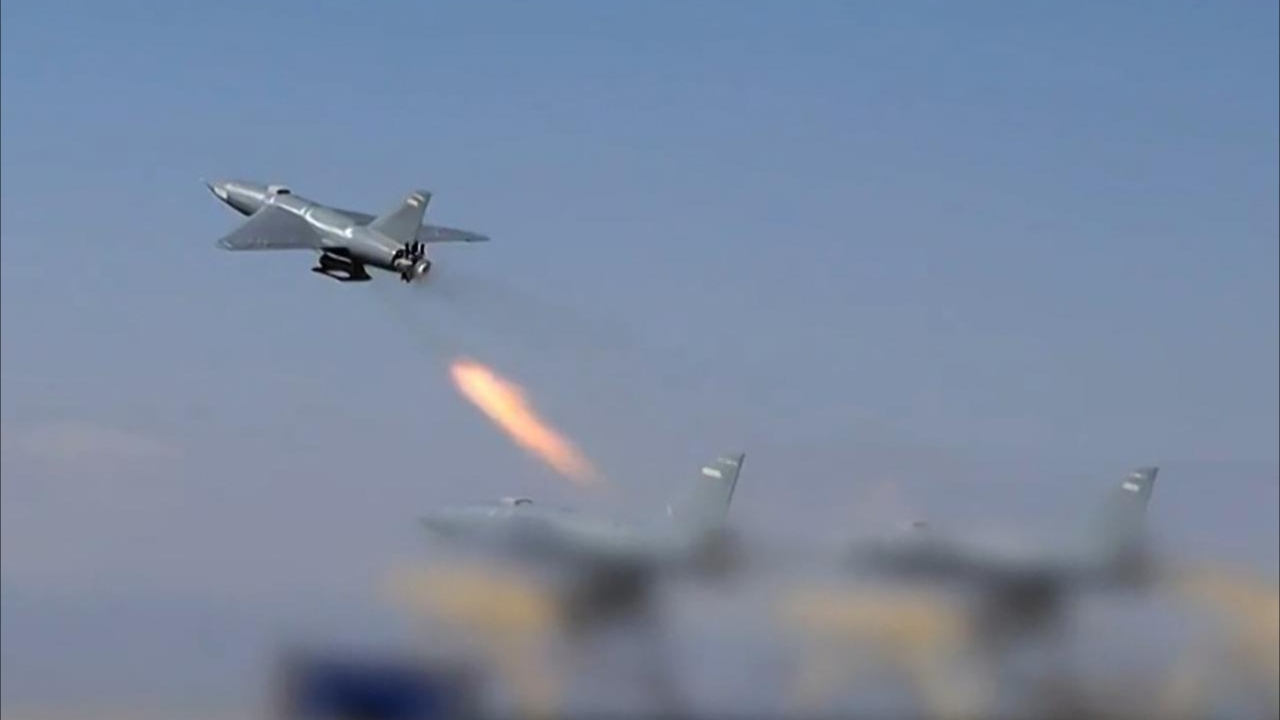
A special CNN report revealed testimony from a U.S. fighter pilot who survived after being shot down over Iran, stating he saw a swarm of Iranian drones flying in coordinated formation resembling a jellyfish shape. This incident has sparked debate within U.S. intelligence circles about the possibility of new Iranian drone warfare capabilities.
CNN released a special report citing insider sources that a U.S. F-15 fighter pilot shot down over the Iranian conflict zone in April testified to intelligence agencies about a shocking sight before ejecting: a large swarm of Iranian kamikaze drones flying tightly grouped and moving as one, resembling a "giant jellyfish." If true, this would mark a significant advancement by Iran's military in possessing advanced drone swarm control technology, possibly aided by Russia and China.
Previously undisclosed information states that during the investigation and mission debrief after rescuing the U.S. F-15 pilot shot down over Iranian airspace, his testimony has ignited intense debate within the U.S. intelligence community, which remains unable to reach a conclusion to this day. This is because the swarm flight system the pilot described is an advanced military technology that the U.S. military never assessed Iran could achieve.
A source close to the pilot's testimony revealed he described what he saw like a scene from a sci-fi movie: "It was multiple drones connected together, moving as one unit, with smaller drones flying beneath a larger drone, like the tentacles of a jellyfish. Honestly, it looked like alien technology."
Another source said the pilot described the situation overhead as akin to a "sky filled with a minefield of drones." It is highly likely this mysterious drone swarm played a key role in allowing Iran's air defense system to shoot down the first American F-15 fighter jet in this war.
The report states the F-15 carried two crew members—the pilot and a weapons systems officer—both of whom were safely rescued by special forces after ejecting. The pilot was rescued within hours, while the weapons officer had to hide from Iranian troops in the mountains for over a full day. It remains unclear whether the weapons officer also saw the drone swarm.
However, some U.S. intelligence officials remain skeptical of this testimony, as the pilot suffered a concussion from the crash. Moreover, this Iran conflict marked the second time he was shot down; the first was early in the conflict due to friendly fire by Kuwaiti forces. Investigators questioned, "Are you really sure what you saw is what you are describing?" Is this a fully developed weapon? A beta test system? Or merely a mirage in the desert?
Technically, experts call the capability the pilot described a "mesh network system for drone swarms," which allows a controller to command many drones simultaneously. Currently, only major powers like Russia and China are believed to possess this technology, and reports indicate both countries have continuously provided technological assistance to Iran's drone programs.
Emma Bates, a drone warfare and defense modernization expert and founder of Cachai, told CNN that this swarm network capability represents a very frightening threat.
"If they can arrange forces into tangible shapes, maintain those shapes in flight, and equip them with explosives on top, with other drones flying backup to re-attack where the first wave fails, this is a highly effective military strategy. The U.S. may have to expend huge blood and treasure to find ways to defend against this."
The heated issue of Iran's drone capabilities arises amid a peace negotiation atmosphere after the U.S. and Iran agreed to a temporary ceasefire and a 60-day negotiation window in Switzerland. Although the main topics focus on nuclear programs and sanction relief, Iran's kamikaze drone swarms—which have caused heavy damage to U.S., Israeli, and Gulf Arab forces during weeks of war—have become a critical topic influencing regional power balances and security in the Middle East.
:CNN