

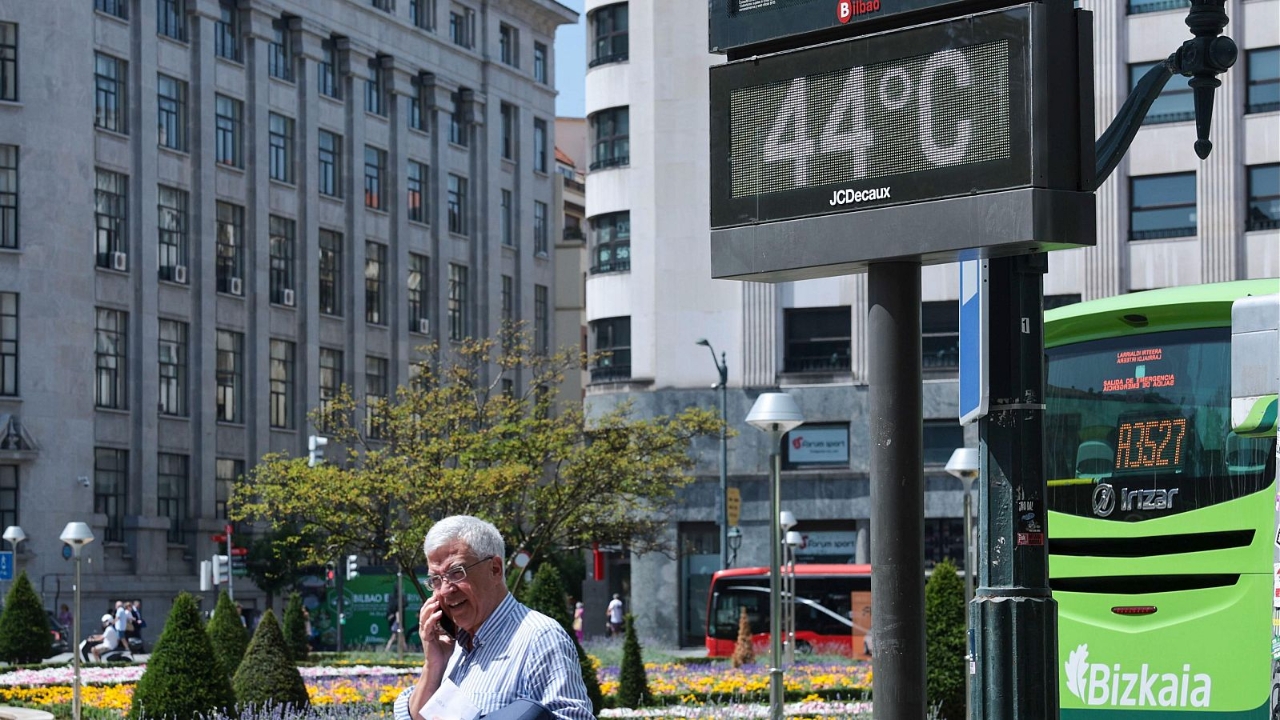
Spain is confronting an extreme weather crisis as the first heatwave of the summer sweeps through, breaking the highest temperature records since 1950. This has resulted in an estimated 212 heat-related deaths within just four days, most of whom are elderly.
The daily mortality monitoring system (MoMo), coordinated by the National Epidemiology Center of the Carlos III Health Institute (ISCIII) in Spain, released preliminary statistics on deaths linked to the heatwave affecting most of Europe. Between 21-24 June, Spain recorded 212 heat-related deaths, with the central and northern regions of the Iberian Peninsula suffering the most severe impacts.
These figures show that Wednesday (24 June) had the highest death toll with 96 fatalities, nearly half of the total. Meanwhile, the Spanish National Meteorological Agency identified Tuesday and Wednesday as the hottest days of the month since records began in 1950, with 66 deaths on Tuesday, 38 on Wednesday, and 13 on Sunday.
Diana Gomez, a scientist from the National Epidemiology Center, explained that the figure of 212 deaths is preliminary and that a more definitive total will be available in about a week. The MoMo system calculates excess deaths by comparing actual deaths with expected deaths during the same period in previous years.
However, this data clearly reflects a "significant surge" in mortality rates during the last four days of June, bringing the total heat-related deaths in June to 380. More than half, or 55%, of these occurred during the latest heatwave. Furthermore, this figure worsens an already abnormal situation since May, which recorded 101 heat-related deaths—the highest May total in Spanish history.
By region, Catalonia had the highest death toll with 43, followed by Castilla y León with 32, the Basque Country with 30, and Madrid with 28.
Assessments indicate that the extreme heat directly affected patients with pre-existing conditions. Of the 212 deaths, 200 were elderly over 65 years old, including 148 people aged over 85.
Gomez also noted a worrying trend that heatwaves are arriving increasingly earlier than usual; normally occurring early in the season. Preliminary research suggests that “the earlier a heatwave arrives relative to the calendar, the higher the mortality rate,” as the human body cannot quickly adapt to sudden climate changes.
Another unprecedented climate change is the "brutal nights" phenomenon in June this year. Particularly on the mornings of 22 and 23 June, nighttime temperatures did not drop below 30 degrees Celsius, marking the hottest recorded nights for June.
Although the MoMo system has not yet isolated nighttime temperature-related deaths, scientists emphasize the urgency of studying this issue. Medical evidence shows that when nighttime temperatures remain high, the human body does not rest or recover properly, overburdening the cardiovascular system and potentially leading to death.
This aligns with global research led by the European Centre for Medium-Range Weather Forecasts (ECMWF), published in the journal Nature Climate Change. It states that nighttime temperatures worldwide are rising faster than daytime temperatures. The top 10 hottest nights annually have seen an average temperature increase of 0.32 degrees Celsius per decade, exceeding the daytime warming rate of 0.27 degrees Celsius per decade.
For the upcoming weekend, temperatures across the Iberian Peninsula are expected to decline, especially along the northern coast in Cantabria, where cooling will be noticeable. However, in the Ebro river basin to the east and the Balearic Islands, temperatures will remain high at 34–36 degrees Celsius, potentially reaching 38–39 degrees Celsius in some areas. The "tropical nights" phenomenon, with nighttime temperatures not falling below 20 degrees Celsius, will persist in central, southern, and Mediterranean coastal regions.
. SourceEl Independiente/ AFP