

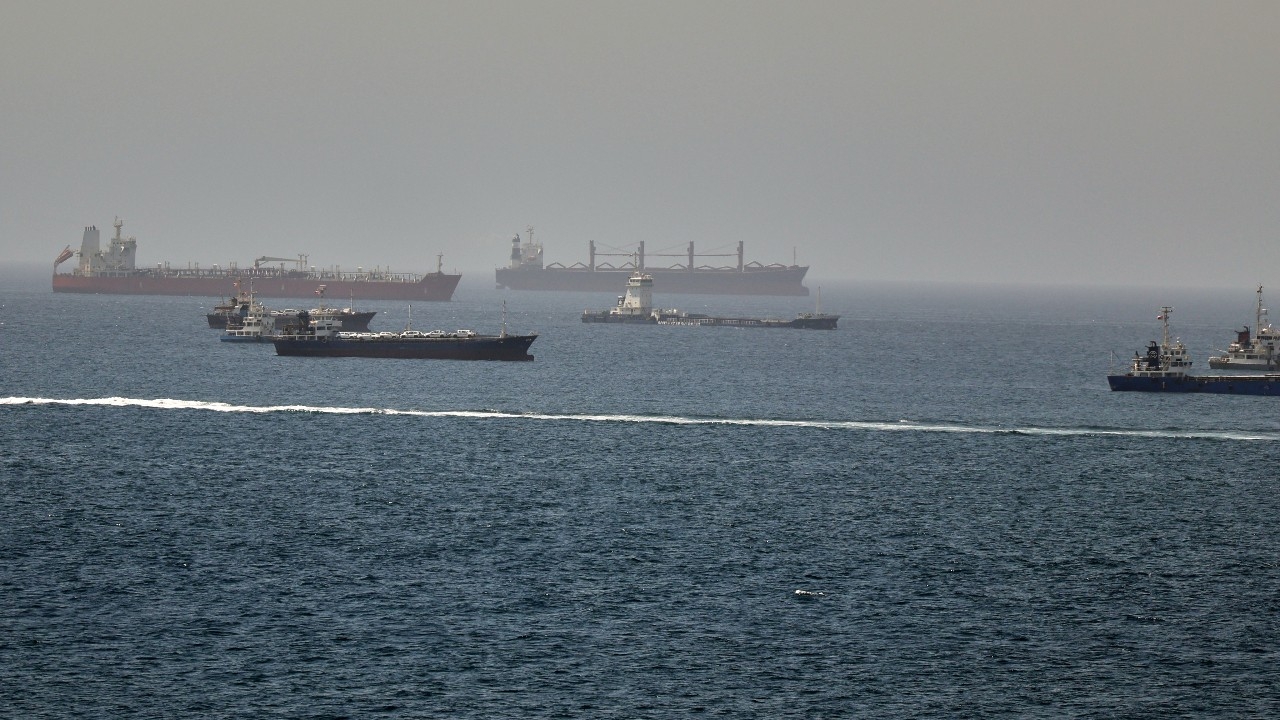
The United Nations' International Maritime Organization (IMO) announced a temporary suspension of evacuation and escort operations for cargo ships and over 11,000 crew members stranded in the Strait of Hormuz following an attack on a Singaporean cargo ship near Omani waters.
The United Nations' International Maritime Organization (IMO) declared a temporary halt to evacuation and escort operations for cargo ships and more than 11,000 crew members stranded in the Strait of Hormuz after a cargo ship passing through the area was attacked, raising new concerns that the preliminary peace agreement to end the US-Israel and Iran conflict might collapse.
Arsenio Dominguez, Secretary-General of IMO, revealed that although some ships had been evacuated earlier, the agency must pause all operations to review and ensure that necessary safety measures for all ships and crew in the region remain in place. He noted that the attacked cargo ship was not part of the IMO's evacuation network.
The UK's Maritime Security Agency (UKMTO) reported that a cargo ship was hit by an unknown explosive device, believed to be a suicide drone, about 7.5 nautical miles southeast of the port of Duqm, Oman. Marine risk management company Vanguard identified the ship as the 'Ever Lovely,' registered and flagged in Singapore. Fortunately, no injuries or fatalities were reported, and the vessel was able to continue through the strait without requiring special assistance.
Tracking data from MarineTraffic confirmed that the Ever Lovely entered the Strait of Hormuz via the southern route on Thursday morning and exited through the eastern side shortly afterward.
Two senior US officials told Reuters that the attack was carried out by the Iranian military, aligning with a statement from Iran's Persian Gulf Security Authority (PGSA), which controls shipping routes. PGSA posted on platform X that "any ship sailing outside designated routes will not be guaranteed safety, and any consequences from unauthorized route use are the sole responsibility of the shipowner, operator, and captain." Reports also indicate that Iran's Islamic Revolutionary Guard Corps (IRGC) intervened to order two Panama-flagged ships to alter their courses on the same day.
News reports stated that global crude oil prices immediately jumped 2% following the attack, as analysts worried that energy transport through this strategic strait—which handles one-fifth of the world’s crude oil and liquefied natural gas—would take longer to return to normal.
Prior to this, global crude oil prices had steadily declined to $73.23 per barrel, a level close to that before the US and Israel launched attacks on Iran in late February. This followed a memorandum of understanding signed on 17 June to set a 60-day framework for peace talks and resolve nuclear issues.
The uncertainty surrounding the conflict is putting heavy pressure on US President Donald Trump ahead of the November midterm elections that will determine Congressional control. A recent Reuters/Ipsos poll found only one in four Americans believe the war with Iran is worth the cost. Trump had also threatened earlier that if Iran did not comply with agreements, the US would resume bombing Iran.
Just hours before the incident, US Secretary of State Mark Rubio, visiting Gulf countries and currently in Bahrain, strongly warned Iran that the US would not tolerate attempts to block or charge "tolls" in the Strait of Hormuz, emphasizing it is an "international shipping lane."
Meanwhile, Tehran continues to assert its claim over the strait, stating it will collect so-called "maritime service fees," not tolls. Additionally, Iran's chief negotiator Mohammad Bagher Ghalibaf denied US claims that Iran plans to use unfrozen assets to purchase agricultural goods from the US, calling such reports completely false.
Although the US Energy Department reported that oil transport through the strait has nearly recovered to pre-conflict levels, with over 20 million barrels passing in the last 24 hours, the recent cargo ship attack highlights the fragile maritime security situation in the Strait of Hormuz. The upcoming 60-day peace negotiation period may face significant obstacles that could determine the global economic outlook.