

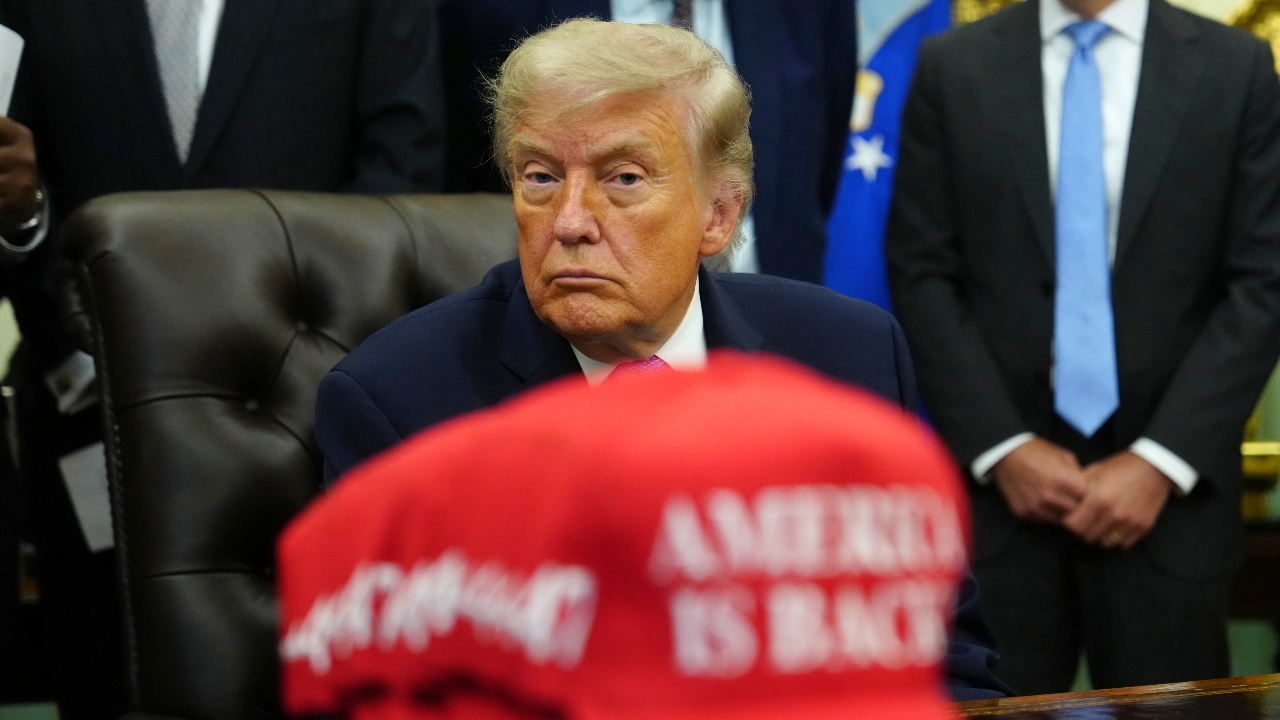
Tensions in the Middle East have escalated again after President Donald Trump warned that Iran "may cease to exist as a country" if the U.S. is forced back into military action, while both sides accuse each other of violating the ceasefire agreement amid retaliatory attacks impacting shipping routes in the Strait of Hormuz.
U.S. President Donald Trump posted a warning on the Truth Social platform stating that the U.S. Air Force launched strikes against multiple Iranian missile depots, drone stockpiles, and coastal radar stations in retaliation for Iran repeatedly violating the ceasefire agreement.
Trump stated, "It may come to a point where we can no longer reason, and will be forced to use military force to finish the job we have started so successfully. And when that day comes, the Islamic Republic of Iran will no longer exist!"
The U.S. Central Command (CENTCOM) clarified that the strikes were a response to Iran deploying drones to attack the Panama-flagged crude oil tanker Kiku, which was carrying over 2 million barrels of crude oil, while Iranian local media reported several powerful explosions in the southern cities of Sirik and Qeshm.
Iran immediately retaliated, with the Islamic Revolutionary Guard Corps (IRGC) announcing a third consecutive day of strikes on U.S. military targets, destroying eight key U.S. bases and facilities, including Ali Al Salem Air Base in Kuwait and the Fifth Fleet Naval Base in Salman Port, Bahrain, causing air raid sirens to sound twice across Bahrain.
Additionally, the IRGC declared a comprehensive escalation of control over shipping routes in the Strait of Hormuz, warning that any vessel violating Iran's designated passage would face harsher retaliation, a situation severely shaking the global energy market and international maritime trade.
This new wave of attacks effectively nullifies the temporary ceasefire and memorandum of understanding signed in mid-June under Pakistan's mediation, which originally required both sides to halt military actions and allow safe passage for commercial ships through the Strait of Hormuz for 60 days.
Meanwhile, the situation in Lebanon further jeopardizes U.S. and Iranian peace plans, as Hezbollah's new leader, Naim Qassem, publicly rejected the long-term peace agreement recently signed by Israel and the Lebanese government with U.S. backing.
Hezbollah's leader condemned the agreement as "shameful and a surrender that sacrifices sovereignty," demanding the immediate withdrawal of Israeli troops from southern Lebanon. Israeli Prime Minister Benjamin Netanyahu insisted that Israeli forces would maintain their presence in southern Lebanon's security zone and would not allow civilians to return until Hezbollah is fully disarmed, a move seen as a "major mistake" by Israel's right-wing and a trigger for a potential large-scale proxy war in the Middle East.
,AFP