

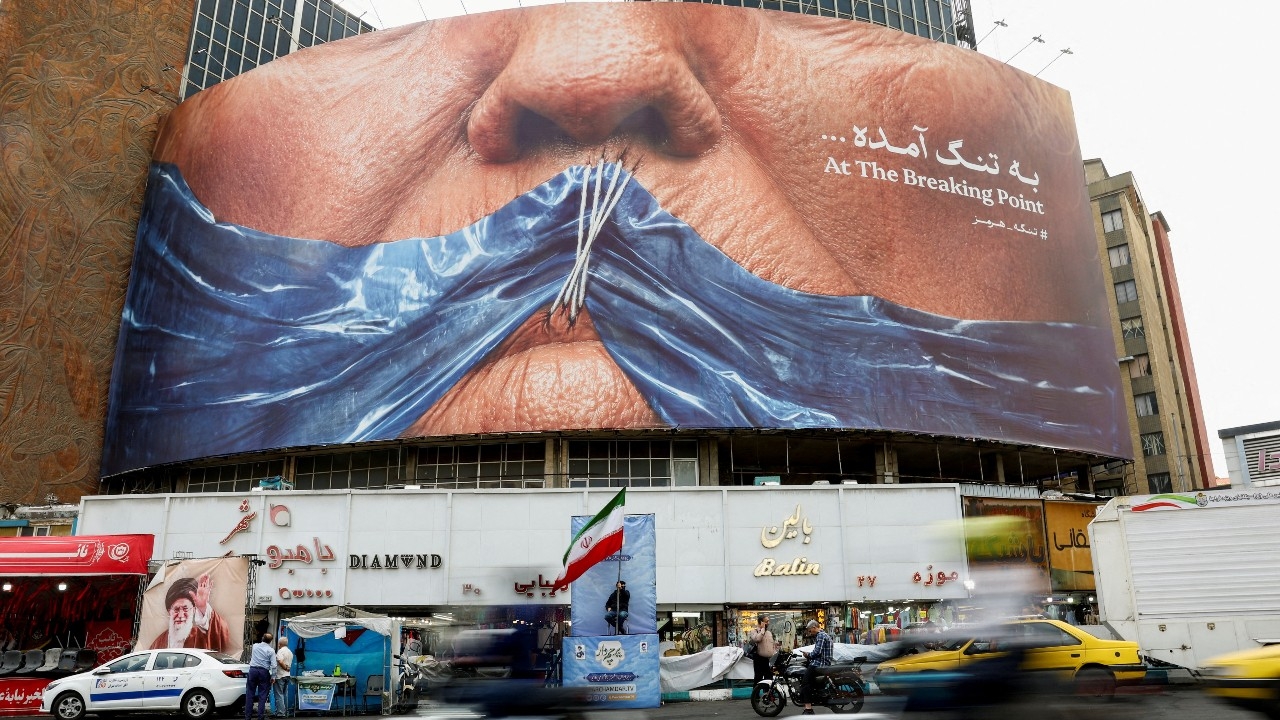
Senior U.S. officials stated that the United States and Iran have agreed to halt attacks and end the latest military confrontations in the Persian Gulf region. Both sides are preparing to send representatives back to technical negotiations under a 14-point Memorandum of Understanding (MOU) previously established on 17 June, to be held again in Qatar.
The ceasefire agreement nearly collapsed after a series of intense reciprocal attacks beginning on 25 June, when Iranian missiles targeted commercial ships in the Strait of Hormuz. This prompted the U.S. military to launch retaliatory strikes against Iran in response to threats to commercial navigation along this critical global energy route.
Just hours before reports of the temporary ceasefire agreement, regional tensions peaked when U.S. President Donald Trump posted a fierce threat on social media, stating, "If Iran does not comply with the agreement to end the war, the Islamic Republic of Iran will collapse and cease to exist!"
Shortly thereafter, the Islamic Revolutionary Guard Corps (IRGC) launched missile and drone attacks against U.S. military bases in Kuwait and Bahrain. The IRGC claimed that the U.S. violated the ceasefire first and warned that American bases in the region would soon face "hell."
Kuwaiti authorities intercepted two guided missiles, while in Bahrain, Iranian attacks damaged residential buildings in Muharraq Governorate, prompting Bahrain to call for an urgent United Nations Security Council (UNSC) meeting. The U.S. military confirmed no American casualties or serious injuries. Additionally, Qatar's Ministry of Interior reported one Qatari fatality from shrapnel aboard a missing vessel within the military operation area.
This crisis began on 28 February when the U.S. and Israel attacked Iran, leading Iran to close the Strait of Hormuz, the world's most important oil and natural gas transit route. The MOU was signed on 17 June to allow free passage of commercial vessels for 60 days in exchange for the suspension of some U.S. sanctions.
However, the situation remains fragile due to its connection with the conflict in Lebanon. Iran has demanded, "The fighting in Lebanon must end for the overall ceasefire agreement to continue." Conversely, although Israel and Lebanon recently signed a peace framework last Friday, Israel continues its military assaults on the Iran-backed Hezbollah group. Recently, the Israeli military destroyed a 200-meter-long secret Hezbollah tunnel in southern Lebanon containing significant weaponry, stating it had informed the U.S. in advance.
While the U.S. currently asserts that commercial ships can once again freely and safely transit the Strait of Hormuz, Iran remains cautious and has not issued an official statement regarding this "retreat" agreement. As a result, many continue to closely monitor the upcoming negotiations in Qatar to see how long this fragile peace can be maintained.