

The South Korean government announced a historic investment plan valued at nearly $1.2 trillion (approximately 39.9 trillion baht), equivalent to almost two-thirds of the nation's GDP, to build a new semiconductor industrial complex and AI data center in the country's southwest. The initiative aims to capture a significant share of the global AI growth surge while addressing inequality and revitalizing the economy outside Seoul.
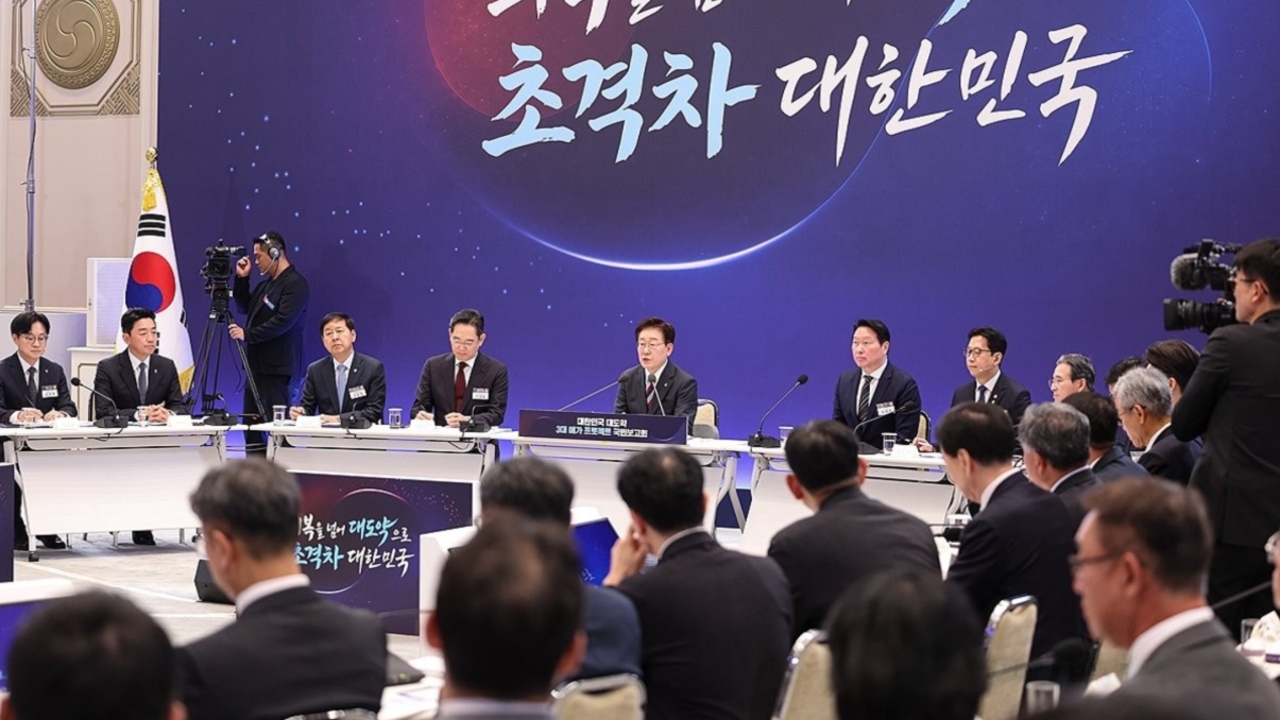
South Korean President Lee Jae-myung announced via a special televised broadcast alongside top executives from Samsung Electronics and SK hynix, the world’s leading memory chip manufacturers, to launch the largest-ever public-private partnership in the sector.
President Lee Jae-myung stated, "Speed is the only way to survive. We must secure the core components of artificial intelligence (AI) faster than any other country in the world." He emphasized that semiconductors, physical AI, and AI data centers are the three main pillars that will drive the country's significant leap forward.
Kim Jong-kwan, Minister of Industry, revealed investment plans to transform the Gwangju and Jeolla regions into the country's second major semiconductor industry hub alongside the existing center in the Seoul metropolitan area, during a national investment briefing chaired by President Lee at the presidential office.
Under the plan, Samsung and SK hynix will jointly invest up to 800 trillion won (approximately 17.25 trillion baht) to establish new computer chip production bases in the country's southwest. The Minister of Industry disclosed that the project will include four advanced manufacturing plants—two from Samsung and two from SK hynix. The government will significantly streamline approval and construction processes to maintain decisive global market leadership.
In addition to chip factories, the South Korean government announced a separate investment plan exceeding 1,000 trillion won (approximately 21 trillion baht) over the next decade to build AI data center infrastructure. Baek Kyung-hoon, Minister of Science, stated that in the first phase, 550 trillion won will be invested by 2029, aiming to establish AI data centers with an additional power capacity of 10 gigawatts by 2035, bringing total capacity to over 18.4 gigawatts.
At a meeting attended by Samsung Electronics Chairman Lee Jae-yong and SK Group Chairman Chey Tae-won, Minister Kim discussed a public-private collaboration plan to invest 30 trillion won (approximately 646 billion baht) over the next 15 years to support the entire semiconductor industry value chain—from research and development, chip design, to testing and production.
A key advantage of the southwest region is its abundant renewable energy resources, which will help these technology companies meet international standards for clean energy use more easily. President Lee also posted on the X platform confirming that the area has the capacity to supply up to 1 million tons of industrial water per day, supporting the massive water requirements of chip manufacturing.
This project is a central policy of President Lee Jae-myung aimed at addressing the concentration of industry in the capital city of Seoul, which has caused rural and southern cities like Gwangju and Jeolla provinces to stagnate and be cut off from economic development since the 1960s and 1970s.
However, analysts and experts from leading universities have expressed concerns. Professor Lee Jong-hwan from Sangmyung University noted that the biggest challenge is that "highly skilled labor and nearly all suppliers are concentrated in the capital area." Building a new industrial ecosystem from scratch could take more than five years, and the business prestige might be at risk if the government does not offer sufficient incentives to attract labor migration.
This massive investment announcement comes amid fierce regional competition from Taiwan, China, and Japan, each investing heavily to attract chip factories to their own countries. Currently, global IT giants such as Google, Amazon, and Meta plan to spend a combined $650 billion on AI infrastructure this year, boosting profits and stock values for Samsung and SK hynix—key suppliers to Nvidia—with SK hynix's market value surpassing $1 trillion in May.
Amid this growth trend, some investors have begun to warn of "over-investment" in the AI industry, causing certain technology stocks to decline in recent days. There is also domestic pressure in South Korea over debates on redistributing these massive AI profits back to society. The presidential office is considering imposing excess taxes on AI businesses to support young startups and provide a basic income for rural farming and fishing communities.