

The U.S. government has begun measures to relocate undocumented migrants to third countries, sending the first individual to Palau, a small island nation in the Pacific Ocean, under a $7.5 million subsidy agreement. However, the first migrant chose to leave the island after only two weeks amid criticism that the U.S. is shifting its immigration burdens onto a small country.
AFP news agency reported, citing a statement from the Palau presidential office, that the U.S. has started sending migrants to Palau, a South Pacific island nation, with the first migrant arriving in late May.
The office of Palau President Surangel Whipps Jr. stated, "We welcomed the first individual at the airport in late May, took him to temporary accommodation, assisted with obtaining a mobile phone, and helped him adjust to life here."
The agreement aims for migrants to settle and find work in Palau to start a new life in an unfamiliar place where they have no family, friends, or cultural ties. However, the first migrant lived on the island for less than two weeks after arriving in Koror, the country's main city.
The Palau presidential office revealed, "After about two weeks, he decided not to remain here." Basic information about the man, including reasons for his deportation from the U.S. and his next destination after leaving Palau, remains confidential and has not been publicly disclosed.
Previously, President Surangel Whipps Jr. praised the deportation agreement as mutually beneficial for both Palau and the U.S., saying at the signing ceremony in December last year, "It is a win-win. We are helping the U.S. and helping these individuals who need a safe place to live, hoping they find work and happiness in Palau."
Under the agreement, Palau agrees to accept up to 75 deported migrants, with the key condition that all refugees must have no criminal records. Palau reserves the absolute right to "veto" or reject individuals it does not wish to admit. In exchange, the U.S. will provide Palau with $7.5 million (approximately 255 million baht) to develop public services and necessary infrastructure.
Although the country's leadership views the deal positively, the policy has faced heavy criticism and domestic opposition. A group of Palau legislators filed a lawsuit to suspend the policy but lost the case earlier this year.
Palau Senate leader Hokkons Baules told Australian ABC News in February, "Palau's sovereignty is being disregarded. We feel like they are dumping their problems on Palau."
Meanwhile, a U.S. State Department spokesperson briefly commented that the administration of President Donald Trump remains "firmly committed to ending illegal immigration and mass migration to strengthen security along America's borders," declining to comment on diplomatic communications with the Palau government.
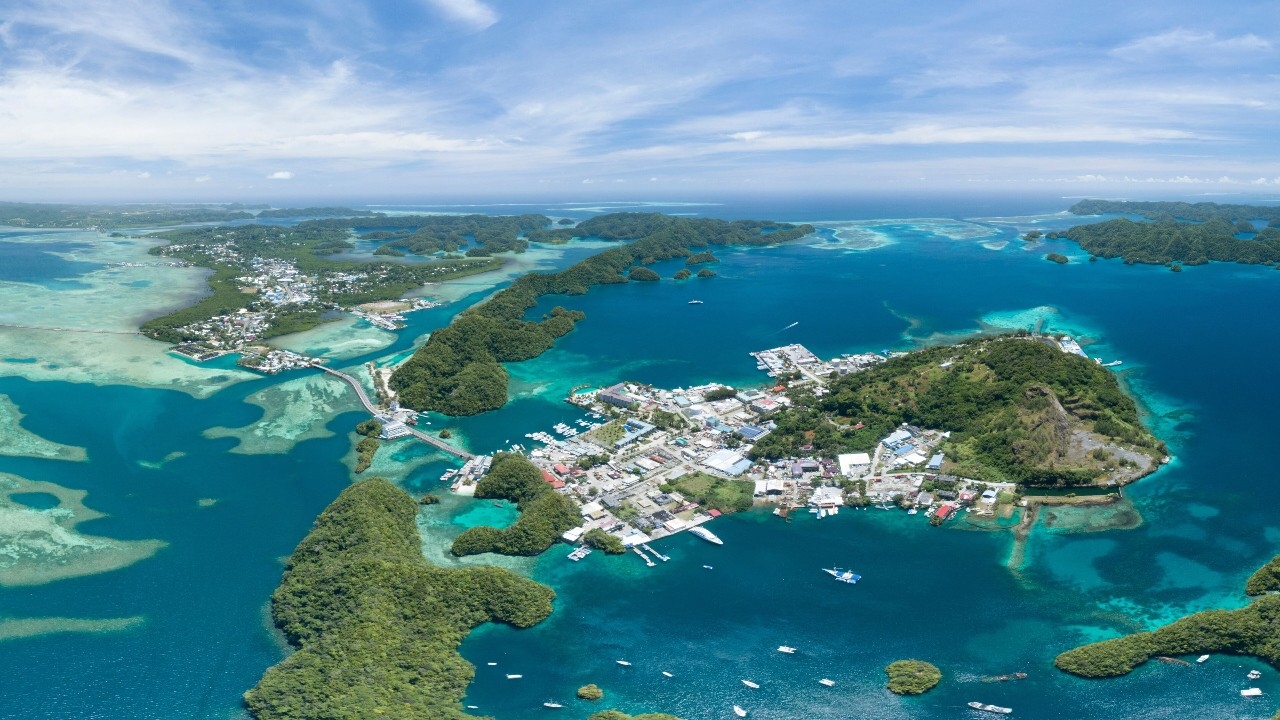
Palau is one of the world's smallest countries, with a population of around 20,000 people spread across numerous volcanic and coral islands. Although it gained independence in 1994, Palau maintains close ties with the U.S. under the "Compact of Free Association."
Under this agreement, the U.S. has rights to use Palau's territory for military purposes in exchange for providing hundreds of millions of dollars in funding and assuming responsibility for Palau's defense and security. Additionally, Palau is one of the few countries that continue to maintain diplomatic recognition of Taiwan instead of the People's Republic of China.
The Trump administration's policy of relocating migrants to third countries did not begin with Palau. The U.S. previously made similar agreements to relocate asylum seekers to countries like El Salvador and Uganda.
. SourceAFP