

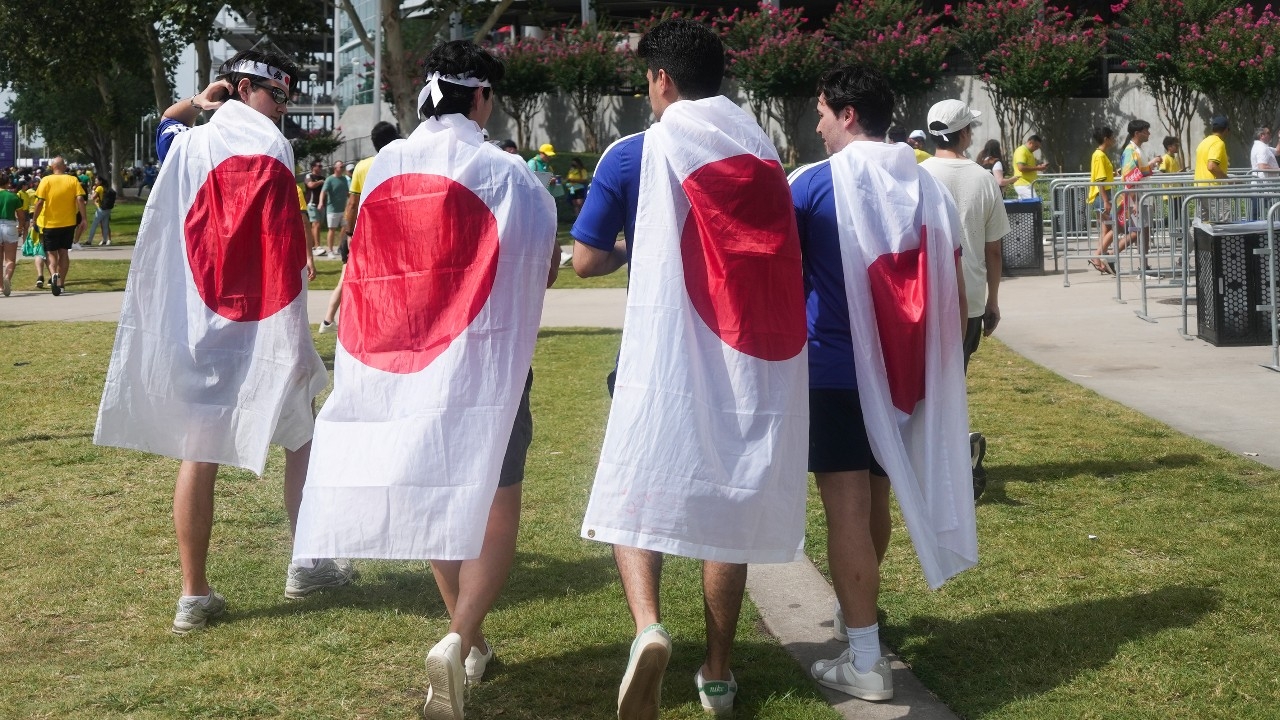
Japan's House of Representatives voted to pass a bill banning the destruction or insult of the national flag, stipulating penalties of up to two years imprisonment or fines not exceeding 200,000 yen. This occurred amid opposition parties boycotting the vote, accusing the government of rushing the law without adequate debate and raising concerns about freedom of expression.
Japan's Lower House approved a bill prohibiting the destruction or insult of the national flag. However, the session was tense as all opposition parties collectively refused to participate in the vote to protest the ruling Liberal Democratic Party's (LDP) approach under Prime Minister Sanae Takaichi, who pushed this measure as a core conservative policy agenda.
Although previously the Democratic Party for the People (DPFP) and Sanseito, conservative-leaning parties, had cooperated with the LDP and the Japan Innovation Party (JIP) in submitting the bill to the House, both ultimately joined the boycott of the vote due to dissatisfaction with how the government coalition controlled and directed the parliamentary agenda.
The key point of the bill imposes penalties on anyone who intentionally destroys, moves, or soils the national flag in public places in a way that causes "severe discomfort or strong disgust" to others. Violators face up to two years imprisonment or fines up to 200,000 yen (approximately 41,000 baht).
This law was included in the coalition agreement between the LDP and JIP in October. Proponents said it aims to resolve a "contradiction" in Japan's current Penal Code, which penalizes insults to foreign flags but lacks penalties for offenses against Japan's own flag.
The government's firm measures in parliament not only sparked conflict with the opposition but also caused divisions within the LDP. Some lawmakers abstained, such as Takeshi Iwaya, former foreign minister and viewed as a moderate politician. He told reporters that although he did not oppose the party's decision, he could not "openly support" it, stating, "Respect for the national flag should arise naturally and voluntarily, not be enforced through criminal penalties."
Meanwhile, the bill faces a critical hurdle in the Upper House, where the ruling coalition remains a minority and it is unclear whether it will be approved. Major opposition parties, centrist parties like the Constitutional Reform Alliance, and Komeito have expressed concerns that the bill may infringe on the "freedom of expression" guaranteed by the constitution. They also questioned the legal grounds for prosecution and the unclear definitions of punishable behavior.
In the general election on 8 February, the LDP and JIP together secured over three-quarters of the Lower House seats, exceeding the two-thirds majority needed to override Upper House vetoes. This allows the government to easily push legislation through the Lower House using its "majority rule".
Besides the flag law, the government also forced the consideration of other major bills amid opposition, including a bill to reduce the number of Lower House seats by about 10%, and legislation to establish a "second capital city" to prepare for emergencies in Tokyo.
The escalating confrontation has stalled parliamentary work. Representatives from five opposition parties in the Lower House met with House Speaker Esuke Mori, stating, "They cannot accept bills being forced through based solely on numerical advantage."
Yoshihiko Isozaki, chairman of the LDP's Upper House affairs committee, told the media that given the current conflicts, it will be very difficult to pass the government's remaining 17 pending bills and other proposals by the scheduled session end on 17 July.
Government leaders have begun calling for an "extension of the parliamentary session" to handle all pending legislation. The political power struggles in Japan's capital are expected to remain intense going forward.
/sourceKYODO NEWS/The Mainichi