

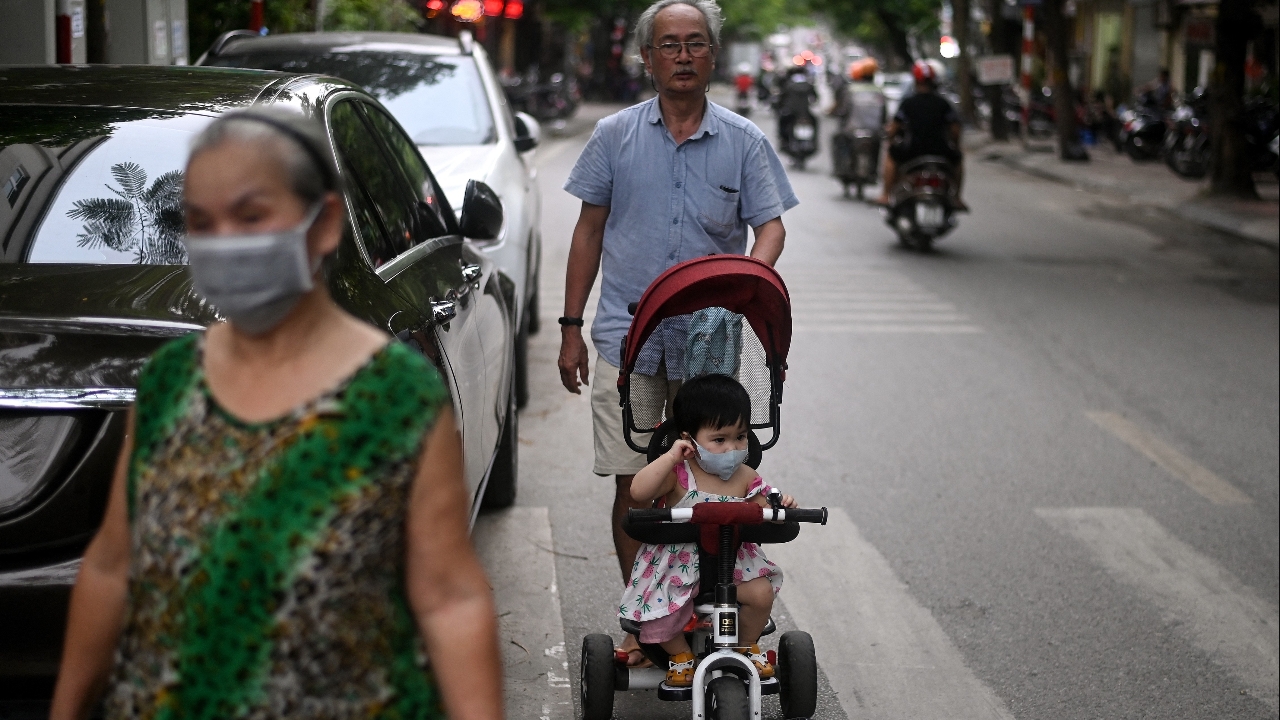
Vietnam has introduced new measures offering bonuses to encourage people to have children, following the repeal of a long-standing two-child limit policy amid concerns that the country is rapidly entering an aging society, affecting the economy and labor market.
These measures will take effect from 1 July 2026 under the new population law. Mothers having a second child will receive extended maternity leave from 6 to 7 months, along with health support and financial aid from the government.
Eligible individuals will receive benefits such as free prenatal and postnatal health screenings and a one-time bonus of up to approximately 228 US dollars, about two-thirds of the average monthly income of Vietnamese citizens.
Pham Thi Lan, head of the Population and Development Division at the United Nations Population Fund, said this marks a significant shift for Vietnam, moving from family planning control to focusing on population development.
Previously, members of the Vietnamese Communist Party with more than two children faced disciplinary sanctions until this rule was abolished last year.
Currently, Vietnam is experiencing a trend of increasing average life expectancy but a continuous decline in newborns, making it one of the fastest aging societies in the world.
Economists warn that if this trend continues, labor shortages may occur, increasing burdens on welfare and elderly care systems. Despite government cash incentives, many families remain reluctant to have more children.
Nguyen Kim Bic, 32, from Hanoi, revealed that although she is entitled to extended leave and financial support for having a second child, the high cost of raising children is still prohibitive. An extra month of leave and a small subsidy do not motivate her to have another child, as nearly half of her family's monthly income of about 1,000 US dollars is already spent on raising their first child.
However, experts view that Vietnam has not yet reached the severe population crisis levels seen in South Korea or Japan, but the government is beginning to take urgent steps before the working-age population declines sharply.
. Source:channelnewsasia
Click to read related newsForeign news