

A conflict monitoring organization revealed that the death toll from all sides in Myanmar's civil war has exceeded 100,000, more than five years after the February 2021 military coup. This has made it the most violent and intense conflict in Asia, with over 3.7 million people displaced internally.
The Armed Conflict Location & Event Data Project (ACLED), a global conflict monitoring agency, reported that since Myanmar's military overthrew the civilian government led by Aung San Suu Kyi in February 2021, the death toll linked to conflict-related violence has reached 100,114. This figure is compiled from media reports; although no official count exists and analysts believe the true number is higher, it clearly shows Myanmar's civil war is "the most violent and bloody ongoing conflict in Asia."
The military's brutal crackdown on protesters opposing the coup led many activists and youth to flee to the forests to form People's Defense Forces (PDF), armed groups loyal to democracy, who joined forces with long-standing ethnic armed groups opposing the central government.
ACLED states that there are currently more than 1,200 distinct armed groups involved in this war, making it "the most fragmented conflict in the world." Senior ACLED analyst Sun Man Than said the conflict has spread across every inch of the country and poses extreme danger to civilians. Last year, Myanmar ranked second worldwide for the highest impact from conflict, behind only the Palestinian territories.
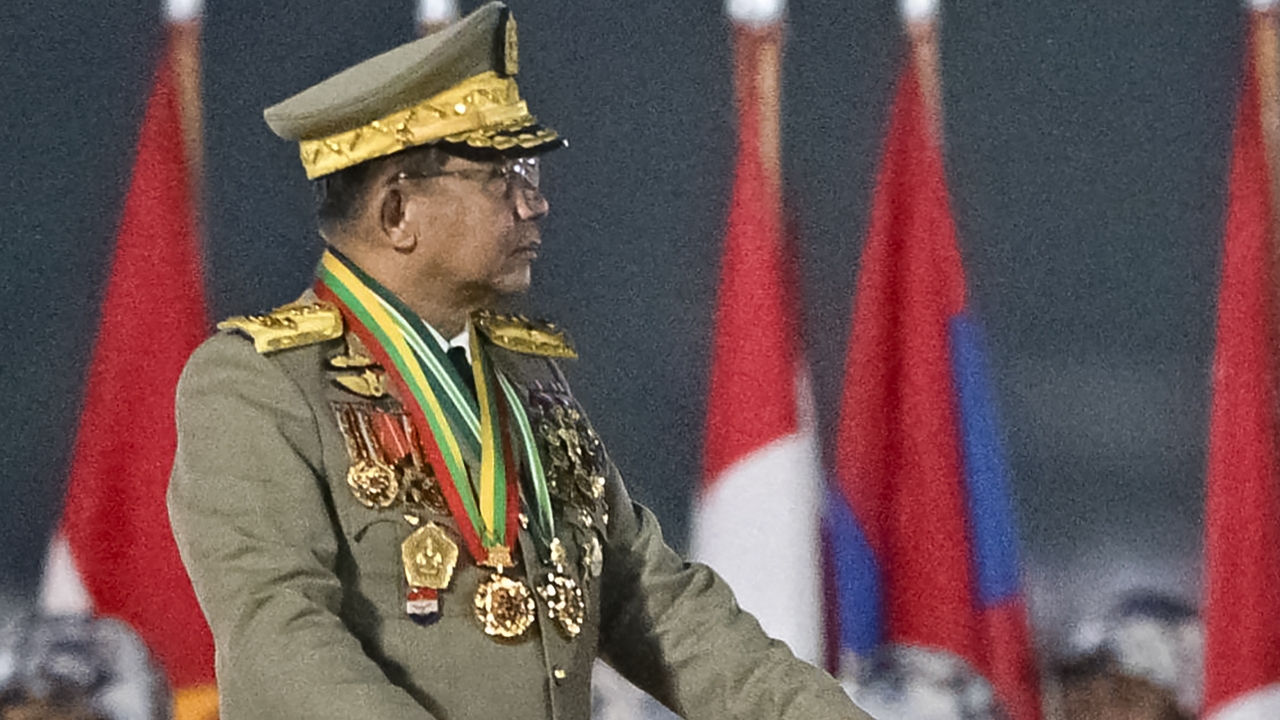
For the five years following the coup, Myanmar has been ruled under the dictatorship of Senior General Min Aung Hlaing, who recently retired from the military to assume the role of "civilian president" following a heavily restricted election that barred Aung San Suu Kyi’s party. Democratic observers have condemned the election as a "sham" designed to legitimize his power, while rebel groups have rejected peace talks, calling them mere public relations efforts on the international stage.
Although in late 2023, anti-military allied forces captured key territories and advanced close to Mandalay, Myanmar’s second-largest city, raising hopes of seizing the former capital, analysts now say the situation is turning back in favor of the military. This is due to China's support for the military and its role as a mediator in ceasefire talks with the two most influential ethnic armed groups.
To compensate for depleted forces, Myanmar’s military has enforced conscription laws, forcibly recruiting over 50,000 civilians. A former 20-year-old conscript who fled after being sent to the front lines revealed, "These conscripts can do nothing; it’s like they are being sent to die. If you don’t die in one battle, they send you to die in another."
This war’s effects extend beyond Myanmar’s borders, filling refugee camps in neighboring countries like Thailand and Bangladesh and turning the region into a hub for transnational crime.
All armed groups finance their arsenals through rapidly expanding drug trafficking of heroin and methamphetamines. Meanwhile, Myanmar's border areas have become centers for large "call center gangs and online scam operations" housed in fortified compounds guarded closely by armed groups.
For those remaining in Myanmar, the United Nations reports over 3.7 million internally displaced persons, with more than one in five facing critical food insecurity, as the country plunges swiftly into poverty.
/sourceAFP