

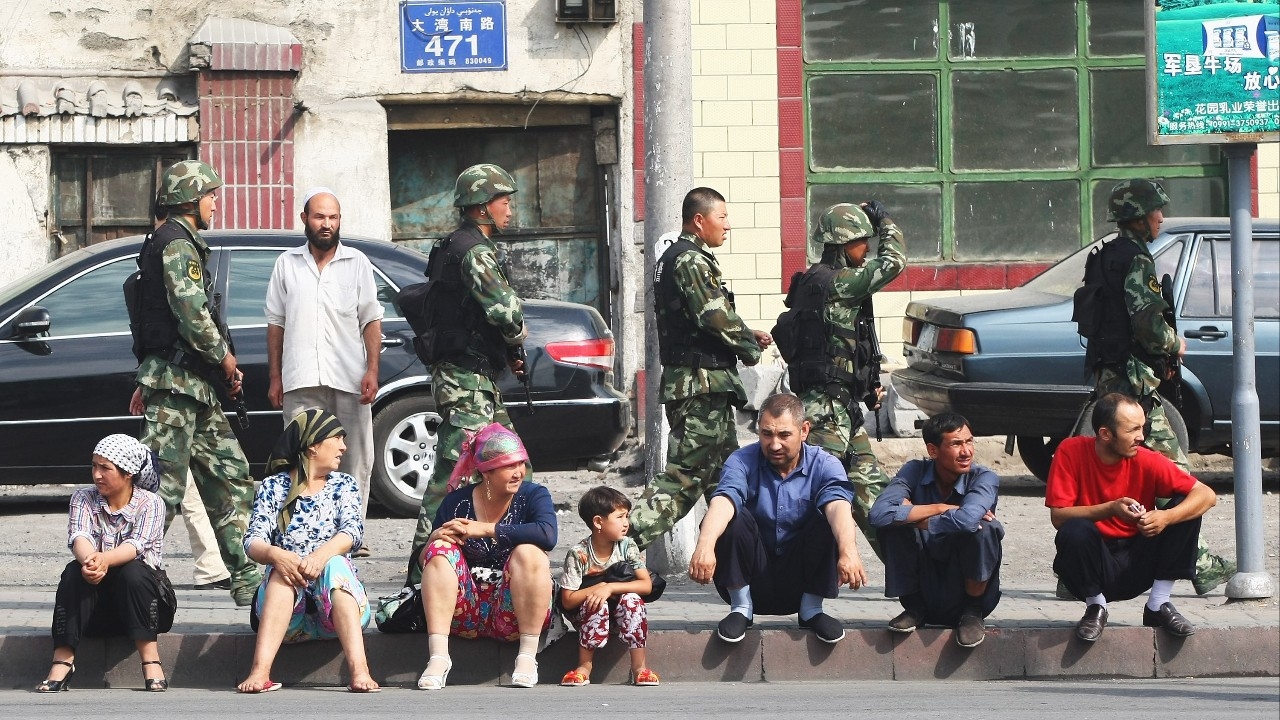
China's new law promoting ethnic unity and progress officially took effect on 1 July amid strong condemnation from the United Nations and human rights organizations. They warned the law could become a legal tool to systematically "assimilate" minority groups such as the Uyghurs and Tibetans. The law also includes provisions that enable the Chinese government to suppress critics of the Communist regime living abroad.
This Ethnic Unity and Progress Law primarily aims to forge a "shared national identity" among the country's various ethnic groups. The legal framework formalizes longstanding policies, such as elevating Mandarin Chinese to be the sole official language in education, state-run businesses, and public spaces.
Additionally, the law covers social cohesion measures, including preventing terrorism and separatism. China has historically used such justifications to crack down on ethnic groups in border regions that have their own distinct languages and cultures.
Amnesty International’s regional deputy director, Sarah Brooks, strongly criticized the law, describing it as institutionalizing a policy of "forced assimilation" under legal authority.
"Chinese authorities have a human rights obligation to protect minority communities and their cultures, but this law does the opposite," she said. "It does not celebrate diversity but forces ethnic groups like the Uyghurs, Tibetans, and Mongolians to accept a single national identity imposed by the state, dominated by Han Chinese culture, the country's majority group."
Brooks added that the term "unity" in this context does not mean harmony among communities but rather "conformity of thought and ideology with the Chinese Communist Party." Activities already risky in China—such as promoting minority languages, documenting human rights abuses, or campaigning for detainee releases—may now be increasingly criminalized.
One of the most concerning provisions for the international community is that individuals can be prosecuted for violating the law even if the alleged offense occurs outside China. Last week, Hu Weilian, a senior Chinese judicial official, defended this extraterritorial application as "legitimate, lawful, and necessary" to address actions or signals undermining unity or inciting separatism.
However, Volker Türk, United Nations High Commissioner for Human Rights, called for the immediate repeal of the law, warning it could "intensify restrictions on language, education, religious practice, culture, expression, and assembly." Meanwhile, Uyghur and Tibetan leaders urged countries to pressure China to abandon the law, which erases their identities.
Taiwan’s government strongly condemned the law’s enforcement. Taiwan’s Ministry of Foreign Affairs described it as an expansion of "intimidation and threats against the people of Taiwan and other countries." It warned that anyone from any country expressing views or actions displeasing to Chinese authorities could become targets under this law.
Taiwan’s Mainland Affairs Council (MAC), led by Liang Wenjie, issued a statement cautioning Taiwanese citizens about increased risks when traveling to China. They noted the law is full of "extremely vague legal concepts," allowing arbitrary interpretation—a hallmark of China’s Communist legal system. They said China would use the law to justify human rights crackdowns in Xinjiang and Tibet, and to silence international voices supporting or friendly to Taiwan.
Chinese authorities continue to deny all accusations of human rights violations against ethnic minorities, maintaining that their policies ensure internal security and equitable economic prosperity for all groups.
Source: AFP /Amnesty International