

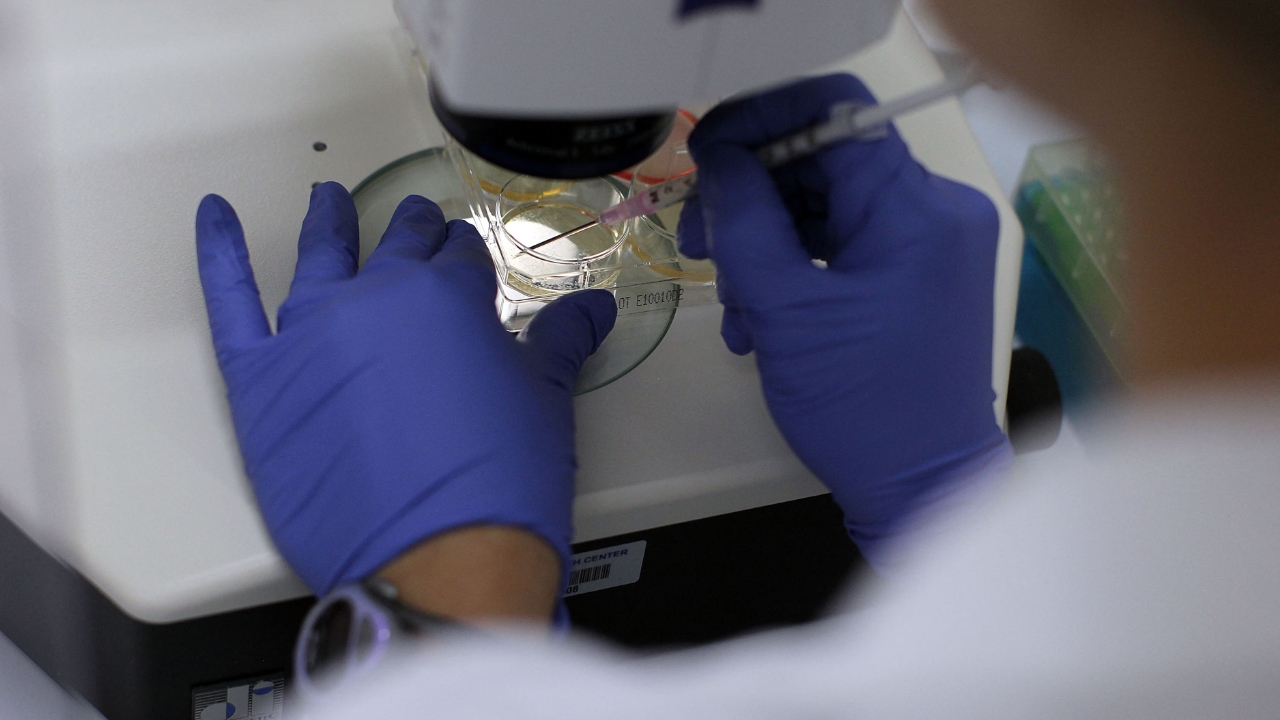
A team of scientists in the U.S. revealed that they have successfully created a new cell from scratch for the first time, marking a major advancement in synthetic biology.
On 1 Jul 2026 GMT+7, scientists announced they had created a new cell from scratch for the first time—a cell capable of obtaining nutrients, growing, and replicating itself like a natural cell. This represents a significant breakthrough in synthetic biology that could usher in an era of custom-designed living organisms.
Dr. Kate Adamara, a synthetic biologist and professor at the University of Minnesota, along with her team, assembled this cell piece by piece from non-living chemical components. Although this prototype cell has limitations and is fragile, it helps scientists better understand the origins of life and could eventually be programmed to address some of the world's most pressing biological challenges.
The newly assembled cell, which Dr. Adamara named “SpudCell,” has no specific classification—neither plant nor animal—but resembles a single-celled bacterium most closely.
“I know the complete list of ingredients in this cell. I know exactly what chemicals and molecules it contains and at what concentrations,” Dr. Adamara said. “Its structure is fully defined, which means we can engineer (modify) it.”
Cells are the fundamental building blocks of life, yet they are far from simple. The human body contains about 37 trillion cells—more than the number of stars in the sky—and scientists still do not fully understand how each cell type functions or what exactly is contained within them.
For decades, scientists have used genetic engineering on natural cells to solve human problems. A notable example is inserting the human insulin gene into E. coli bacteria to produce insulin for diabetes treatment.
Many scientists believe synthetic cells represent the next frontier. They could lead to new cancer treatments, innovative carbon capture methods, or novel chemical production techniques.
Yuval Elani, an associate professor of biochemical engineering at Imperial College London not involved in this research, said the synthetic cells created by Adamara and her team are not yet "life created in the lab," but they mark a "true milestone on the path to that goal."
“Creating a cell from scratch means you’re no longer constrained by the limitations and evolutionary baggage of natural biology. It opens possibilities to design systems and program them to do things that typical living cells either cannot do easily or cannot do at all,” Elani explained.
“From my perspective, this is a genuine breakthrough in the long effort to answer whether chemicals can be organized to operate so marvelously that we can start calling it ‘life.’”
It is important to note that synthetic biology is distinct from stem cell research, which reprograms and modifies existing cells obtained from biological resources.
Adamara and her colleagues publicly released a scientific paper detailing the SpudCell on Wednesday (1 Jul). Although the research has not yet been published in a peer-reviewed journal, Adamara said they plan to submit it for publication within this week.
According to Dr. Adamara, SpudCell consists of about 150 to 200 molecules. It can consume nutrients, grow, and replicate itself for about five generations. This complexity is far less than natural biological cells, which contain millions or even billions of molecules.
“It is a very fragile and weak living entity that currently does little beyond eating and occasionally dividing into daughter cells,” she said. Each generation requires food and takes about 12 hours to replicate at 30 degrees Celsius, whereas E. coli bacteria divide every 30 minutes.
Additionally, the genome of this synthetic cell is much smaller than that of natural cells, with only about 90,000 base pairs compared to E. coli’s 4.6 million base pairs. Although it can replicate like natural cells, this synthetic cell uses a different mechanism.
Natural cells rely on a cytoskeleton—a supporting framework that SpudCell lacks. Instead, SpudCell produces proteins that densely crowd near the cell membrane until the pressure forces the cell to split.
SpudCell cannot produce ribosomes—the key cell components for protein synthesis—on its own. It depends on ribosomes from E. coli bacteria supplied through its nutrient intake.
“This is only the beginning,” Adamara said. “It is a foundational framework we hope to build upon, and that is important because we now have a reasonable idea of how to develop it further.”
Follow international news:https://www.thairath.co.th/news/foreign
Source:cnn