

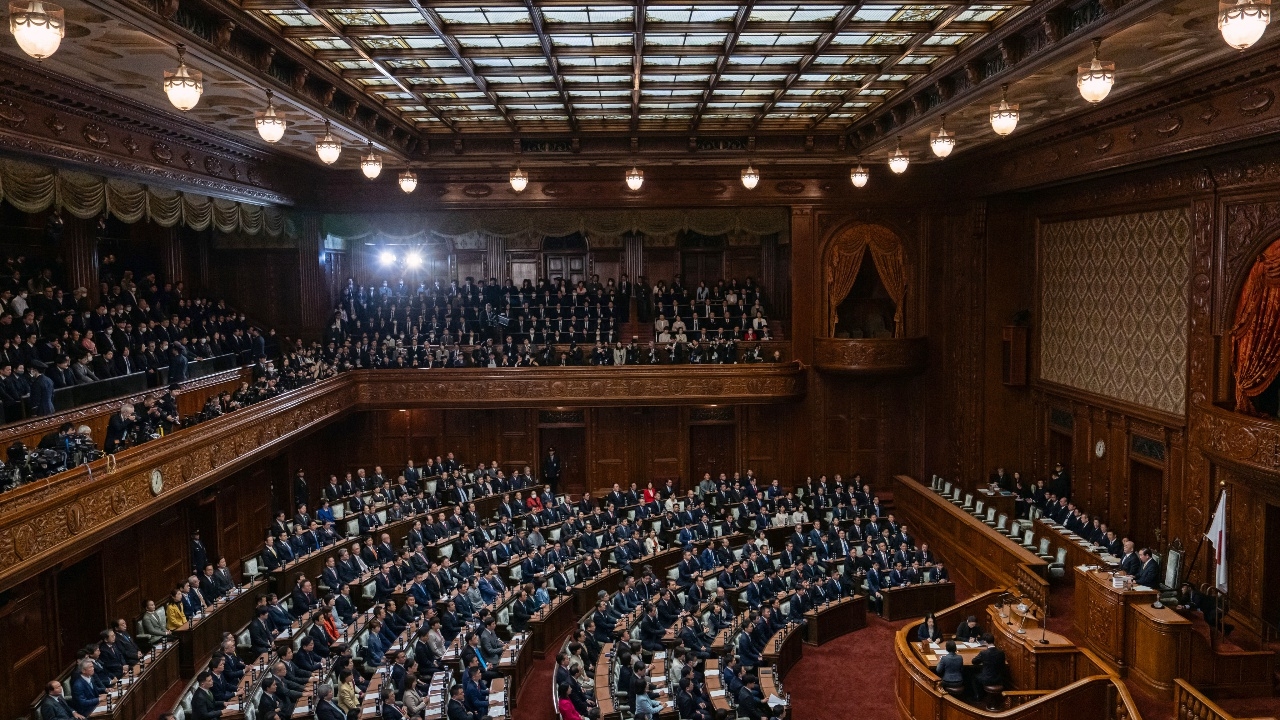
Japan's National Diet has approved adding only two more women's restrooms after a group of 58 female lawmakers united to file a complaint about long queues before sessions began. This reveals the legacy of an old parliament building constructed when women lacked voting rights, highlighting ongoing gender inequality in Japan's political arena, which remains behind global standards.
A female spokesperson for Japan's House of Representatives disclosed on Thursday that the National Diet plans to expand the women's restrooms near the main conference room by two additional units, increasing the total from two to four. Work will start immediately after the Diet session concludes on 17 July 2024 GMT+7. Officials are also considering plans to add more women's restrooms on other floors.
This move followed a petition signed by 58 female lawmakers from multiple political parties who submitted it to the House of Representatives' Rules and Administration Committee last December. They called for facilities to be allocated in proportion to the growing number of female lawmakers.
Yasuko Komiyama, a female lawmaker from the opposition Constitutional Democratic Party and one of the signatories, described the difficulty: "Before sessions start, many female lawmakers have to stand in long lines waiting in front of the restrooms every time."
Hideko Nishio, the sole woman on the parliamentary committee approving the restroom expansion, told local media she appreciates and welcomes this progress. Although a small change, it will help ease the shortage of women's restrooms for female lawmakers, parliamentary staff, and secretaries alike.
According to the Yomiuri Shimbun newspaper, the current House of Representatives building has 12 men's restroom locations comprising 67 individual units, whereas there are only nine women's restroom locations with a total of 22 units.
This structural inequality stems from history: Japan's National Diet building was completed in 1936, nearly a decade before Japanese women gained the right to vote. Women were granted suffrage in December 1945 following Japan's defeat in World War II, so the building was originally designed primarily to accommodate men.
Despite prominent female politicians like Sanae Takaichi, Japan's first female prime minister, signing the petition, gender equality in Japanese politics remains critical.
In the most recent House of Representatives election in February 2024 GMT+7, only 68 women were elected out of 465 seats, far below the government's target of at least 30% female representation.
Furthermore, the United Nations and the World Economic Forum's Global Gender Gap Report last year ranked Japan 118th out of 148 countries in gender equality. This imbalance extends beyond politics, with women underrepresented and lacking recognition in business and media sectors as well.
Additionally, many female candidates in Japan report frequently facing sexist remarks and criticism during campaigns, often told by some voters and society that "women should stay home to raise children rather than engage in politics." This restroom crisis in the Diet is merely the tip of the iceberg, reflecting Japan's deeply entrenched traditional gender roles in society.