

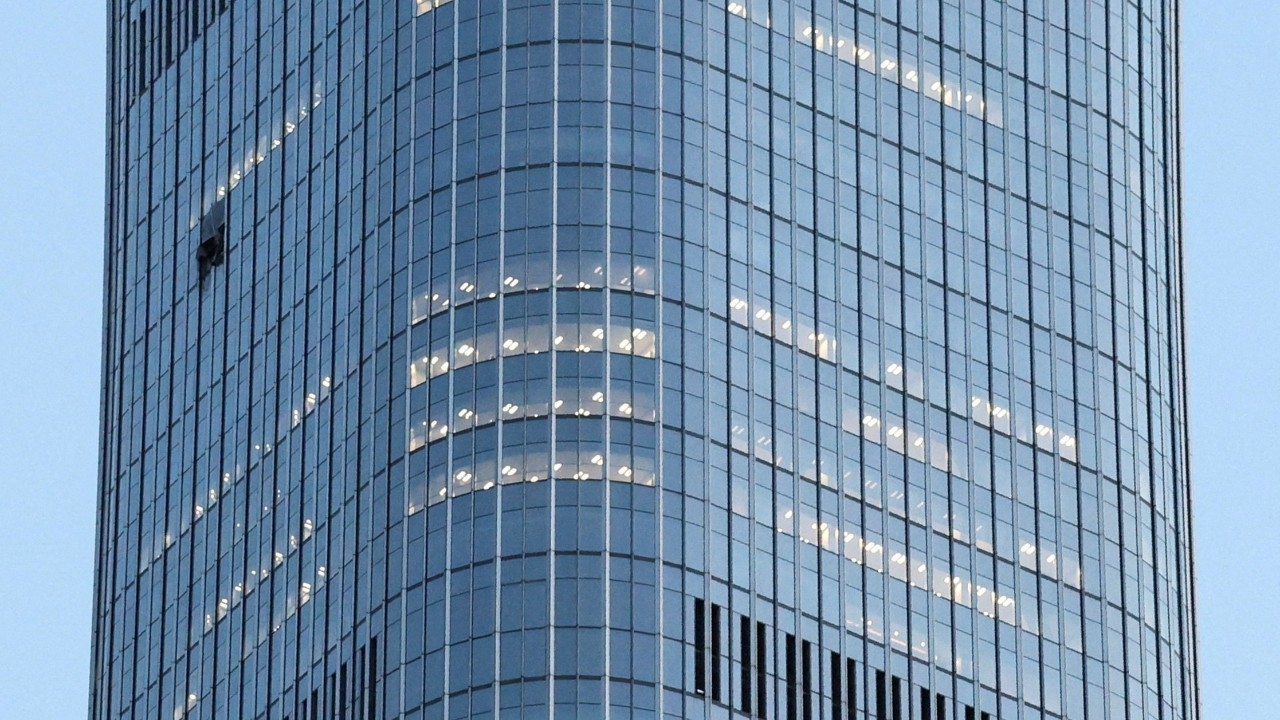
Beijing authorities have concluded the investigation into the small plane crash into the CITIC Tower, Beijing's tallest skyscraper, which injured 13 people and killed the pilot. They stated that the 66-year-old pilot suffered from insomnia and chronic anxiety, and that his personal diary contained multiple notes about ending his own life. The incident was ultimately attributed to personal issues of the pilot.
The Chaoyang District authorities in Beijing issued an official statement regarding the progress of the small aircraft crash into the CITIC Tower, also known as "China Zun," a 109-story skyscraper (528 meters tall), the tallest in China's capital. The crash occurred on Friday evening, 26 June, at approximately 17:55 local time.
In-depth investigation revealed that the pilot who caused the incident and died on the scene was a 66-year-old man residing in Beijing. Authorities identified him by the surname Liu, stating he was divorced, lived alone, and worked as a freelancer. The statement noted that Mr. Liu had long suffered from insomnia and anxiety disorders, and his diary contained numerous entries expressing despair and references to ending his own life.
The local government statement said, "After a comprehensive investigation, it was concluded that this incident was a public safety threat caused by personal problems of the perpetrator."
Reports indicated that Mr. Liu was quite skilled in aviation, having obtained a small aircraft pilot license in 2021 and recently acquired a Private Pilot License in 2024.
On the day of the incident, in the afternoon, Mr. Liu took off from a general aviation airport in the Pinggu suburban district of Beijing. Initially, he was flying under instructor supervision, then switched to solo flight. During the solo portion, he deviated from the designated area and suddenly lost contact with air traffic control before crashing violently into the upper floors of the skyscraper in Beijing’s central business district.
Flight tracking website Flightradar24 reported that the aircraft Mr. Liu was flying was an Aurora SA60L, a small single-engine propeller plane with two seats, manufactured by China's Sunward Aircraft Company. The plane measures 6.9 meters in length with an 8.6-meter wingspan and is designed for tourism, aerial photography, and recreational flying.
The impact explosion killed Mr. Liu instantly at the scene and injured 13 people inside the building and nearby. Latest reports indicate one injured person has been discharged from hospital. Witnesses reported debris falling and a small fire with smoke rising near the upper glass façade and the building's base.
The incident caused alarm and raised questions about Beijing's air security measures, as the CITIC Tower is only about 7 kilometers from Zhongnanhai, the central government compound and residence of senior Chinese Communist Party leaders. Many see this as a major security vulnerability.
Shortly after the incident, photos and videos of the plane crashing into the CITIC Tower, widely shared on Chinese social media, were swiftly removed by government censors. Even unrelated images and memes featuring the building, often considered a symbol of good luck locally, were deleted. Additionally, local police cordoned off the crash site, prohibiting journalists and the public from photographing the building’s damage.
Meanwhile, the BBC reported that at least three Chinese aviation companies disclosed they had received urgent central orders to temporarily suspend all small aircraft flights and operations during the ongoing investigation.
/BBC/ AFP