

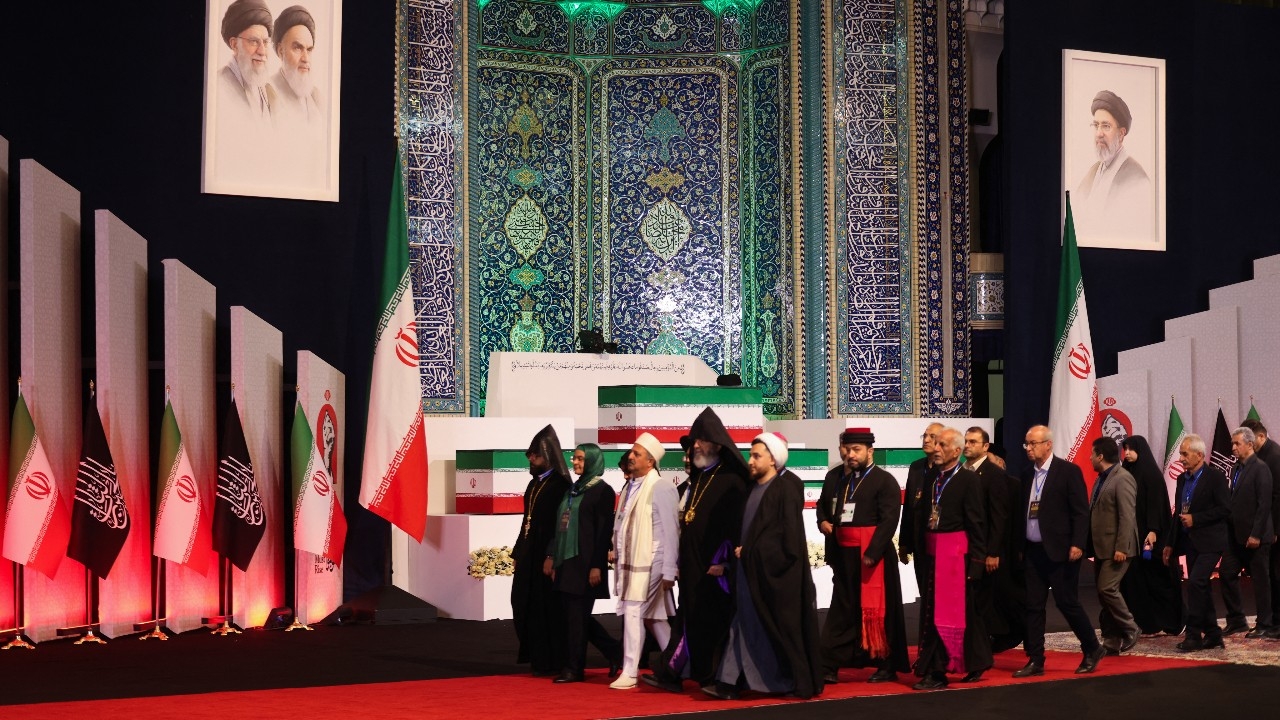
Iran has transferred the body of former Supreme Leader Ayatollah Ali Khamenei to the Mosalla Central Mosque in Tehran for an official funeral ceremony. He died following airstrikes by the United States and Israel. Security measures are being tightened, with expectations of 15 to 20 million participants, potentially making this the largest state funeral in Iran's history.
Iranian government media reported that the body of Ayatollah Ali Khamenei, Iran’s Supreme Leader who died at age 86 from airstrikes by the United States and Israel—events that triggered the Middle East conflict—arrived today (3 July) at Tehran’s Mosalla Central Mosque to prepare for the official funeral this weekend.
Preparations for the funeral were initially halted during the height of the war’s escalation but have resumed following a preliminary agreement and fragile ceasefire between Iran and the United States.
Mohammad Bagher Ghalibaf, Speaker of Parliament and chief Iranian negotiator, issued a statement urging all Iranians to participate in the ceremony to mark a glorious historical chapter and to raise calls for revenge worldwide. He predicted 15 to 20 million mourners, which, if realized, would be the largest state funeral in the nation's history.
Iranian authorities have arranged transportation, accommodation, and food, including hotel discounts of up to 50%, and converted schools, mosques, and gyms to accommodate the masses. The ruling religious leaders hope the sight of millions dressed in black will serve as a "referendum" affirming the strength of the theocratic regime and the Islamic Revolution, despite the existential threats posed by the war.
However, analysts point out that beneath the state’s portrayal of unity, public support for the regime is waning significantly. Many Iranians, especially younger generations, are exhausted by decades-long economic sanctions and resent the harsh crackdown on protests against inflation in December and January. Reports indicated that some Tehran residents quietly cheered upon initially learning of Khamenei’s death.
On Saturday, Khamenei’s body will lie in state for three days alongside family members who also died in the same attack: his daughter, son-in-law, granddaughter, and the wife of Mojtaba, the new Supreme Leader. Representatives and top leaders from over 30 countries, including Pakistan, China, Russia, Afghanistan, and nations from the Caucasus region, have confirmed attendance.
A key point of interest is whether Mojtaba Khamenei, the new Supreme Leader’s son who was seriously wounded in the attack that killed his father, will appear publicly at the main ceremony in Tehran, as he has not been seen in media since the war began.
Iranian authorities have declared a public holiday in Tehran and the holy cities of Qom and Mashhad, closing government and private offices in Tehran from Saturday through Monday. Traffic restrictions and partial airspace closures start Friday, with full airspace closure on Monday.
The state funeral schedule begins with mourning ceremonies at Tehran’s Mosalla Mosque on Saturday and Sunday, followed by a large funeral procession in central Tehran on Monday. On Tuesday, the body will be transported to Qom, the center of Iran’s Shia clerical establishment. Wednesday will see the body moved to the holy cities of Najaf and Karbala in Iraq, with participation from Iranian-backed regional militia representatives. The final procession and burial will take place on Thursday (9 July) at Imam Reza’s Shrine in Mashhad, Khamenei’s birthplace.
Security measures will be at their highest level throughout the events. The Iranian military has warned of immediate severe retaliation if the United States or Israel attempts to exploit the occasion to launch another attack.