

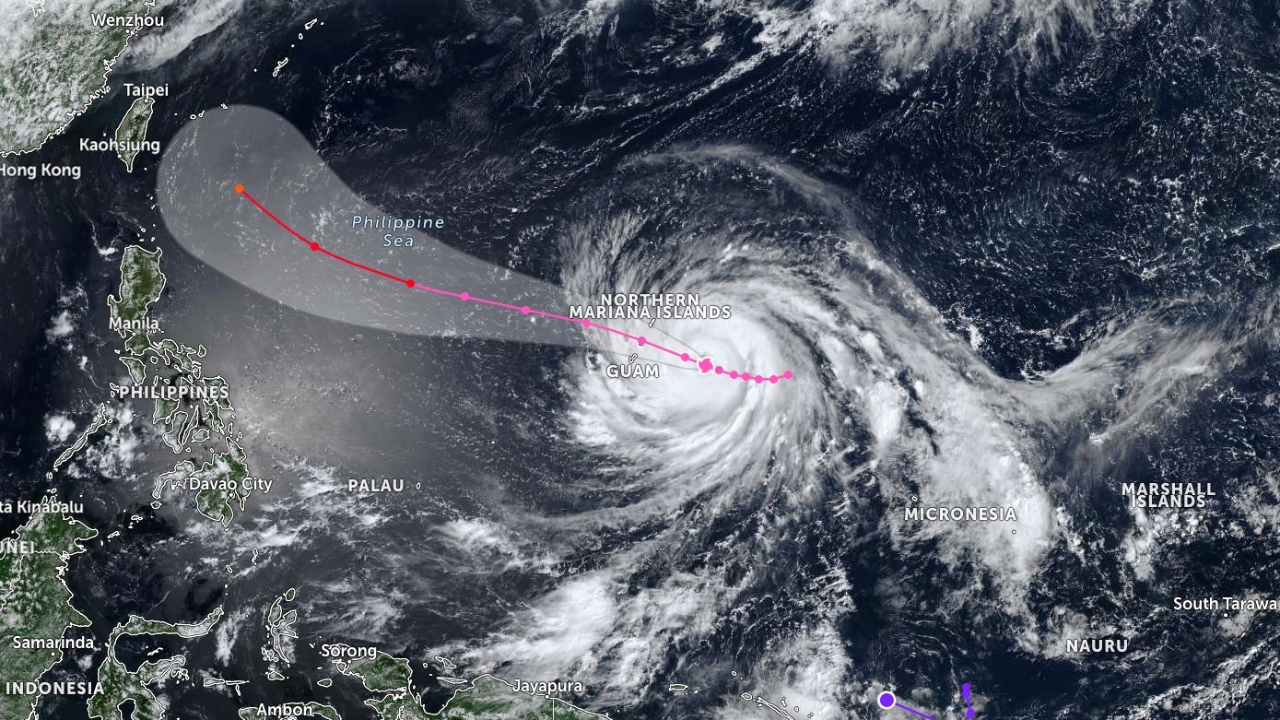
Residents of Guam and the Northern Mariana Islands, U.S. territories, are hastening evacuation to shelters and preparing for Super Typhoon "Bavi," which is moving into the area with maximum sustained winds of 260 kilometers per hour, equivalent to a Category 5 hurricane. The U.S. National Weather Service warns of potentially severe damage, flash flooding, and waves exceeding 10 meters.
People on Guam and the Northern Mariana Islands, U.S. territories in the Pacific Ocean, are rapidly evacuating to emergency shelters and preparing for Super Typhoon "Bavi," expected to pass through the area from Monday morning local time (6 July).
The U.S. National Weather Service describes Super Typhoon Bavi as "extremely dangerous," forecasting maximum sustained winds of about 260 kilometers per hour (160 mph), equivalent to a Category 5 hurricane, with peak gusts reaching 315 kilometers per hour.
Authorities warn that areas will begin experiencing tropical storm-force winds from Sunday afternoon to evening, with severe damage expected near the storm's center. Heavy rainfall, flash floods, storm surges, and waves approximately 10.7 meters high—comparable to a 10-story building—are forecast, posing significant risks to maritime navigation.
Pinky Kubakub, 55, a restaurant owner in Guam, said she rushed to buy plywood worth about 500 U.S. dollars on Saturday morning to board up her windows. "I can’t afford to lose income for several more days since I just started the business. The current earnings only cover rent, utilities, staff wages, and materials. I haven't even paid myself a salary yet," she said.
Arabella Paulino, 48, a customer service worker, said her daughter is frightened by the storm, but she believes their family will be safe because their home is concrete-built and any damage is likely limited to the windows. Meanwhile, Derma Soaladob, 51, a U.S. military school bus driver, said although her house is also concrete, she chose to stay in a hotel due to concerns about the wind noise and storm severity.
Miku Sakurai, a 25-year-old Japanese tourist scheduled to return to Tokyo on Sunday, revealed that her flight was canceled due to weather conditions, forcing her to stay in a hotel and wait for the storm to pass.
Latest reports indicate that Super Typhoon Bavi will pass near Rota Island, situated midway between Guam and Saipan, the main island of the Northern Mariana Islands. Rota Island has a population of approximately 1,500.
Aubrey Hokok, mayor of Rota Island, urged residents to follow official guidance, emphasizing that cooperation and preparedness will protect families and communities, and he prayed for everyone's safety.
The U.S. Federal Emergency Management Agency has deployed personnel to Guam and pre-positioned over 1.1 million liters of drinking water, 1.2 million ready-to-eat meals, 6,700 cots, and 90 generators to support emergency operations.
Guam authorities have opened five evacuation centers at various schools with a total capacity of about 1,900 people, focusing on assisting residents living in structurally weak homes. Meanwhile, the National Weather Service warned that "time for evacuation or seeking shelter is running out."
Super Typhoon Bavi follows the region’s experience with Super Typhoon "Cimaron" in mid-April, which caused power outages for tens of thousands, downed trees, overturned vehicles, and widespread roof damage. Additionally, the cargo ship MV Mariana suffered engine failure and capsized, resulting in one crew member’s death and five missing presumed fatalities.
Meteorologists attribute the increased intensity of tropical cyclones to record-high ocean temperatures and the development of the El Niño phenomenon. Warmer seas provide more energy for storms and cause heavier rainfall. The World Meteorological Organization has warned that El Niño has begun forming in the tropical Pacific Ocean and is likely to intensify over the coming months.
.AFP