

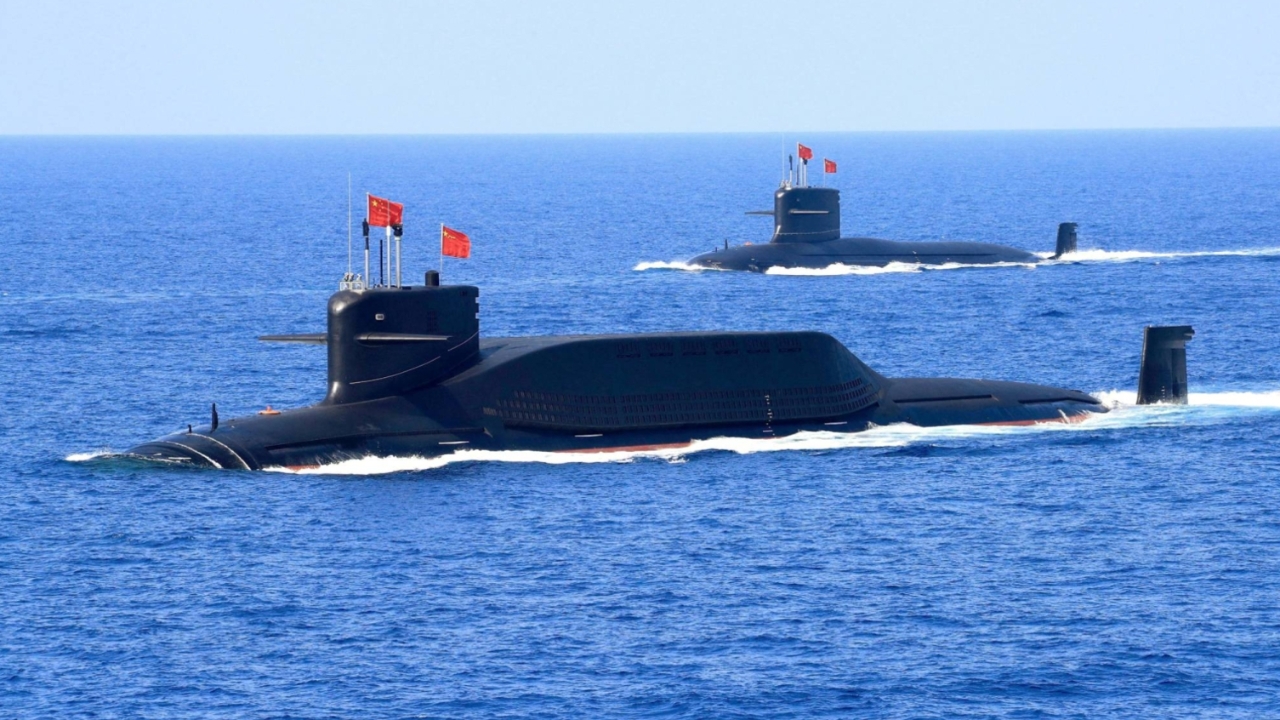
China announced the successful test launch of a strategic missile from a nuclear submarine into the Pacific Ocean, affirming it was an annual exercise with advance notification to relevant countries. However, this test has raised concerns among several regional countries, with Japan, Australia, and New Zealand expressing unease amid China's expanding military capabilities and nuclear arsenal.
The Chinese People's Liberation Army Navy stated today (6 July) that it successfully conducted a strategic missile test launch from a nuclear submarine into the Pacific Ocean, following earlier regional reports that China was preparing to test an intercontinental ballistic missile (ICBM) capable of carrying nuclear warheads.
This test represents a rare demonstration of military power in the South Pacific region, where the United States, Australia, and New Zealand have long-standing security alliances.
Wang Xueming, spokesperson for the Chinese Navy, said via the official WeChat account that at 12:01 local time, the strategic nuclear submarine of the Chinese Navy launched a strategic missile equipped with a simulated warhead for training purposes toward the open sea in the Pacific Ocean, landing accurately within the designated target area.
China confirmed that this test was part of its annual military exercises, with prior notification given to relevant countries, conducted in accordance with international laws and practices, and was not targeted at any specific country or objective.
The test launch coincided with the start of annual joint naval exercises between China and Russia off the coast of Qingdao, eastern China, although it remains unconfirmed whether the missile launch was part of these joint drills.
In recent years, China has accelerated the development of its nuclear weapons capabilities and steadily increased its defense budget. According to U.S. Department of Defense data from May 2023, China has over 500 deployable nuclear warheads, with projections to exceed 1,000 by 2030.
Prior to the official announcement, Papua New Guinea's Foreign Minister Justin Tkatchenko revealed he was personally notified by the Chinese ambassador about the missile test plans, while New Zealand government sources confirmed China had also given advance notice of the intercontinental missile test but did not disclose the missile's impact location.
In September 2024, China previously tested an intercontinental missile with a simulated warhead into the sea near French Polynesia, marking the first long-range missile launch through international waters in over 40 years. Analysts believe the missile was a Dongfeng-31, capable of carrying thermonuclear warheads.
The missile impact zone lies within a designated nuclear-weapon-free zone under international treaties, prompting close monitoring by various Pacific nations of China's activities.
The latest missile test immediately raised concerns among multiple regional countries. The Japanese government disclosed it received advance notification of the launch and requested China to consider halting such tests, expressing serious concern about China's increased military activity.
Additionally, Japan's Coast Guard was informed by Chinese authorities on Sunday that debris from space object releases might fall within Japan's exclusive economic zone, although later Kyodo News, citing government sources, reported that the missile did not fall in the said area.
Australian Foreign Minister Penny Wong stated that although Canberra was notified in advance, the test contributes to regional instability, emphasizing that China's military build-up lacks the transparency and confidence-building measures expected by countries in the region.
New Zealand Foreign Minister Winston Peters said the government was notified only a few hours before the test launch and views the use of the South Pacific as a missile testing ground as a concerning and undesirable development, echoed by other Pacific island nations.
The Pacific region remains sensitive to nuclear issues, as many countries have been affected by nuclear weapons testing by major powers in the decades following World War II.
Meanwhile, China continues to expand its influence in the Pacific through investments in infrastructure such as hospitals, roads, and stadiums, drawing close international scrutiny of Beijing's military activities in the area.