

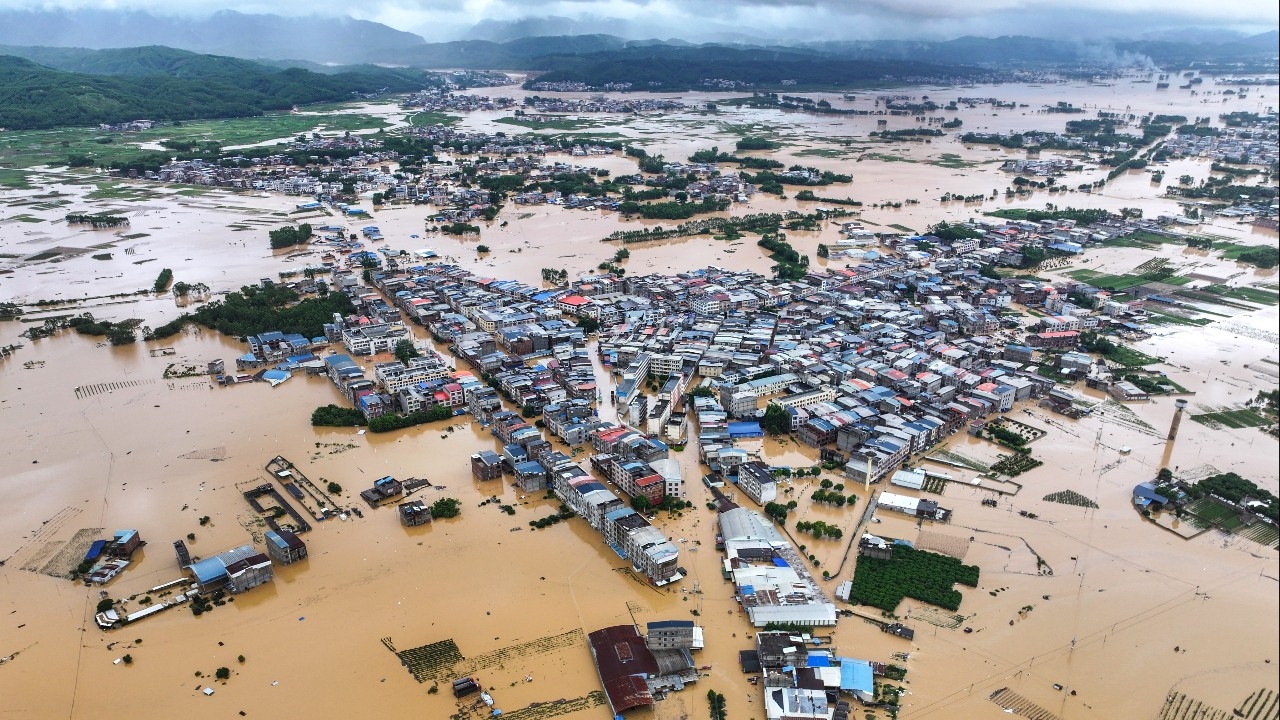
China has been experiencing continuous severe weather in its central and southern regions, including thunderstorms, strong gusty winds, flooding, and landslides. These events have caused at least 15 deaths and 275 injuries. Meanwhile, over 48,000 people in Guangxi have been evacuated due to flooding, and a landslide in Gansu province buried 33 residents, with rescuers having already saved 17.
Chinese media reported a major natural disaster across multiple regions on Monday and Tuesday (6-7 July), where many areas faced severe unstable weather including thunderstorms, strong winds, tornadoes, and mudslides. These events caused numerous deaths and injuries and heavily damaged infrastructure and agricultural land.
CCTV and Xinhua News Agency reported that on Monday evening, thunderstorms and strong gusts reaching speeds of up to 149 kilometers per hour struck several cities in Hubei province in central China, including Huangshi, Huanggang, Ezhou, and Xianning, all within just four hours.
This disaster resulted in at least 11 deaths and over 275 injuries in Hubei province, particularly in the Huangzhou district of Huanggang city. Tornadoes were also reported in some areas, with one person missing. Local authorities urgently evacuated over 408 people to safe zones, and rescue teams continue intensive relief efforts.
Meanwhile, in the Guangxi Zhuang Autonomous Region in southern China, the influence of Tropical Storm Maysak caused critically heavy rainfall across Nanning, Guangxi's capital, from 4 to 6 July.
Wei Jiang, Vice Mayor of Nanning, stated at a press conference Monday evening that the extreme rainfall caused the Liulan and Yunpiao reservoirs in Hengzhou city to overflow, resulting in dam breaches. This unleashed a massive mudflow that severely flooded Yunpiao city and surrounding areas, submerging many homes and vehicles. Four people have died from the floods, and around 55,000 residents were affected. Authorities successfully evacuated about 48,000 at-risk residents in advance.
Due to the severity of the situation, China's Ministry of Water Resources elevated the emergency response level for flood control in Guangxi from Level 3 to Level 2. Simultaneously, the Ministry of Emergency Management dispatched more than 150,000 relief items to affected areas including Guigang and Fangchenggang cities in Guangxi.
In addition to flooding and storms in the south, a severe landslide occurred around 06:56 a.m. Tuesday in a village in Nanhe Township, Tanchang County, Longnan City, Gansu province in northwest China. Local authorities estimate that 33 villagers were buried under the mudslide. Rescue teams have so far saved 17 survivors and are intensifying efforts to find the remaining missing.
China's National Meteorological Center also warned that southeastern and eastern provinces, such as Jiangsu and Shandong, should prepare for rainfall up to 260 millimeters within the next 24 hours, increasing landslide risks. Northeastern and southern areas also face tornado threats. This new round of unstable weather could impact more than 200 million people in high-risk zones and severely damage key crops awaiting harvest, including corn, peanuts, and vegetables.
Furthermore, China is monitoring Super Typhoon Bavi as it moves across the Pacific Ocean toward Taiwan. The U.S. National Weather Service reported that the typhoon reached maximum wind speeds of 290 kilometers per hour as it passed Guam and the Mariana Islands last Saturday.
Scientists and meteorologists warn that the intensity and frequency of these extreme weather events are direct effects of climate change caused by rising global temperatures from greenhouse gas emissions. These natural disasters are causing economic losses to China worth tens of billions of dollars annually, amid China's efforts to achieve carbon neutrality by 2060.