

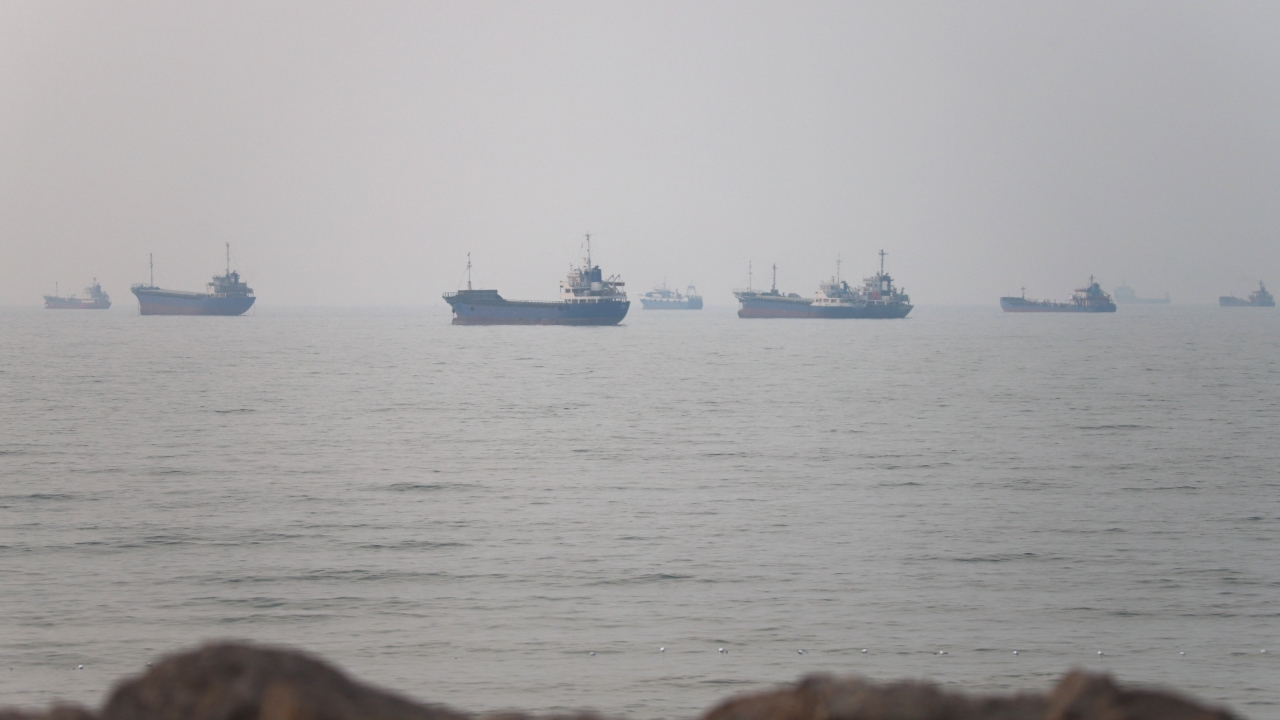
Iran attacked three commercial vessels near the Strait of Hormuz, including a Qatari ship. U.S. officials condemned the attacks as a serious violation of the MOU, while Qatar summoned the Iranian ambassador to protest.
U.S. officials revealed that Iran fired on three commercial ships in Omani waters near the Strait of Hormuz on Tuesday, 7 July 2026, constituting a serious breach of the Memorandum of Understanding (MOU) between the U.S. and Iran.
The U.S. official added that the United States has various retaliatory options for Iran's violation of the agreement and is currently considering all possible measures.
On Tuesday, Qatar's Foreign Ministry announced that the "al-Rakiyat," a Qatari-flagged liquefied natural gas (LNG) tanker, was passing near the Strait of Hormuz when it was attacked.
Qatar blamed Iran for the attack, condemning it as a clear and serious violation of international law and demanded Tehran immediately cease all actions affecting regional security or threatening the safety of international navigation.
“We hold Iran fully legally responsible for this attack, including any resulting damage or consequences,” the ministry added, summoning the Iranian deputy ambassador to present a formal protest letter.
Meanwhile, the UK Maritime Trade Operations center (UKMTO) reported the attack at 01:19 a.m. Gulf time on Tuesday. The Qatari vessel was about 8 nautical miles east of the Omani city of Lima when attacked, causing a fire onboard but no injuries or fatalities.
Earlier, Iran's semi-official Fars News Agency cited anonymous sources reporting that a Qatari oil tanker was attacked while passing through the Strait of Hormuz "after ignoring multiple warnings."
The attack occurred hours before U.S. President Donald Trump departed for the NATO summit in Ankara, Turkey, where leaders were expected to discuss security in the Strait. At the same time, Iran was holding funeral ceremonies for former Supreme Leader Ali Khamenei, who died in an attack involving the U.S. and Israel.
Tehran has temporarily suspended permanent peace talks with the U.S. during the funeral of Ayatollah Ali Khamenei, the former Supreme Leader who died in a U.S.-Israel attack on 28 February, marking the start of the Middle East conflict. The funeral ceremonies will continue throughout the week.
On Monday, 6 July, U.S. President Donald Trump told reporters that the U.S. would choose either to reach an agreement with Iran or to "deal with the matter conclusively."
On Tuesday, Iranian Foreign Minister Abbas Araghchi posted on X that final agreement negotiations "will not begin if threats and intimidation continue," citing clause 13 of the MOU, which requires both parties to meet certain conditions before starting final deal talks.
Follow international news:https://www.thairath.co.th/news/foreign
Source:cnn