

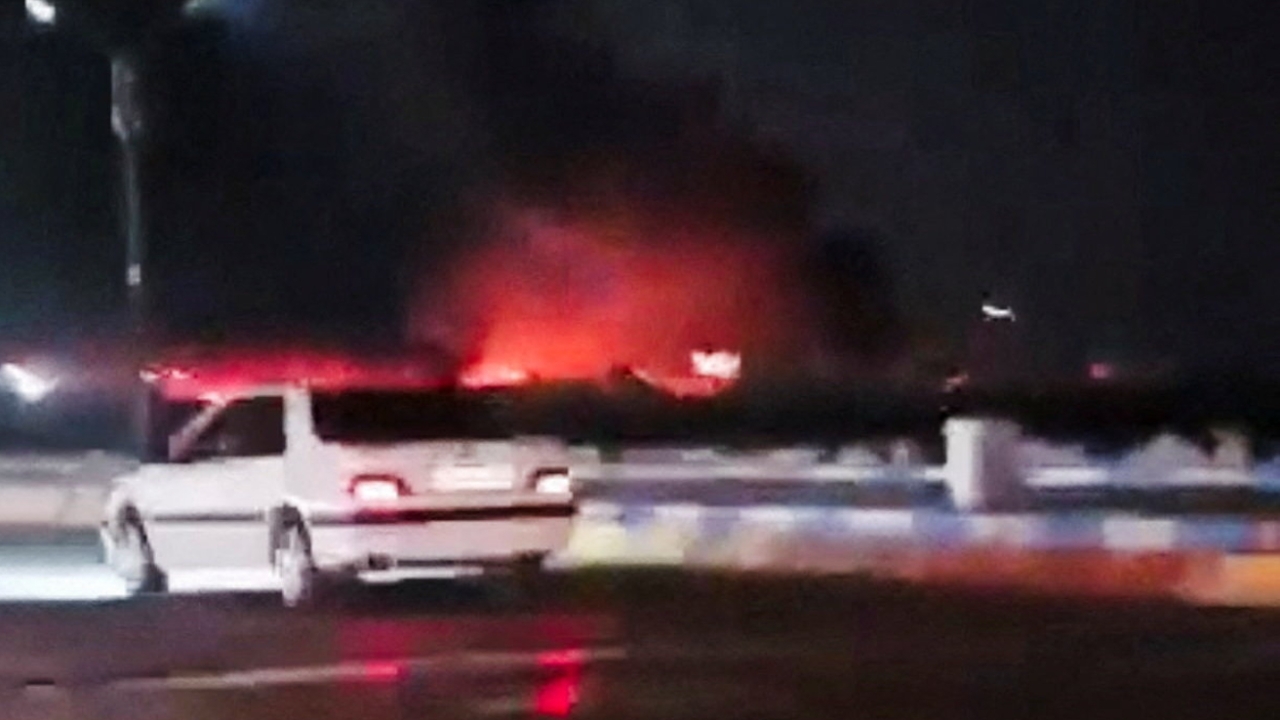
Tensions in the Middle East have escalated again after Iran launched attacks on U.S. military bases in Bahrain and Kuwait in retaliation for U.S. military strikes targeting Iranian military assets following attacks on oil tankers in the Strait of Hormuz. This caused global oil prices to surge over 3%, amid concerns that the ceasefire agreement between the two countries could collapse.
Iran's Islamic Revolutionary Guard Corps (IRGC) announced a joint operation using missiles and drones to attack U.S. military bases and facilities in the Persian Gulf region, including the U.S. Naval Forces Fifth Fleet base in Bahrain and Ali Al Salem Air Base in Kuwait. They also claimed to have shot down a U.S. MQ-9 surveillance drone during the operation.
Following the attacks, sirens sounded in Bahrain and Kuwait, while Kuwait's military stated that its air defense systems intercepted the threatening missiles and drones. Official reports on damage and casualties have not yet been released.
Previously, the U.S. launched strikes on multiple military targets in Iran in response to attacks on three oil tankers in the Strait of Hormuz. The U.S. also revoked temporary permits allowing Iran to export oil to the global market. The U.S. Central Command (CENTCOM) stated that these operations targeted more than 60 small armed vessels of the IRGC, along with air defense systems, coastal radar installations, surface-to-air missiles, anti-ship missiles, and drone launch bases, aiming to increase Iran’s military costs related to attacks on shipping lanes.
Iran’s Central Command of Quds forces condemned the U.S. attacks as "blatant aggression," declaring it would respond with severe measures. They also affirmed they would not allow U.S. interference in managing the Strait of Hormuz, one of the world's most critical oil shipping routes.
Meanwhile, Mohammad Bagher Ghalibaf, Speaker of Iran’s Parliament, accused the U.S. of violating the ceasefire agreement through military attacks, reinstating sanctions on Iran’s oil exports, and other actions Iran views as breaches of the agreement. He emphasized, "The era of intimidation and coercion has ended."
Iranian media reported multiple explosions on Kharg Island, the country's main crude oil export hub, as well as on Qeshm Island, Sirik city, and Bandar Abbas port city. U.S. officials stated the attacks specifically targeted military infrastructure, not oil production facilities directly. Iran claimed no civilian deaths but acknowledged injuries caused by shrapnel at the commercial port in Sirik.
This renewed tension follows the fragile temporary ceasefire between the U.S. and Iran agreed upon last month, intended to last 60 days and pave the way for permanent peace talks. However, indirect negotiations held last week in Qatar failed to make progress.
The situation worsened after the U.S. government revoked Iran’s licenses to sell oil on the global market and set a deadline of 17 July to end all transactions. This caused crude oil prices worldwide to jump over 3%, amid fears that the conflict could disrupt energy shipments through the Strait of Hormuz.
Separately, Qatar accused Iran of being behind attacks on several commercial ships in the Strait of Hormuz, including Qatar’s liquefied natural gas tanker Al Rayyat, which suffered an engine room fire after a drone attack, and a Saudi-flagged crude oil tanker damaged off the coast of Oman. Iran denied involvement and stated it continues to comply with the ceasefire agreement.
U.S. President Donald Trump repeatedly warned of renewed airstrikes if Iran failed to reach a permanent agreement. Meanwhile, Iranian Foreign Minister Abbas Araghchi stated that long-term negotiations cannot begin if the U.S. continues to use intimidation and military force.