

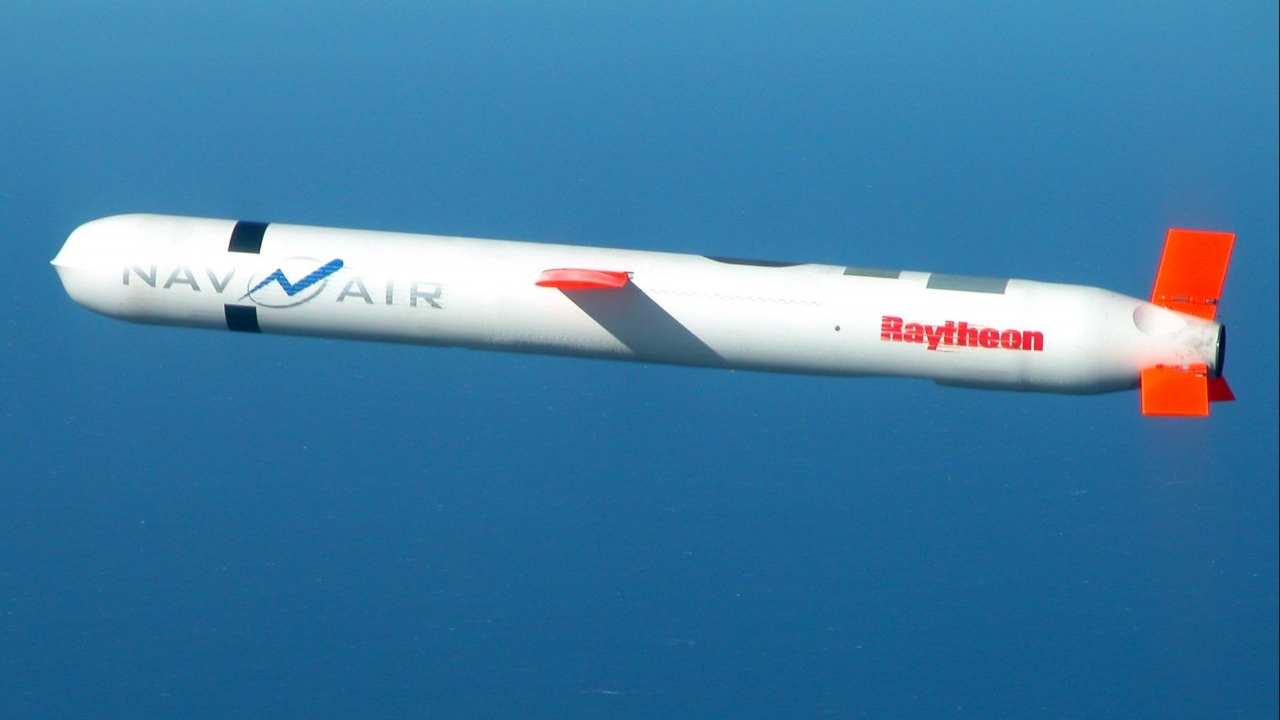
Friedrich Merz, Germany's Chancellor, revealed that the U.S. has approved the sale of long-range "Tomahawk" cruise missiles to Germany after reaching an agreement during the NATO summit in Turkey. He stated this would strengthen national defense capabilities and close strategic gaps amid concerns over threats from Russia.
Chancellor Friedrich Merz announced to members of the Bundestag today (9 Jul) that Germany has reached an agreement with the U.S. government outside the NATO summit in Ankara to purchase long-range "Tomahawk" cruise missiles for official deployment in Germany.
"We have finalized an agreement with the American government that the U.S. Tomahawk missiles will be purchased by us and stationed in Germany," said Chancellor Merz. "This move will close a critical strategic gap in our national defense system, while we will continue to develop European weapons systems for deployment on the continent."
This purchase agreement marks a turnaround after Chancellor Merz previously indicated in May that plans to deploy Tomahawk missiles in Germany—initiated under former President Joe Biden in 2024—might be canceled due to U.S. stockpile depletion from supporting wars in Ukraine and Iran. Additionally, a sharp dispute between Merz and President Donald Trump over the Iran war led Trump to criticize Merz's leadership as "very poor." However, recent negotiations revived the deal as a new option.
Germany's Ministry of Defense stated that deploying Tomahawk missiles, which have a range of 1,600 to 2,500 kilometers and are usually launched from submarines or warships, on land aims to establish an effective deterrent capability against threats from Russia.
Back in 2024, German authorities expressed serious concerns after Russia stationed "Iskander" missiles capable of carrying nuclear warheads in the Kaliningrad region, deployed fighter jets with hypersonic "Kinzhal" missiles, and announced plans to install nuclear weapons in Belarus. With a range reaching 2,000 kilometers, Russia's weapons pose a significant threat to Western Europe, prompting NATO to consider proportionate countermeasures.
Currently, European NATO allies lack their own medium-range weapons. Thus, purchasing Tomahawk missiles from the U.S. is a short-term measure to fill this gap. Meanwhile, European countries have jointly launched the European Long-Range Strike Weapon program (ELSA), initiated at the 2024 Washington summit, for medium- and long-term development.
The ELSA project is a collaboration among several European allies to research and develop long-range, high-precision guided cruise missiles exceeding 2,000 kilometers to strike high-value strategic enemy targets and reduce future reliance on U.S. military technology.
The mid-range weapons crisis in Europe reignited after the 1987 Intermediate-Range Nuclear Forces (INF) Treaty, signed by former Presidents Ronald Reagan and Mikhail Gorbachev to ban ground-launched missiles with ranges between 500 and 5,500 kilometers, collapsed in 2019. The U.S. and NATO accused Russia of violating the treaty by developing a new missile, the 9M729, which led the U.S. to withdraw from the agreement.