

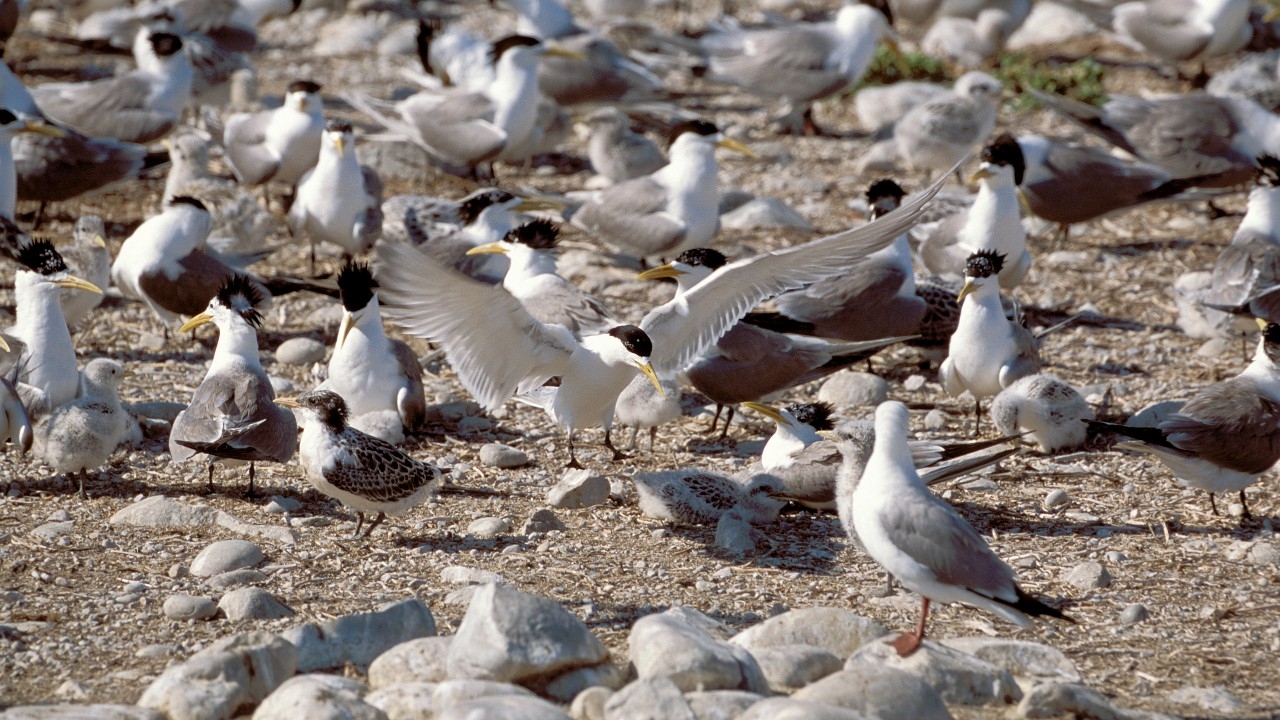
Australian authorities have confirmed the presence of the H5 strain of avian influenza in the Greater Crested Tern, a native seabird, marking the first such detection. Previously, the virus had only been found in migratory birds. Experts warn this could cause severe damage to wildlife if it begins to spread naturally, but emphasize it has not yet affected poultry farms and the risk to humans remains low.
The Australian government issued a statement confirming the detection of the dangerous H5 avian influenza virus in a native seabird for the first time, signaling a significant warning for the country's ecosystem and wildlife. Until now, all detections had been limited to migratory birds arriving from the sub-Antarctic region.
Julie Collins, Australia's Minister for Agriculture, revealed that test results from the Commonwealth Scientific and Industrial Research Organisation (CSIRO) laboratory confirmed the presence of H5 avian influenza in a Greater Crested Tern found in Robe, along the Limestone Coast in southeastern South Australia. A concerned citizen spotted the bird and reported it via the emergency animal disease hotline.
Additionally, two more infected cases were confirmed in South Australia and one more in Western Australia, bringing the total confirmed cases in the country to 12. Authorities are also awaiting test results for a suspected case in Western Australia.
The Agriculture Minister noted that the Greater Crested Tern is a native seabird whose coastal habitat overlaps with migratory seabird routes, making it highly likely to have contracted the virus through contact or interaction during foraging. However, she confirmed there is currently no evidence of mass wildlife deaths locally, nor any spread to agricultural systems or commercial poultry farms. Local governments are intensifying surveillance efforts in the affected areas.
Dr. Carol Booth from the Invasive Species Council expressed deep concern, stating that this virus strain is highly contagious. It can spread not only through contaminated water or close contact among birds but also to predatory birds and mammals that scavenge carcasses, such as cats, dogs, foxes, and even the Tasmanian devil.
Previously, in South America, the H5 virus caused the deaths of tens of thousands of sea lions and elephant seals. Dr. Booth warned, "Once it becomes fully established in local wildlife populations, the chances of controlling it are nearly zero, and vulnerable rare species, such as the orange-bellied parrot with fewer than 100 individuals remaining in the wild, could be wiped out entirely."
Meanwhile, Morin Christie, an official from the coastal bird conservation group Friends of Shorebirds SE, tearfully stated, "We have warned for years that this is not a question of 'if' but 'when,' and it is heartbreaking that the day has finally come." She called on authorities to urgently install warning signs and educate the public along beaches, similar to past environmental crises.