

Typhoon "Bavi," expected to be the largest storm approaching Taiwan in over 30 years, has brought heavy rains causing landslides in the Philippines, resulting in at least 15 deaths and 6 missing persons. Meanwhile, Taiwan is evacuating more than 2,000 people, closing schools, canceling hundreds of flights, and preparing military forces to respond.
The monsoon trough influenced by Typhoon "Bavi" caused landslides in southern Philippines, killing at least 15 and leaving 6 missing. Taiwan and southern Japanese islands have ordered school closures, canceled many flights, and evacuated over 2,000 residents.
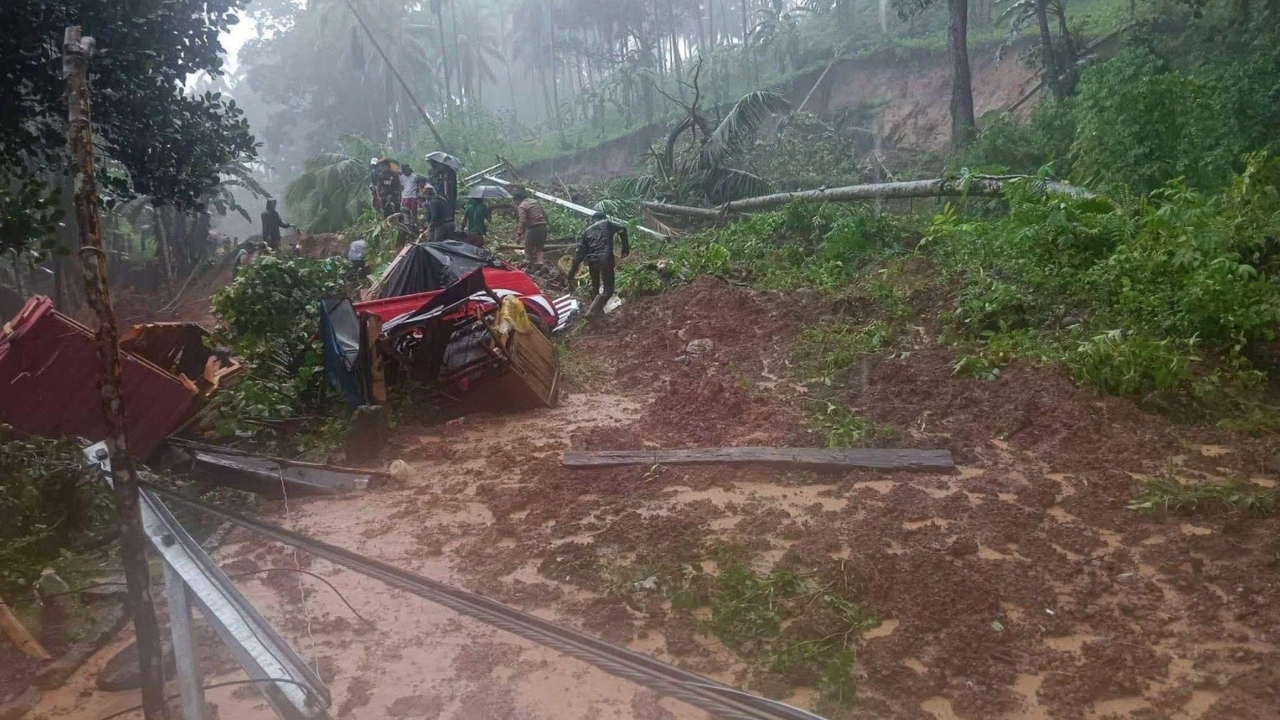
Philippine authorities reported that accumulated rain from the storm caused two severe landslides on Mindanao Island in southern Philippines, confirming at least 15 deaths and 6 missing individuals, with rescue teams urgently conducting search operations.
In Malapatan city, Sarangani province, a landslide buried a house where two families were sleeping, killing at least 8 people. Rescue workers are searching for 2 missing persons after a landslide in Blissong Fundao village. Meanwhile, about 100 families in the same city were evacuated due to flooding before dawn. Additionally, at least 5 died and 6 are missing from a landslide in Calanogas, Lanao del Sur province.
Rescue teams have yet to determine the number of homes affected by landslides in Ngingir village, where some roads are impassable. Earlier, the Philippine Weather Bureau warned of moderate to heavy rain expected from Friday to Sunday in western areas, with reports indicating severe flooding could force evacuations, damage agriculture, homes, and infrastructure, disrupt schooling and work, halt land, sea, and air travel, and increase risks of waterborne and insect-borne diseases such as leptospirosis and dengue fever. Heavy rains may also cause landslides, rockfalls, and blocked mountain roads.
Taiwan's Meteorological Department reported that Typhoon Bavi slightly weakened after passing Guam, currently with maximum sustained winds near the center at 155 kilometers per hour and gusts up to 190 kilometers per hour. However, the most concerning feature is the storm's vast wind radius of 380 kilometers, making it the largest typhoon to strike Taiwan in over 30 years.
Taiwan authorities have closed schools, government offices, and nearly all businesses in the northern and eastern regions, canceling hundreds of flights. Over 2,000 people have been evacuated, especially in mountainous areas like Hualien city, where officials are closely monitoring a natural dam due to forecasts of up to 1,000 millimeters of rain, increasing the risk of flash floods and landslides.
In Keelung city, the northern port expected to be heavily affected, residents rushed to stock up on supplies. Vendors and fishermen hastened to place sandbags in front of shops, secure items with nets, and cover outdoor statues with ropes to protect against strong winds. Authorities warned people to stay away from the coast due to expected waves as high as 9 meters.
Taiwanese President Lai Ching-te issued a statement urging residents in vulnerable areas to maintain the highest level of vigilance. He ordered the military to prepare over 28,000 personnel, along with rescue machinery and vehicles, to be on standby for emergency response around the clock.
Not only Taiwan but also Japan’s Sakishima Islands and Okinawa in the south have begun feeling the effects. Some schools and offices have been temporarily closed. Water-based tourism operators report that all weekend bookings and activities have been canceled, causing significant economic damage.
According to forecast tracks, after Typhoon Bavi passes southern Japanese islands and skirts northern Taiwan, it is expected to move toward eastern China this weekend, potentially worsening the critical flooding situation there. China recently experienced severe storms causing at least 39 deaths and a dam failure.
Scientists from the European Union’s Copernicus Marine Service state that the climate crisis, which has raised ocean temperatures to record levels, combined with this year’s return of the El Niño phenomenon, has accelerated the rapid intensification of tropical cyclones. These conditions enable storms to hold vast moisture amounts, creating severe thunderstorms and widespread damage, as currently observed.