

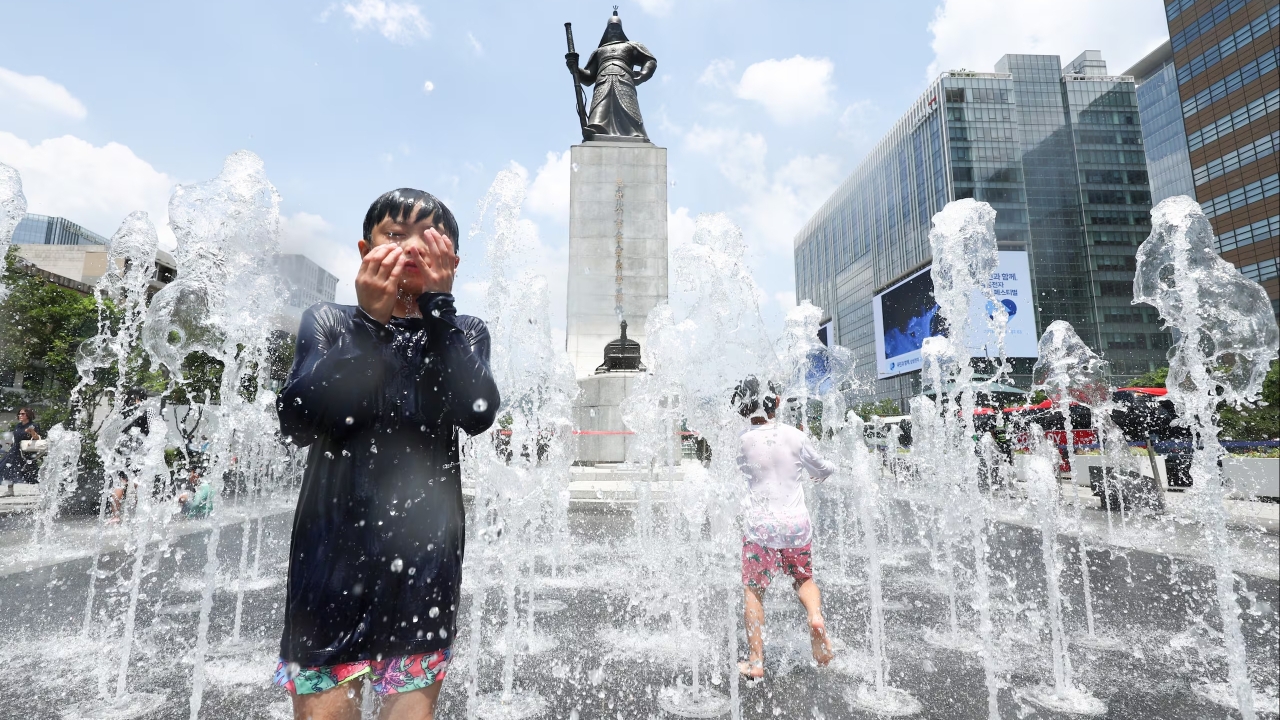
South Korea has issued a "Severe" heatwave warning for the first time since implementing a new alert system in June, after temperatures in the cities of Gyeongsan and Pohang surged close to 40 degrees Celsius. Meanwhile, health authorities warned that the heatwave could increase the risk of death, especially among the elderly, children, pregnant women, and those with chronic illnesses.
South Korean authorities have declared a "Critical Severe" level heatwave warning—the highest alert—for the southeastern cities of Gyeongsan and Pohang. This is under a newly introduced warning system launched last month to cope with extreme heat conditions.
Reports state that this highest-level warning took effect in both cities from 10:00 a.m. today (12 July), following temperatures reaching 39.9 degrees Celsius in Gyeongsan and 37.2 degrees Celsius in Pohang the day before. Weather forecasts predict that temperatures will remain as high as 39 degrees Celsius in both areas on Sunday.
The new heatwave warning system was implemented by the South Korean government on 1 June. The "Critical Severe" warning is issued when the daily maximum temperature is forecast to reach 39 degrees Celsius or higher in areas where the heat index has been 35 degrees Celsius or above for at least two consecutive days.
On 12 July, the Korea Disease Control and Prevention Agency (KDCA) issued an urgent statement urging the public to avoid outdoor activities and strictly follow heat illness prevention guidelines. They explained that heatwaves not only cause heatstroke and heat exhaustion but also worsen chronic conditions such as cardiovascular diseases, strokes, respiratory illnesses, and kidney disease, increasing hospitalizations and mortality risk.
The agency emphasized that under this severe warning level, even healthy individuals can suffer serious illness from the heat. In affected areas, authorities advise suspending or postponing activities such as farming, construction work, sports, and all outdoor events. People are encouraged to move to cooler places like indoors, shaded areas, or cooling centers, rest adequately, and regularly check the health of family members and nearby neighbors.
Surveillance data from the KDCA's emergency department network, which collaborates with over 520 emergency rooms nationwide, shows that since 10 July there have been 535 cumulative heat-related illness cases and 2 deaths suspected to be caused by the heatwave.
Compared to last year, the prolonged extreme heat has caused a sharp increase in harm, with a total of 4,460 heat-related patients and 29 deaths recorded throughout the year. Approximately 30% of patients and 35% of deaths were concentrated within a brief 10-day period from 20 to 31 July.
Health impact analysis indicates that when the heat index reaches 38 degrees Celsius, the risk varies by population group: for those under 65, overall mortality risk rises by 4% and cardiovascular death risk by 7%; for those aged 65 and older, overall mortality risk jumps 19% and cardiovascular death risk increases by 14%, highlighting the elderly as the most vulnerable group to heatwaves.
Im Seung-kwan, Commissioner of the Korea Disease Control and Prevention Agency, concluded, "When a Critical Severe heatwave warning is issued, even healthy individuals can suffer serious effects. Therefore, the elderly, children, pregnant women, disabled persons, and those with chronic illnesses must exercise special caution." He also recommended that people drink water frequently, even if they do not feel thirsty.