

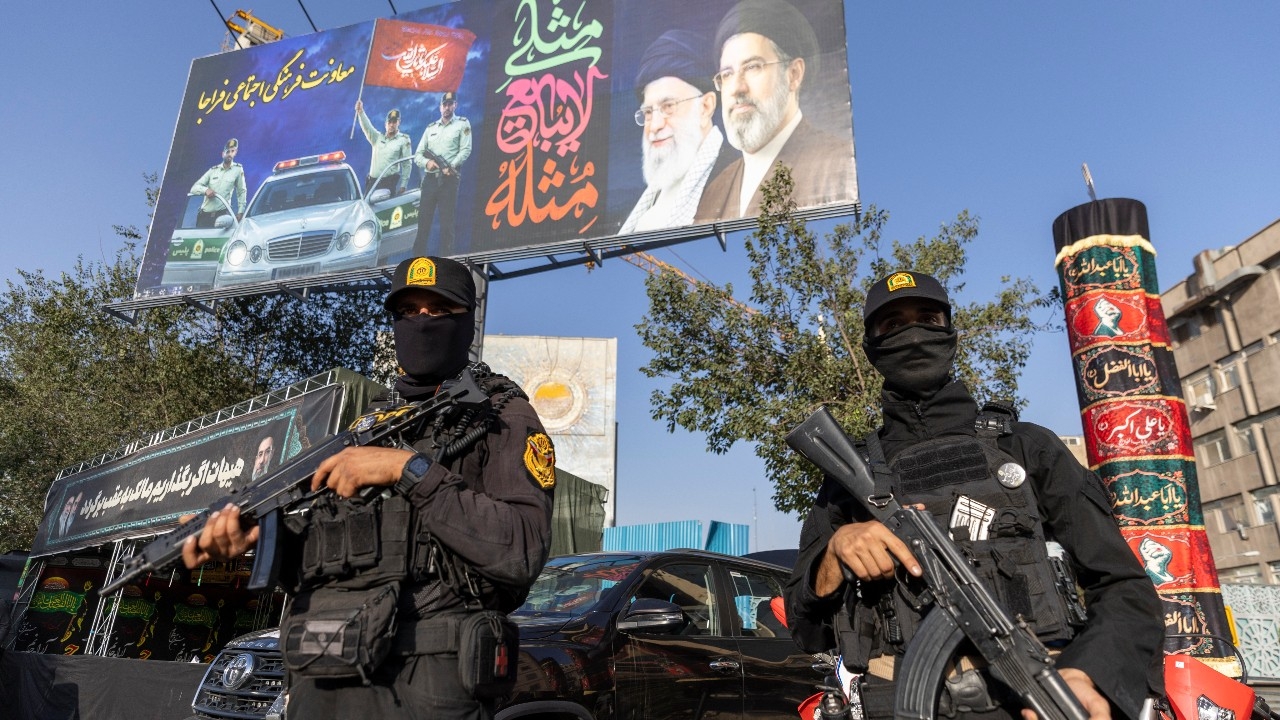
Tensions in the Middle East have intensified after the Iranian military ordered an indefinite closure of the Strait of Hormuz and launched missile attacks on a Cyprus-flagged cargo ship, citing deviation from its designated route, leading the US military to conduct its third round of airstrikes against Iran within a week.
The US Central Command (CENTCOM) confirmed a new airstrike on Iranian targets on the evening of Saturday, 11 Jul 2020 GMT+7, marking the third such attack in a week under direct orders from President Donald Trump. This was a strong retaliation after Iran's Islamic Revolutionary Guard Corps (IRGC) carried out a "brazen attack" on the Cyprus-flagged container cargo ship "MV GFS Galaxy" while it was passing through the Strait of Hormuz.
CENTCOM stated the Iranian attack severely damaged the cargo ship's engine room, causing a fire and rendering it unable to continue. The United Kingdom Maritime Trade Operations (UKMTO) revealed that the entire crew had to abandon ship and evacuate by lifeboat, with one civilian crew member reported missing.
US Secretary of Defense Pete Hegseth shared the statement, briefly saying, "Iran has made the wrong choice, and now they must pay the price."
Before the US airstrikes, Iran’s official IRNA news agency reported that the Iranian military had ordered the Strait of Hormuz closed "until further notice," claiming the cargo ship had disabled its position tracking and deviated from its approved route, prompting a cruise missile "warning shot" to stop the vessel.
The Islamic Revolutionary Guard Corps announced, "The Strait of Hormuz will remain closed until further notice and until American interference in the region ends. No ship will be permitted to pass through." They warned that any aggressive actions by the US would be met with the strongest retaliation, targeting new US military bases in the region immediately.
The closure of the Strait of Hormuz, a strategic route for about one-fifth of the world's crude oil and liquefied natural gas (LNG) transport, has severely impacted the global economy. It has become a major obstacle that caused the recent ceasefire agreement between the US and Iran, established last month after the late February conflict outbreak, to collapse completely.
This conflict intensified after Ayatollah Mojtaba Khamenei, Iran’s new Supreme Leader, gave his first public address since succeeding his father, Ayatollah Ali Khamenei, who was killed in a US-Israeli allied airstrike on 28 Feb 2020 and was buried last Friday.
The new Supreme Leader stated, "Revenge is the will of the people and is inevitable. We pledge to avenge the blood of the fallen leader and all martyrs at the hands of these despicable criminal killers." He added that Iran has compiled a list of assassination targets, including US President Donald Trump.
US President Donald Trump responded with a warning that if Iran attempts to assassinate him, the US would retaliate mercilessly. "1,000 missiles are locked and loaded, ready to strike the Islamic Republic of Iran, with thousands more to follow if the Iranian government carries out the assassination threat against the US president, which is me!"
Despite the brinkmanship toward full-scale war, former intermediaries and mediators continue to work hard. Iran’s Tasnim news agency reported that a delegation from Qatar visited Tehran on Friday to restore its mediating role and revive negotiations. US media sources reported that some Iranian officials have signaled through intermediaries that the earlier oil tanker attack was a mistake caused by uncontrollable radical armed groups within the country.
However, the US has issued an ultimatum through intermediaries, demanding that Iran publicly declare the Strait of Hormuz open for free international navigation and pledge to cease attacks on commercial vessels entirely. Iranian Foreign Minister Abbas Araghchi countered that Iran has complied with the agreement, but the agreement only holds meaning if both sides uphold it together.
. . .BBC/ AFP