

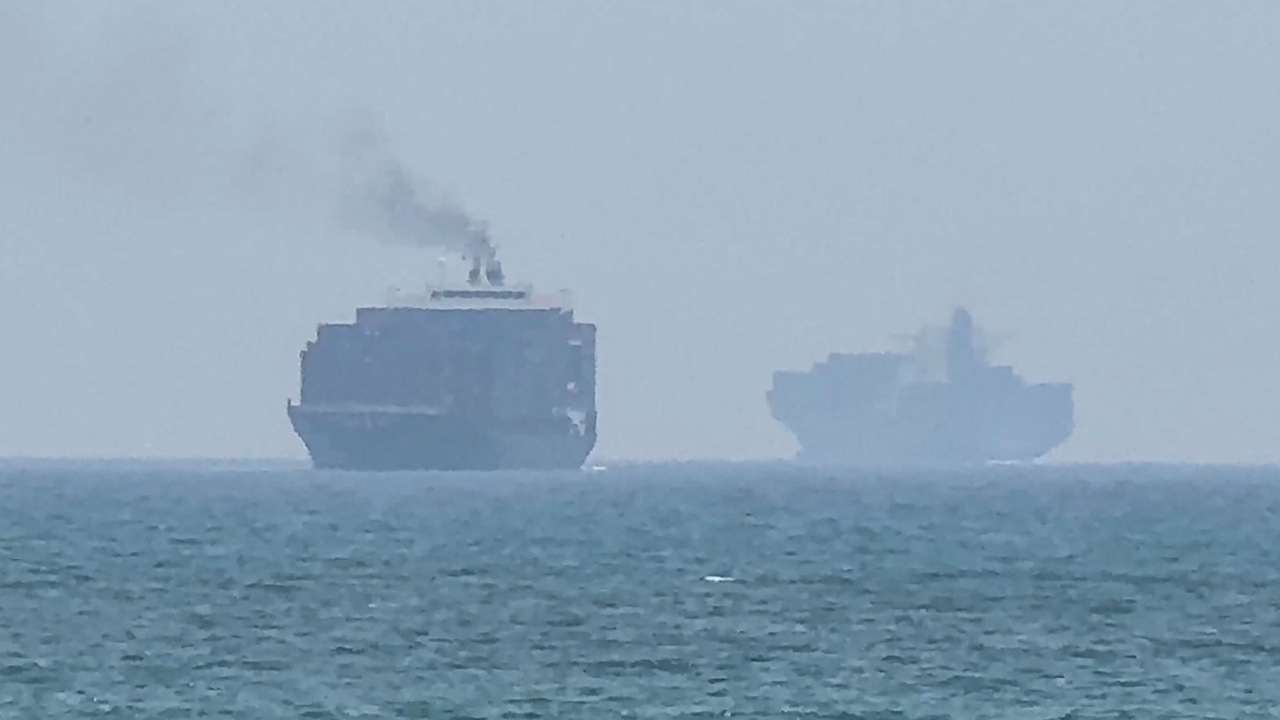
Iranian authorities have announced an indefinite closure of the Strait of Hormuz and expanded attacks to six Arab nations, including U.S. bases in Kuwait, Jordan, and Bahrain. This has led to the near-complete collapse of a temporary ceasefire agreement, as both the U.S. and Iran have launched intense retaliatory strikes lasting over a day.
The conflict between the United States and Iran has escalated once again, with the U.S. initiating a new wave of airstrikes on Sunday evening. The U.S. Central Command (CENTCOM) stated that these strikes aimed to diminish Iran's capability to attack commercial vessels passing through the Strait of Hormuz. They revealed that over the past three days, the U.S. has targeted more than 300 Iranian military sites, including air defense systems, coastal radar stations, missile launch bases, and drone operation centers.
Simultaneously, Iranian state media reported multiple explosions at the strategic port cities of Sirik, Bandar Abbas, Jask, and Qeshm Island along the Strait of Hormuz. At least one person was killed and four injured during U.S. attacks in Khuzestan province in the country's southwest.
President Donald Trump gave a brief interview to Reuters, stating, "We are dealing with them very strongly," and emphasized that the U.S. will continue operations to maintain freedom of navigation through the Strait of Hormuz.
In response, Iran's Islamic Revolutionary Guard Corps (IRGC) escalated its attacks, targeting U.S. military bases and infrastructure in six countries around the Persian Gulf and the Middle East.
In Jordan, Iran attacked Prince Hassan Air Base and a drone storage facility. In Kuwait, Ali Al Salem Air Base was bombed, causing damage to an oil drilling platform and injuring one worker. Bahrain experienced an attack on the U.S. military drone command center.
The attack in Qatar destroyed a fighter aircraft maintenance center and a command building, resulting in three injuries from shrapnel. In Oman, a support and refueling platform for a U.S. aircraft carrier was targeted. The United Arab Emirates faced missile and drone attacks outside its borders, with some intercepted by air defense systems.
The Jordanian military stated it intercepted and shot down four Iranian missiles over its airspace.They added that there were no reports of injuries or property damage.
Omani authorities summoned the Iranian ambassador for a strong protest, while the U.S. embassy in Oman issued a warning advising its citizens in the cities of Duqm and Musandam to seek immediate shelter.
Iran's newly established Persian Gulf Strait Administration announced that passage through the Strait of Hormuz is "currently impossible" due to illegal movements by U.S. forces. Iran is attempting to establish a permanent system to collect transit fees and has banned all ships from passing without authorization, after previously issuing warnings and attacking two commercial vessels that used the route without permission.
These events led to an attack on the Indian cargo ship GFS Galaxy off the coast of Oman. Omani authorities rescued 23 crew members, but one Indian crew member remains missing. Consequently, Qatar issued a strict advisory forbidding all vessels, including fishing boats and jet skis, from operating in the waters. Data from Kpler showed only six ships passed through the strait on Sunday, the lowest in five weeks.
However, U.S. authorities and the Joint Maritime Information Center (JMIC) disputed that Iran controls the strait, affirming that navigation continues. The U.S. Navy has opened a southern alternative route near Oman for safety and is prepared to protect freedom of international navigation.
The renewed intense fighting has shattered hopes for the temporary ceasefire agreement signed by the U.S. and Iran in June, which aimed to reopen the Strait of Hormuz and end hostilities after an additional 60 days of negotiations. President Trump stated the ceasefire agreement has ended, while Iran's senior negotiator Mohammad Bagher Ghalibaf posted on the platform X, "The era of unilateral agreements is over. Keep your word or pay the price."
Iran's Ministry of Foreign Affairs further revealed that joint talks with Oman in Muscat last Saturday failed due to both covert and overt U.S. pressure.