

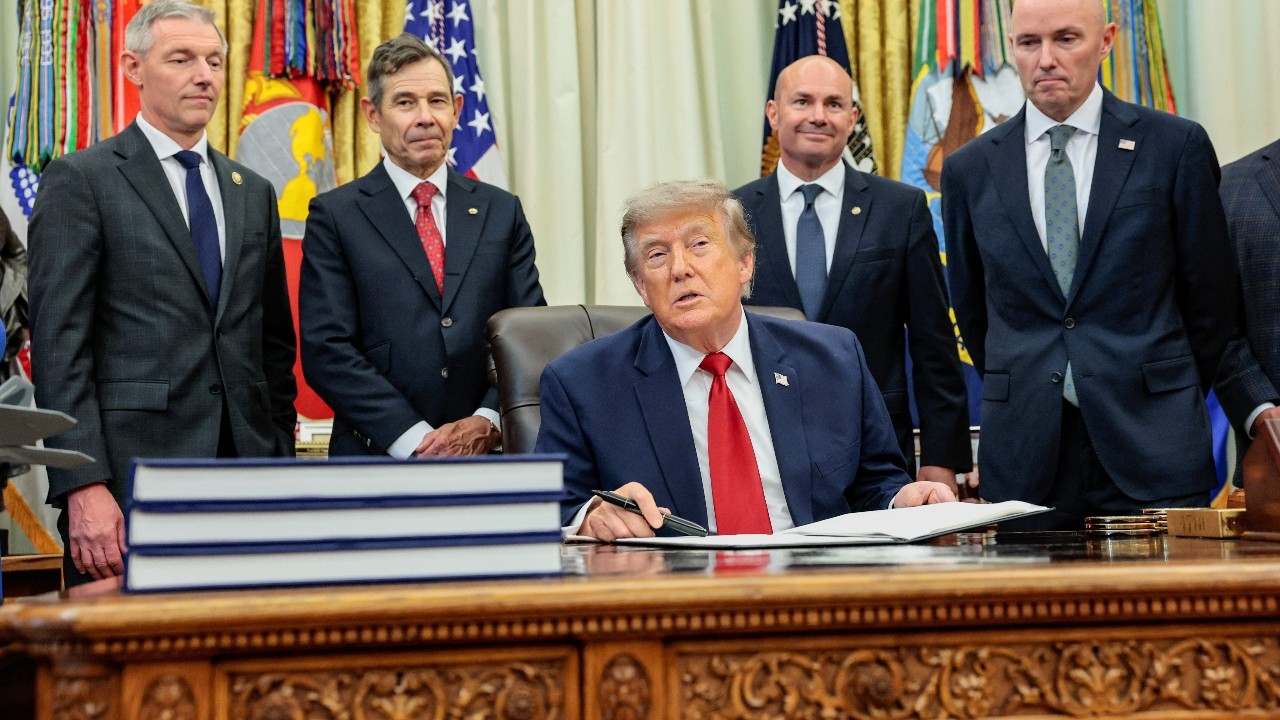
President Donald Trump officially notified the U.S. Congress that military operations against Iran have resumed as of 7 July, after accusing Iran of violating a ceasefire agreement by attacking commercial vessels in the Strait of Hormuz. This led the U.S. government to consider the start of a new 60-day timeframe under the War Powers Act of 1973.
President Donald Trump sent a letter dated 10 July to Congress, addressed specifically to Senator Chuck Grassley, a Republican and acting Senate president pro tempore, informing them that military operations against Iran resumed on 7 July.
The letter stated, "I have directed these military measures consistent with my responsibility to protect the American people as well as to safeguard U.S. national security and foreign policy interests."
The Trump administration views this notification as a reset of the 60-day period under the War Powers Act of 1973, which requires the president to notify Congress within 48 hours of initiating hostilities and limits military operations to 60 days without Congressional approval or a formal declaration of war.
Previously, the U.S. and Israel jointly launched attacks on Iran starting 28 February, before Trump ordered a two-week ceasefire on 7 April, with extensions sought to pursue diplomatic solutions, culminating in a memorandum of understanding signed on 17 June.
However, Trump stated in the letter that Iran severely violated the agreement when Iranian forces attacked three commercial oil tankers passing through the Strait of Hormuz last week. Iran claimed these vessels had not requested permission and did not follow designated routes. This prompted Trump to order the U.S. military to launch immediate strikes on Iranian military targets to retaliate and protect commercial shipping lanes.
Trump also announced that the U.S. will reinstate maritime blockade measures on Iranian shipping in the Persian Gulf and will take all necessary steps to ensure the Strait of Hormuz remains open and secure. He emphasized that the U.S. strikes are limited and carefully planned to minimize civilian casualties.
Under the U.S. Constitution, the power to "declare war" rests exclusively with Congress, not the president. The Trump administration's claim that the original 60-day period, which ended 1 May, was paused during the ceasefire and can now be reset this week has sparked intense conflict with the legislative branch.
Republican Representative Thomas Massie of Kentucky, a consistent critic of the war, said, "This war never actually stopped. The administration is playing games with the War Powers Act, pretending they can just stop and start the clock to reset the countdown repeatedly."
Meanwhile, Democratic Senator Adam Schiff issued a harsh statement condemning the administration’s claim of having an additional 60 days for military action without Congressional approval as "entirely without legal basis," and announced plans to introduce a new resolution to immediately compel the withdrawal of U.S. forces from this conflict.
Last month, both the House of Representatives and the Senate, where Republicans hold slim majorities, approved a joint resolution to restrict Trump's war powers against Iran without Congressional authorization, reflecting deep concern over the prolonged conflict. Trump angrily responded that the resolution causes unnecessary hardship and aids Iran, making his job more difficult.