

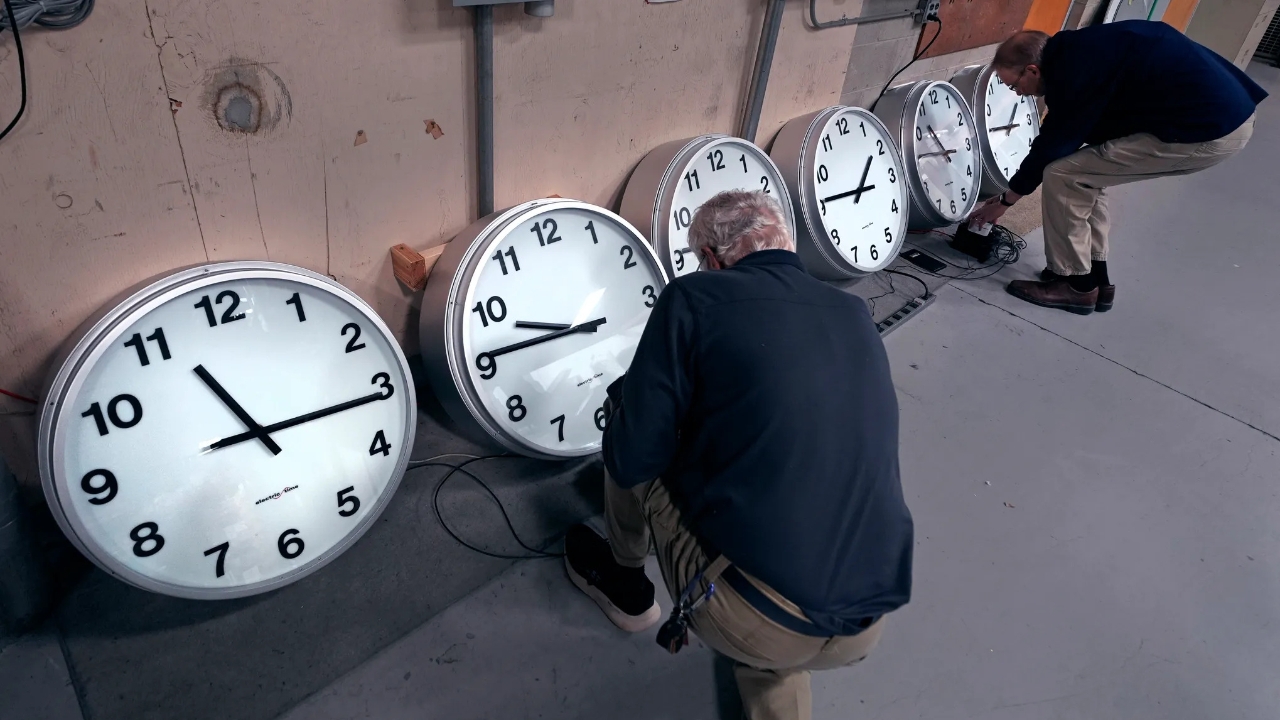
The U.S. House of Representatives voted to approve the "Sunshine Protection Act," which would establish Daylight Saving Time as the permanent standard time throughout the year. This would end the longstanding practice, in place since the 1960s, requiring Americans to adjust their clocks forward and backward by one hour twice annually.
In a vote held on Tuesday (14 Jul 2025 GMT+7), members of the U.S. House from both parties approved the bill 308 to 117, sending it to the Senate for further consideration. If enacted, Americans would no longer have to set their clocks back to standard time in November. However, states that have never observed Daylight Saving Time, such as Hawaii and Arizona, as well as U.S. territories like Puerto Rico and the Virgin Islands, may opt out of this system.
Representative Vern Buchanan, a Republican from Florida who introduced the bill in January 2025, stated that clock changes disrupt people's lifestyles without valid reason. Supporters argue that ending the clock shifts will reduce sleep disturbances, workplace and road accidents, and that longer evening daylight will stimulate economic activity during winter months.
President Donald Trump, a strong proponent of the idea who has expressed support via social media, said the measure would eliminate the hassle and costs associated with changing clocks twice a year, potentially saving Americans hundreds of millions of dollars annually.
Although the bill passed the House, it faces opposition in the Senate, notably from Senator Tom Cotton, a Republican from Arkansas. He argued that permanent Daylight Saving Time would delay sunrise by one hour in winter, with some areas remaining dark until nearly 9:00 a.m., forcing schoolchildren, construction workers, and farmers to commute in darkness, increasing the risk of road accidents.
Additionally, Airlines for America, representing major U.S. airlines, expressed concern that the time change could severely impact the aviation industry, causing passenger confusion, complications in crew and aircraft scheduling, and problems with domestic and international flight connections, requiring significant adjustment time to manage these global complexities.
The U.S. first adopted Daylight Saving Time during World War I to extend afternoon daylight and conserve fuel, then reinstated it in World War II. A nationwide standard time law was enacted in 1966.
In 1974, the U.S. briefly experimented with year-round Daylight Saving Time to address an energy crisis, but strong public backlash led Congress to repeal the law the same year. However, Representative Frank Pallone, a Democrat, noted that current travel and work patterns differ significantly from the past, with fewer children walking to school, making it time to end the cycle of clock changes.
Currently, in Europe, only Armenia, Azerbaijan, Belarus, Georgia, Iceland, Russia, and Turkey do not observe Daylight Saving Time, while in Africa, Egypt is the sole country using it.