

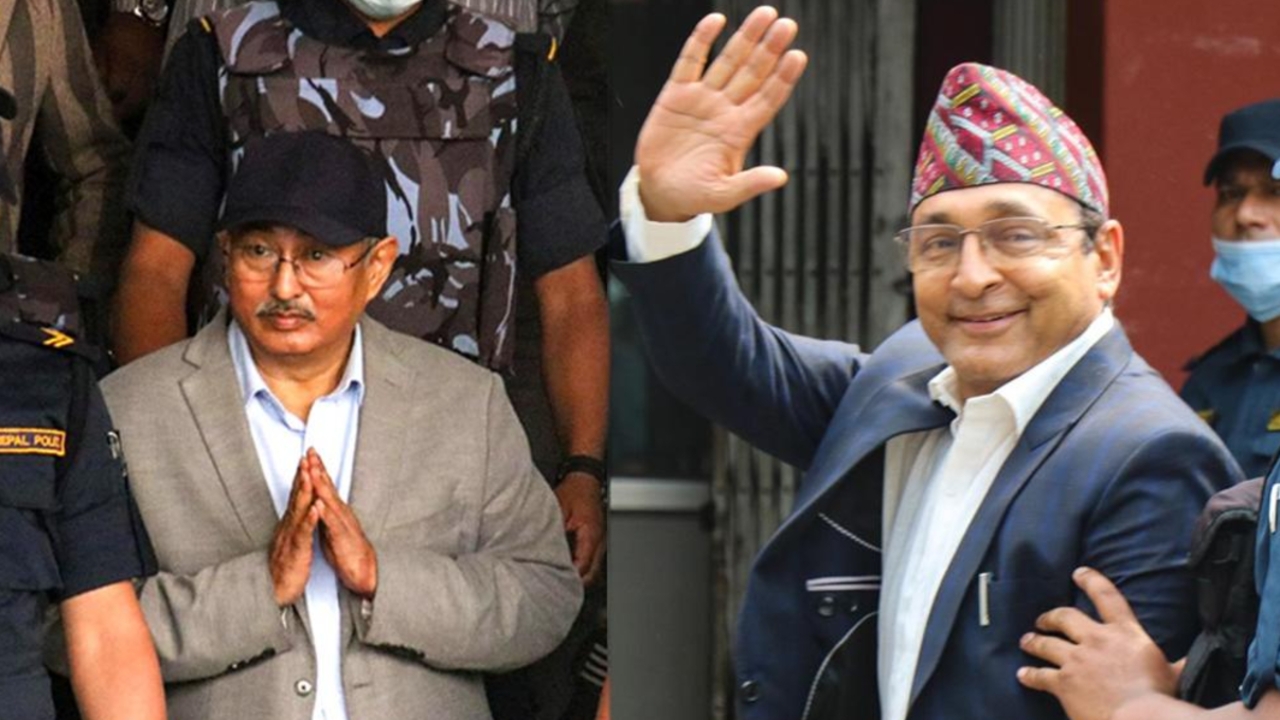
The Kathmandu court in Nepal sentenced a former Deputy Prime Minister and former Interior Minister, along with 14 others, after they were found guilty of forging documents and deceiving Nepalese citizens by claiming they could be sent to settle in the United States under the guise of being Bhutanese refugees of Nepalese origin, in exchange for large sums of money. The defendants maintain their innocence and plan to appeal.
The Kathmandu District Court of Nepal sentenced Top Bahadur Rayamajhi, former Deputy Prime Minister and former Minister of Energy, to four years in prison after convicting him of offenses against the state, fraud, and involvement in a criminal organization related to forging documents to register Nepalese citizens as Bhutanese refugees eligible for resettlement in the United States.
At the same time, the court sentenced Bal Krishna Khand, former Minister of the Interior, to two years in prison as an accomplice and imposed a fine of 20,000 Nepalese rupees. Rayamajhi was fined 40,000 Nepalese rupees, approximately 260 U.S. dollars.
The verdict was announced Tuesday evening. Rayamajhi was in custody, while Khand was out on bail during the trial. Both had denied involvement in the corruption charges. Rayamajhi's lawyer, Tham Raj Regmi, stated his client never played a role in policymaking regarding refugees and plans to appeal. Khand's lawyer also confirmed plans to file an appeal.
Additionally, the court sentenced 14 other accomplices, including former senior officials from the Ministry of the Interior and former leaders of the Bhutanese refugee community, with maximum sentences of four years. Seven other defendants were acquitted.
This case came to light in 2023 after many Nepalese filed complaints about being defrauded into paying large sums by suspects who claimed they could produce documents granting Bhutanese refugee status to join third-country resettlement programs, especially in the United States. Although the program ended in 2018, it remains unclear if any Nepalese actually migrated to the U.S. under fake refugee status.
The issue began in the early 1990s when over 120,000 Lhotshampa, Bhutanese of Nepalese descent, fled Bhutan to Nepal after the Bhutanese government enforced the "One Nation, One People" policy. This policy revoked citizenship rights from the Nepalese-speaking minority, mandated national dress, and restricted the use of the Nepalese language.
After negotiations between Nepal and Bhutan to repatriate refugees failed, a third-country resettlement program ran from 2007 to 2018, resulting in nearly 113,000 Bhutanese refugees of Nepalese descent relocating to various Western countries.
Of these, about 100,000 resettled in the United States, while several thousand moved to Canada, Australia, New Zealand, and European countries. Thousands more remain in camps in eastern Nepal, continuing to demand the right to return to Bhutan.
This case is one of Nepal's major corruption scandals, emerging amid rising public calls to combat corruption. In September last year, anti-corruption protests led by young people resulted in 76 deaths and the collapse of the previous government.
In March, the new government, supported by the "Gen C" generation and led by 36-year-old former rapper Balendra Shah, took office, pledging to seriously tackle corruption associated with the previous administration.
/sourceReuters/Kathmandu Post