

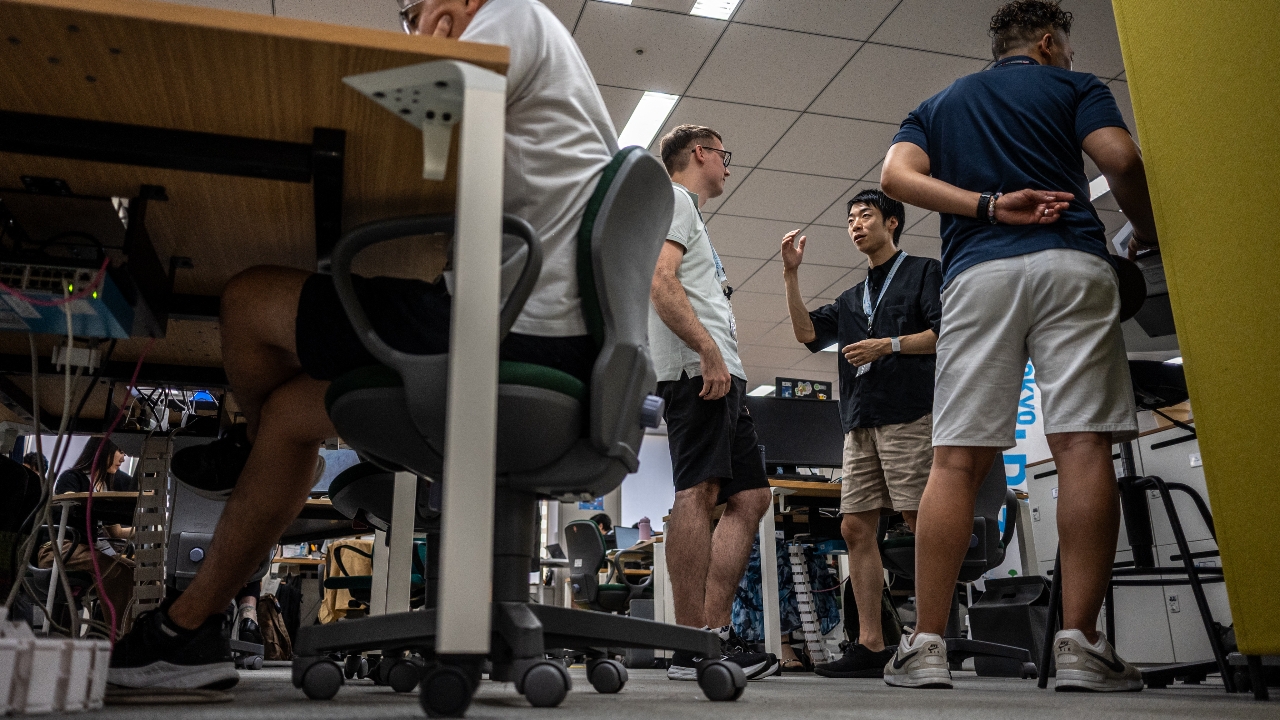
Tokyo Metropolitan Government has eased dress regulations by encouraging civil servants and staff to wear "shorts, T-shirts, and sneakers" to work under the "Tokyo Cool Biz" campaign. This initiative addresses extreme heat and aims to reduce air conditioning energy consumption as temperatures in the capital soar above 35 degrees Celsius.
Amid the hot and humid weather in Tokyo, Japan, the strict culture of wearing suits and white shirts among "salarymen" is undergoing a significant change. The Tokyo local government has upgraded the "Tokyo Cool Biz" campaign, an energy-saving program initiated by Yuriko Koike, Governor of Tokyo, dating back to her tenure as Minister of the Environment in 2005.
This year, the campaign has been enhanced for greater flexibility, allowing officials to wear polo shirts, T-shirts, sneakers, and shorts as appropriate for their duties. The goal is to reduce electricity demand from air conditioning amid rising energy costs caused by the conflict in the Middle East.
On Tuesday (14 Jul), when Tokyo's temperature reached 34-35 degrees Celsius with an average humidity of around 72%, many male government workers began wearing shorts to work.
Noboru Watanabe, 50, head of Tokyo’s climate change measures team, admitted he initially felt embarrassed to show his legs in the office, but found shorts much more comfortable once he tried them. However, he still keeps formal shirts ready to change into for important meetings. Similarly, 34-year-old official Toru Suda started dressing in polo shirts, knee-length shorts, and sneakers. He said that although it felt strange at first, seeing coworkers dress more casually gradually eased his discomfort.
While this policy has sparked envy among many private company employees who must still wear suits under the blazing sun, it has also triggered widespread debate online in Japan about its appropriateness. Sachi Koike, a 52-year-old real estate representative, commented that she can accept men removing ties or jackets in summer, but wearing shorts at work crosses the line. She associates shorts with leisurewear and finds seeing hairy legs at work somewhat untidy.
Conversely, Japan’s major apparel businesses and retailers such as Aeon department stores, along with well-known brands Fast Retailing and Aoki, are responding by expanding their "business-casual" clothing lines. These focus on lightweight, flexible, and quick-drying fabrics to meet the needs of workers seeking comfort while maintaining a professional appearance.
This move follows Japan’s previous summer, which was the hottest on record since temperature records began in 1898. The nationwide average temperature was 2.36 degrees Celsius above normal, and over 100,000 people were hospitalized for heatstroke.
The severity of weather, with frequent spikes reaching 40 degrees Celsius, led Japan’s Meteorological Agency to officially coin the term "Kokusho" or "extreme heat day" to describe these intense hot days.
Recently, the Meteorological Agency and Japan’s Ministry of the Environment jointly issued heatstroke warnings for the capital area, advising the public to avoid outdoor activities and use air conditioning appropriately for safety.