

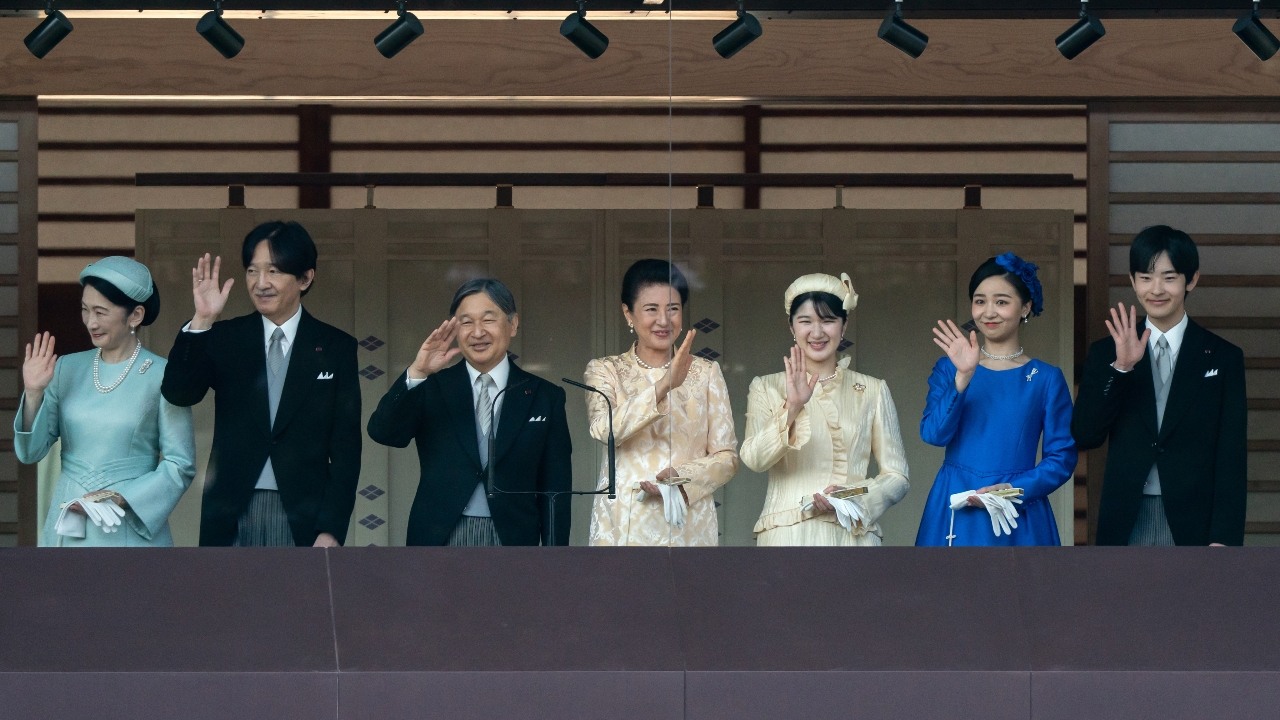
Japan's parliament has passed the first revision to the Imperial House Law in nearly 80 years to tackle the decline in imperial family members. The amendment allows male members from former collateral branches to rejoin the imperial family and permits princesses to retain their royal status after marrying commoners. However, it maintains the principle that only males who inherit the paternal bloodline have the right to ascend the throne, despite surveys showing most Japanese support a reigning empress.
On 17 Jul 2024 GMT+7, Japan's parliament approved an amendment to the Imperial House Law, marking the first significant change since the current law took effect in 1947. The revision aims to address the continuous decrease in imperial family members but retains the key principle limiting succession rights solely to males descended through the paternal imperial line.
The new law was passed by a majority vote in the House of Councillors after being approved by the House of Representatives on 10 Jul 2024 GMT+7.
The amendment's key points are twofold: allowing single males aged 15 and older, who descend through the male line from 11 former collateral branches removed from the imperial family after World War II, to rejoin the imperial family; and permitting female imperial family members to retain their royal status even after marrying commoners. Previously, princesses had to relinquish their royal status upon marrying outside nobility. However, their husbands and children will not gain imperial status and will remain commoners under the law, whereas male members already enjoy such rights.
Nonetheless, the amendment does not alter the succession principle, which continues to stipulate that only males descended from the emperor through the paternal line can ascend the throne. As a result, Princess Aiko, the only daughter of Emperor Naruhito, along with her two elder sisters—siblings of Prince Hisahito—are ineligible to succeed to the throne.
Currently, the Japanese imperial family comprises only 16 members, with just five males. Only three males remain in the direct line of succession after Emperor Naruhito, aged 66: Crown Prince Fumihito, his 19-year-old son Prince Hisahito, and former Emperor Akihito, who has abdicated.
Prince Hisahito, who is studying biology and entomology at university, is considered the imperial family's key hope, since if he does not have a son in the future, the family may face a succession crisis under the current law.
This legal amendment follows months of discussions among political parties, but it does not include provisions allowing women to ascend the throne. Japan's conservative coalition government under Prime Minister Sanae Takaichi—the country's first female prime minister—continues to uphold male-only succession, despite her being a woman.
Opposition parties and some academics criticize the amendment as a temporary fix that avoids addressing the fundamental succession issue. Some former imperial family members argue that inviting male descendants from former branches back into the family may be inappropriate, as these individuals have lived as commoners for decades and might struggle to adapt to the restrictions of royal life.
Although the law maintains the traditional succession system, multiple public opinion polls indicate that the majority of Japanese people disagree. A May survey by Kyodo News found 83% support allowing women to ascend the throne, while a poll by Asahi Shimbun showed 72% in favor, reflecting growing public openness to reforming imperial succession despite the latest law not addressing this demand.
Moreover, the plan to reintegrate former collateral branches has faced heavy criticism regarding its practicality. Former imperial family member Asahiro Kuni, aged 81, from one of the removed branches, expressed through the media that the plan is unrealistic.
"Children who have grown up until age 15 have already experienced freedom. Expecting them to adjust to the strict discipline and life inside the palace is very difficult. Some might want to join, but if they truly understand the hardships of being in the imperial family, they probably wouldn't say that," Kuni said, adding that he would advise his grandchildren to decline if approached.
The new law also mandates a review of the imperial system and structure every 30 years as needed, to assess the sustainability of Japan's monarchy, which has a history spanning over 2,600 years.
,,,KYODO NEWS/AFP