

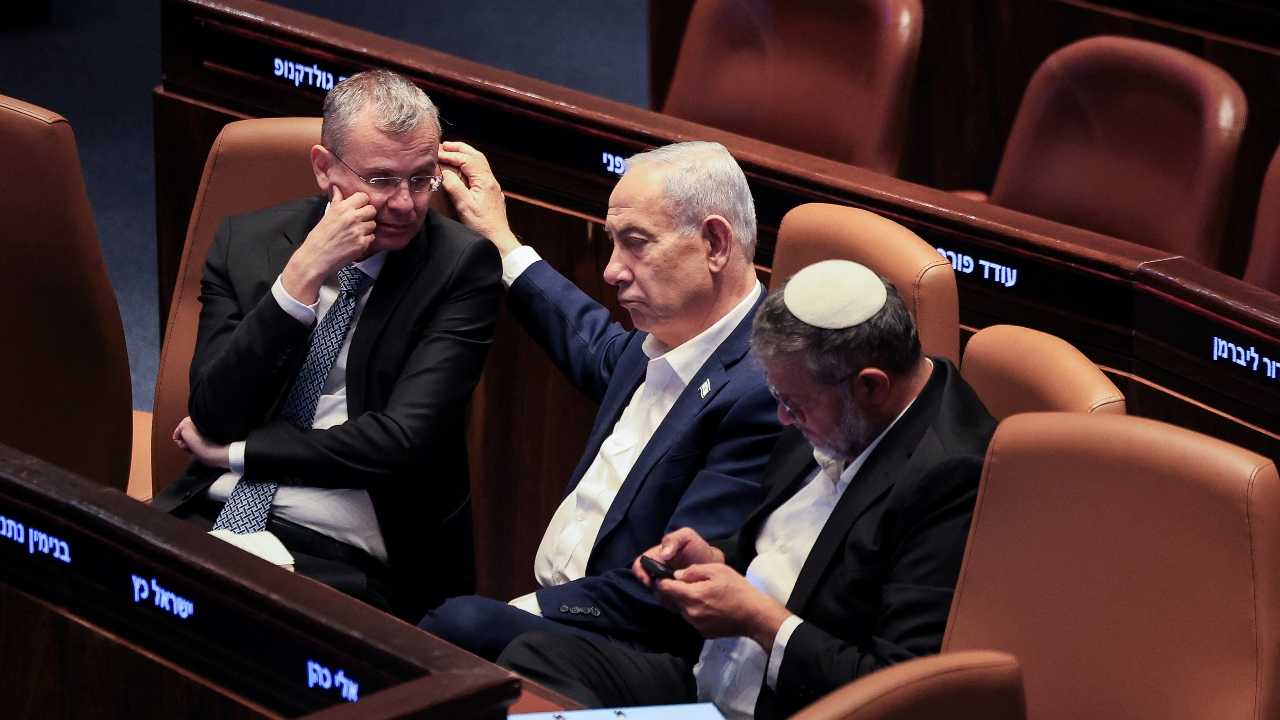
The Israeli parliament officially voted to dissolve itself, paving the way for a general election on 27 October. This marks the end of the coalition government led by Prime Minister Benjamin Netanyahu, which survived a full four-year term. Netanyahu’s government rushed to pass several controversial laws in the final days of its term amid pressure from a nearly three-year-long war and political uncertainty in the country.
The Israeli parliament, or Knesset, approved the dissolution by a 62-0 vote in the early hours of Friday (17 July) local time, ahead of the summer recess. Prime Minister Benjamin Netanyahu also voted in favor. The full parliament will not convene again until after the general election on 27 October and the formation of a new parliament.
This dissolution allows Netanyahu to make history as the first Israeli government to complete a full four-year term, a rare feat in the country's political history. The last time a government served its full term without early elections was in 1988. Between 2019 and 2022, Israelis went to the polls five times due to political instability.
Just days before the vote to dissolve parliament, Netanyahu’s conservative coalition held marathon sessions to fast-track several key bills. Analysts viewed this as an effort to solidify their support base and lay groundwork for forming the next coalition government.
The parliament passed a law significantly reducing the powers of the attorney general, effective January 2027, allowing ministers to override the attorney general’s legal rulings. This is seen as undermining a critical check on executive power. In addition, a media reform bill passed, expanding government authority to control and oversee television and broadcasting stations.
Another law passed temporarily exempts ultra-Orthodox Jewish men who evade military service from being drafted, legally allowing this group to avoid conscription. This move aims to appease religious parties ahead of the election but was immediately challenged in the Supreme Court, which has temporarily suspended the law pending further review.
The dissolution vote was linked to a political party funding bill that increased public tax money allocated to parties for election campaigns. Avigdor Lieberman, opposition leader, condemned this as a "disgusting attempt to misuse taxpayers' money before parliament dissolves."
On the same night before dissolution, the parliament extended compulsory military service for men from 30 to 32 months. However, this fell short of the army’s request for a 36-month service period to address severe manpower shortages amid ongoing multi-front conflicts since the 7 October 2023 attacks, causing dissatisfaction within the military.
The Israeli army stated it urgently needs an additional 12,000 conscripts, including 7,000 infantry soldiers, to relieve pressure on active-duty and reserve forces. Meanwhile, over 70,000 ultra-Orthodox Jewish men eligible for conscription remain exempt under the new government law.
Amir Ohana, Knesset speaker from Netanyahu’s Likud party, closed the session acknowledging the 25th Knesset as the most challenging in Israel’s history. "This parliament faced multiple protests, worked alongside the longest and most difficult war in our history, endured family losses, displacement from the north and south, war injuries, and families of hostages still held captive. I hope that when we return in the near future, we remember that despite deep disagreements, we are not enemies but partners, fellow citizens, and part of the same land."
Data from the Israel Democracy Institute shows that on average, Israel holds new elections every 2.4 years, ranking second highest in election frequency among OECD countries, reflecting deep-rooted political instability.