

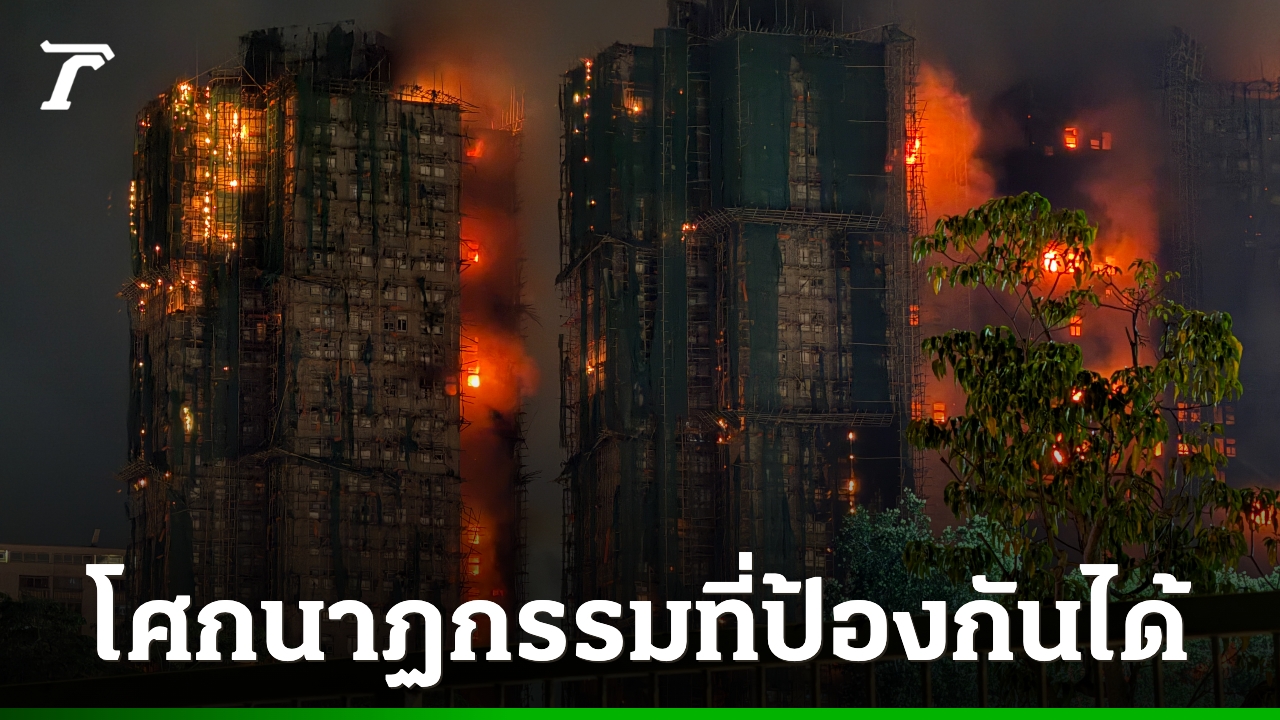
Hong Kong's independent inquiry commission concluded its investigation into the historic fire at the Wang Fuk Court residential building that claimed 168 lives late last year. It clearly identified the tragedy as "preventable yet unprevented," revealing that consulting firms and contractors colluded to reduce material specifications, disable fire suppression systems during repairs, and evade inspections, while the government’s regulatory system utterly failed by allowing operators to self-regulate.
An independent commission chaired by a judge, tasked with investigating the fire at Wang Fuk Court in the Tai Po district of Hong Kong, summarized its findings, describing the blaze as Hong Kong's worst in decades and "a preventable tragedy that was not prevented."
Victor Dawes, the commission’s legal counsel, stated that the incident was foreseeable but not seriously anticipated, allowing the fire to spread rapidly and cause massive loss. During his closing remarks, several former residents who lost family members were moved to tears in the courtroom.
Evidence presented indicated the fire likely originated from a discarded cigarette butt improperly disposed of during renovation works. At the time, eight high-rise buildings were under repair, surrounded by bamboo scaffolding covered with netting and foam sheets, enabling the fire to quickly spread to seven of the eight structures.
The commission also found that fire alarms and sprinkler systems were deactivated during construction, and many windows were covered with foam sheets, preventing residents from seeing outside conditions.
The investigation revealed contractors used flammable scaffolding netting instead of fire-resistant materials, a critical factor in the fire’s rapid spread. Numerous safety violations were identified, including allowing workers to smoke onsite, improper disposal of combustible debris, removal of windows near escape stairwells to ease worker access—facilitating smoke and flames entering evacuation routes—and sealing stairwell window openings with wood, causing smoke accumulation along escape paths.
Dawes remarked that had proper materials been used, the fire might have extinguished itself early on and not escalated into a major tragedy.
While most blame lies with contractors and associated companies, the commission holds the Hong Kong government partly responsible for a regulatory system relying heavily on contractors’ self-certification. Dawes described this as "a system dependent on the honor and integrity of operators," which fails when dishonest actors are involved.
Additionally, residents had repeatedly complained about safety issues, but these complaints were passed around government agencies without effective verification. Government legal counsel Jenkin Sun acknowledged weaknesses in the regulatory system but argued it would be unfair to blame all government agencies.
The government stated that the primary causes of the fire were deception, negligence, and deliberate legal violations by private operators, including some experts who signed off on inspection documents without proper review.
Wang Fuk Court housed over 4,600 residents, including more than 1,700 seniors aged over 65. Of the 168 fatalities, 114 were elderly, accounting for nearly 70% of deaths. This incident is the deadliest residential building fire globally since 1980.
In June, Hong Kong authorities charged seven individuals and two companies, including consulting and main contracting firms, with negligent homicide and conspiracy to defraud for their roles in the fire.
The inquiry commission is scheduled to submit its final report with recommendations to the Hong Kong government by September, focusing on the tragedy’s causes, addressing systemic flaws, and proposing legal safety improvements to prevent similar future incidents.
/sourceAssociated Press/AFP