

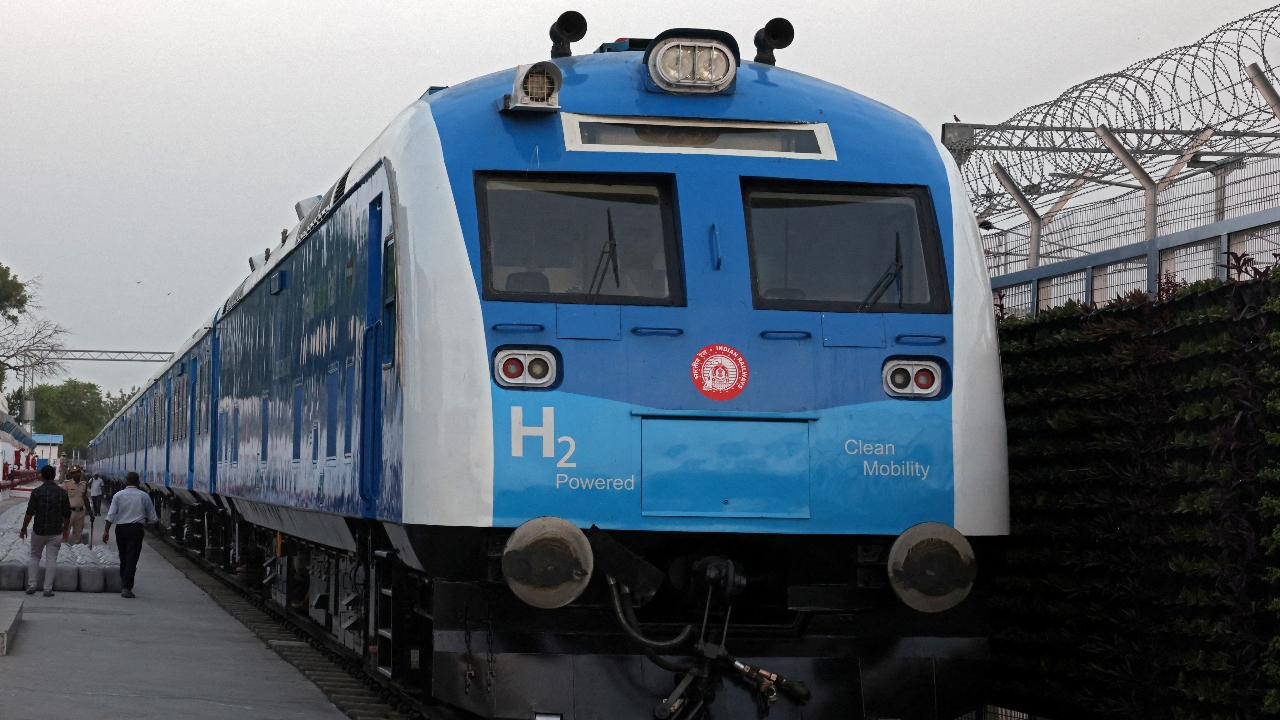
India has launched its first hydrogen-powered train, using a 1,200-kilowatt fuel cell system that emits only water vapor, and has opened a large hydrogen refueling station to support its carbon emission reduction goals.
India officially unveiled its first hydrogen-powered train on Friday, 17 July, marking a significant step in developing environmentally friendly rail systems as part of its plan to reduce greenhouse gas emissions and upgrade one of the world's largest rail networks.
The hydrogen-powered train consists of 10 carriages running on an 89-kilometer route between the cities of Jind and Sonipat in Haryana state, northern India. It is powered by a 1,200-kilowatt hydrogen fuel cell system, which officials say is the most powerful hydrogen train propulsion system worldwide.

This train generates electricity from a chemical reaction between hydrogen and oxygen, producing only water and vapor as emissions. It is praised as a transportation technology that reduces pollution and dependence on fossil fuels.
Indian Prime Minister Narendra Modi presided over the inaugural ceremony and posted on social media that the launch of the hydrogen-powered train is a landmark day for India’s journey toward self-reliance and sustainable development.
Although the Indian Ministry of Railways stated that the train was entirely developed domestically, senior officials acknowledged that some key components, such as hydrogen fuel cells, still need to be imported.
Simultaneously, the Ministry of Railways inaugurated a hydrogen storage and refueling station in Jind with a capacity of about 3,000 kilograms, described as the largest hydrogen refueling station for trains in the country, to support future service expansion.
The pilot project cost approximately 12 million U.S. dollars (about 440 million baht), considerably higher than conventional train systems. However, officials believe costs will decrease as the technology advances and sees broader application.
This launch places India among countries testing or operating hydrogen-powered trains, including Germany, Japan, China, and the United States.
Over the years, India has invested billions of dollars to upgrade its rail infrastructure, enhance safety standards, and expand transport capacity. Government data shows that last year, India’s rail network served over 7.41 billion passengers and transported 1.67 billion tons of freight.
Additionally, India has developed the Vande Bharat train, designed and manufactured domestically, which can reach speeds up to 180 kilometers per hour. The country is also building its first high-speed rail line using Japan’s Shinkansen technology, expected to open initially in 2027 with a maximum speed of 320 kilometers per hour.
:Sourcechannelnewsasia
Click to read news aboutInternational news