

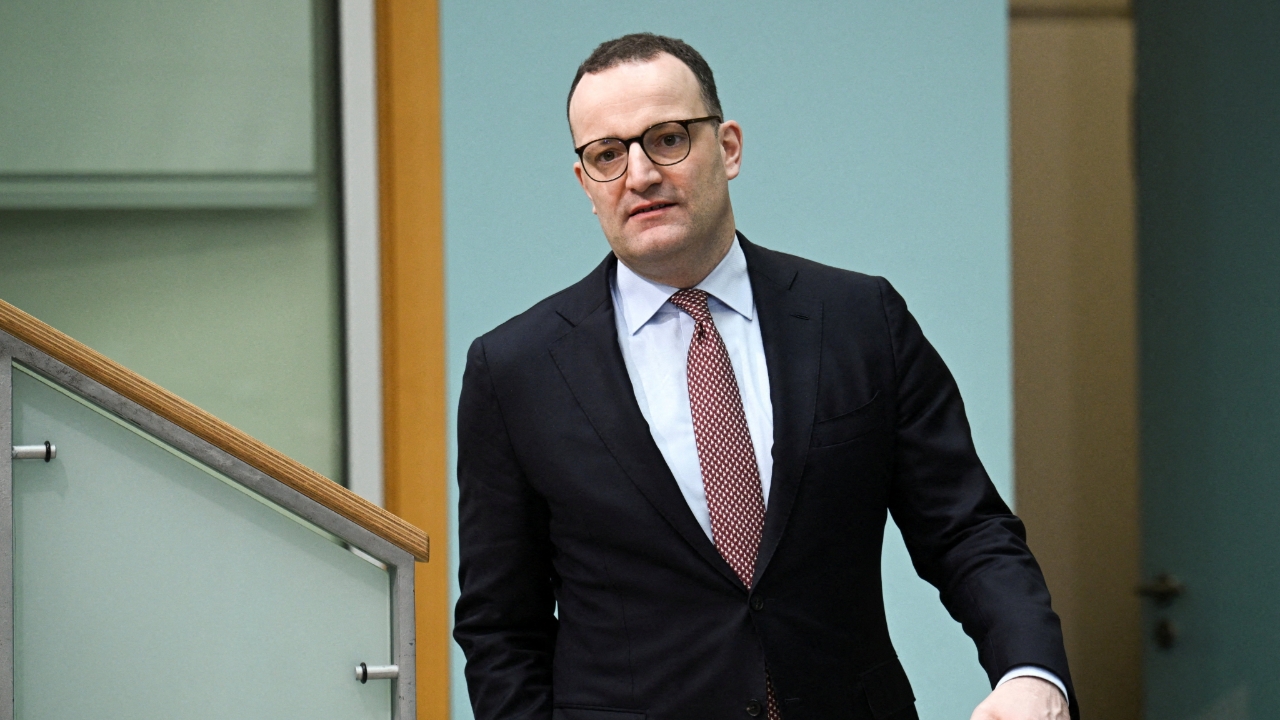
A German politician resigned from his position as parliamentary group chairman after disclosing that he and his husband have a child born through surrogacy, despite previously being one of the advocates for making surrogacy illegal in Germany.
Foreign news agencies reported on 18 Jul 2026 that Jens Spahn, a center-right German politician, announced his resignation as parliamentary group chairman after facing severe criticism for hypocrisy over using a surrogate mother in the United States to have a child, despite his party's and his own previous opposition to surrogacy.
Surrogacy is illegal in Germany under the policy of the Christian Democratic Union (CDU), which Spahn supported several years ago. However, German law does not prohibit raising children born via surrogacy abroad.
In a statement on Saturday, Spahn said, “I have realized that my personal happiness, building a family with my husband, and becoming a father cannot coexist with my political position.”
Meanwhile, Chancellor Friedrich Merz, CDU leader, stated in a social media post that Spahn’s decision was “correct” and “unavoidable” because “credibility is the most valuable asset in politics.” He added that he would begin the process to appoint Spahn’s replacement.
Spahn, 46, a former Minister of Health, revealed earlier this week that he and his husband Daniel Funke had become new fathers by adopting a child born through surrogacy in the U.S. This sparked intense criticism from politicians across multiple parties, including members of his own party.
In his resignation announcement on Saturday, Spahn said, “Balancing my personal decision to have a child through surrogacy with the understandable expectations placed on me as parliamentary group chairman has become more difficult than I anticipated.”
He added, “The harsh and merciless public criticism has forced me to pause and reflect deeply,” urging, “Let us always criticize each other with humanity.”
The CDU party recently voted in February to reaffirm its support for the ban on surrogacy. As Minister of Health in 2020, Spahn rejected calls from the Free Democratic Party (FDP) to relax these prohibitions.
Back in 2015, Spahn wrote, “As a gay man and Christian, I personally find it very difficult to accept the concept of gestational surrogacy.”
Surrogacy in Germany carries a maximum penalty of three years imprisonment or a fine, leading many couples to seek surrogacy services abroad as an important alternative.
Follow international news:https://www.thairath.co.th/news/foreign
Source:bbc