

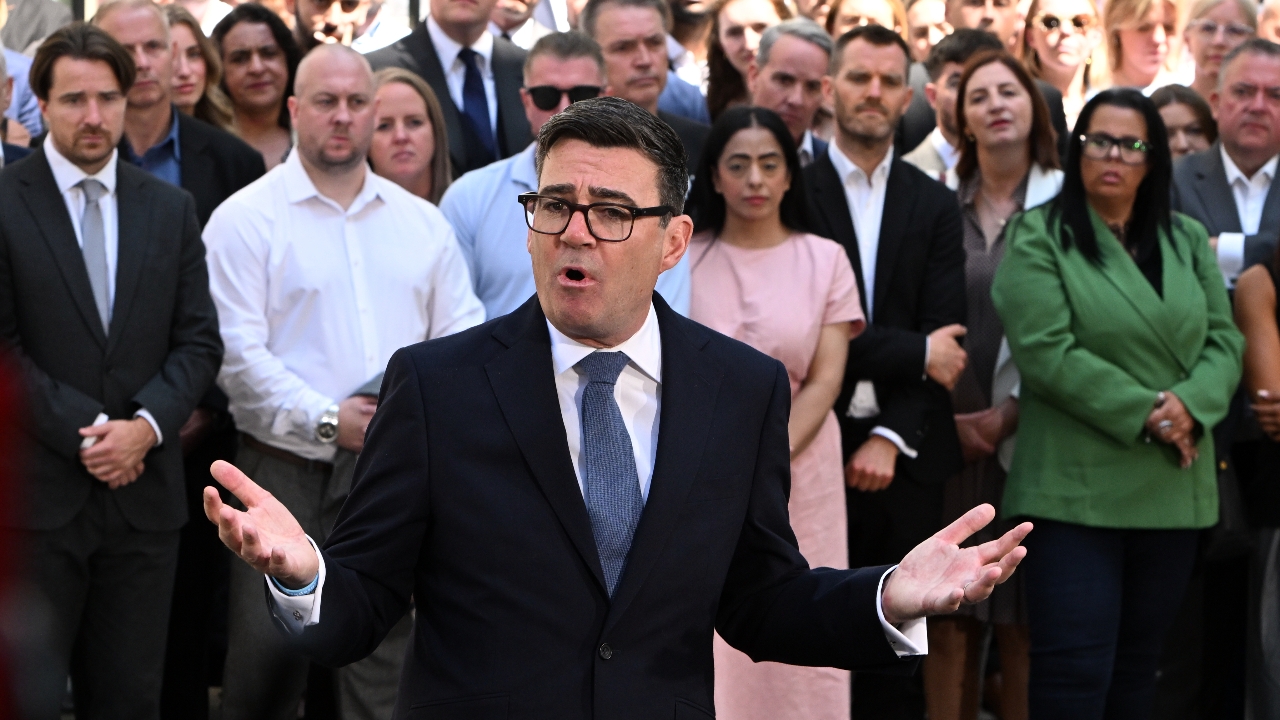
Andy Burnham, the new Prime Minister of the United Kingdom, announced on his second day in office immediate steps to address the cost of living crisis by planning to exempt VAT on household electricity bills, effective from October. The move aims to ease financial burdens on citizens, saving an average of £45 (about 2,000 baht) annually per household. Funding will come from canceling the previous government's Digital ID program.
On 21 July, Andy Burnham unveiled his first set of economic measures by announcing the cancellation of value-added tax (VAT) on household electricity bills to alleviate the prolonged cost of living pressures faced by the public.
This measure will take effect from 1 October, coinciding with the expected increase in the price cap for electricity and natural gas set by the UK energy regulator, a consequence of market volatility following the US-Iran conflict.
The government stated that abolishing VAT will save UK households an average of £45 per year (approximately 2,034 baht) from an average annual electricity bill of around £1,862. This measure particularly benefits low-income households that allocate a significant portion of their income to energy expenses.
Burnham said the government is urgently implementing measures to reduce electricity taxes, increase citizens' disposable income, and restore hope, emphasizing that people deserve "more breathing room" from the continuously rising cost of living burdens.
The government estimates the measure will cost about £850 million (around 38.4 billion baht) in the current fiscal year, funded by scrapping the previous administration's Digital ID program, valued at approximately £1.8 billion.
However, this measure was questioned by Darren Jones, a former minister in Keir Starmer's government, who noted that the Digital ID project has not yet received official budget allocation, making it unclear which funds the government will use to support the electricity tax cut. He called on the government to clarify details in the next budget statement.
The energy price crisis has been a major driver of rising living costs for Britons since global natural gas prices surged following Russia's invasion of Ukraine in 2022. Although prices began to decline mid-2023, they remain about 60% higher than pre-crisis levels and have started rising again due to the Middle East conflict.
The End Fuel Poverty Coalition, campaigning to address energy poverty, welcomed the measure as a positive sign from the new government but considered it insufficient to help millions still burdened by high energy costs and accumulating unpaid electricity bills over recent years.
Meanwhile, Burnham reaffirmed that his administration will maintain strict fiscal discipline, like the previous government, balancing tax revenues and public spending, even while introducing support measures for citizens and small businesses affected by recent tax increases.
On the same day, the UK Office for National Statistics reported that public sector borrowing fell to £16 billion in June, down about one-third from the same period last year, boosting financial market confidence, though ONS warned that the country's public debt remains high compared to historical standards.
John Healey, the new Chancellor of the Exchequer, stated that maintaining fiscal discipline is the government's most important duty, as it underpins economic stability and national security.
Burnham, who took office on Monday, also announced long-term goals to revive the UK's industrial sector, accelerate public housing construction, and consider additional measures such as regulating bus fares to ease citizens' cost of living burdens, amid a slow economic recovery over the past two years despite IMF forecasts that the UK economy will outperform many major economies this year.