

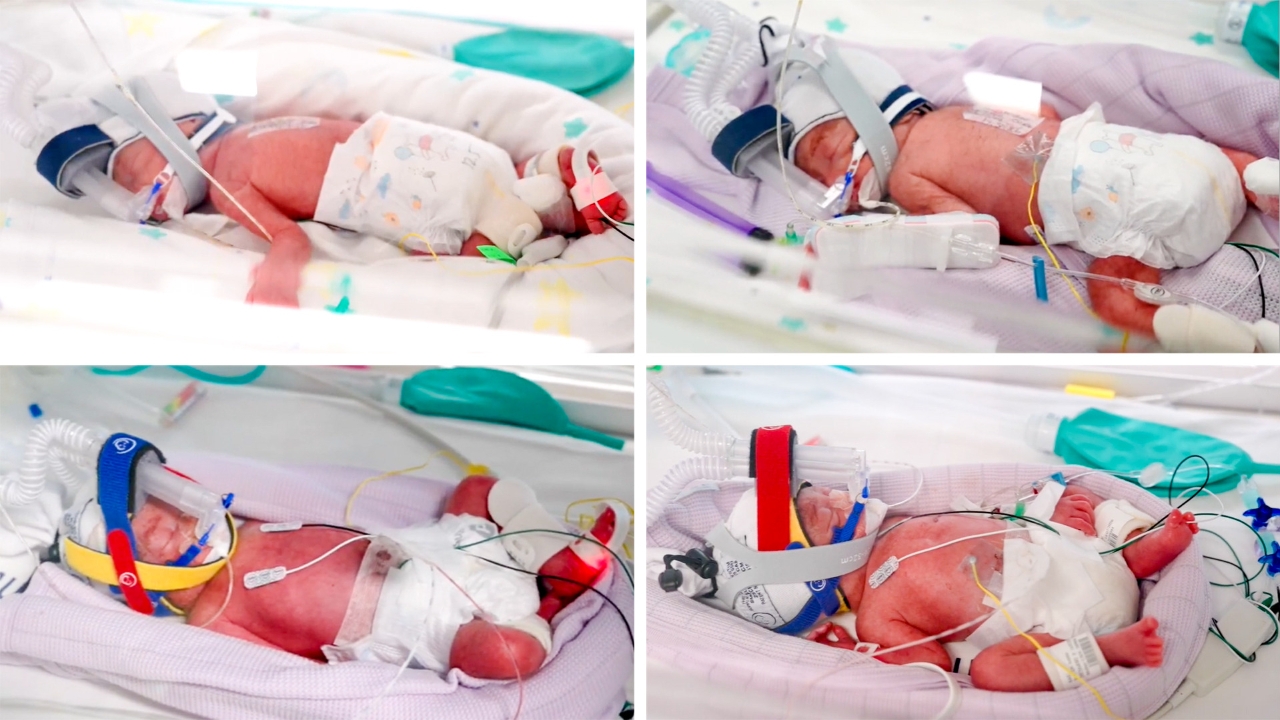
A 34-year-old Australian woman gave birth to identical quadruplet girls from a natural pregnancy, originating from a single fertilized egg that split into four embryos sharing one placenta. Doctors describe this as an extremely rare case with only a 1 in 15 million chance of occurring, possibly the first in Australia's history.
Royal Brisbane and Women's Hospital in Queensland, Australia, announced a medical success after 34-year-old Jenitar Sau Na'amoana gave birth to identical quadruplet girls from a natural pregnancy. Doctors stated this is an exceptionally rare case that may have never before occurred in Australia.
The four babies—Emily, Harriet, Catherine, and Alexa—were delivered by cesarean section on 14 July at 28 weeks and 4 days gestation. All are female infants sharing identical genetics because they originated from a single fertilized egg that split into four embryos and shared one placenta, a condition even rarer than typical quadruplet pregnancies.
Dr. Alexa Bendall, a maternal-fetal medicine specialist overseeing this pregnancy, revealed that such pregnancies occur only once in 15 million and that no prior naturally occurring case has been reported in Australia. "Identical quadruplets from a single egg occur about once in 15 million, but all four sharing one placenta is almost unprecedented," she said.
Generally, natural quadruplet pregnancies happen about once in 700,000 pregnancies, while most current quadruplet cases arise from assisted reproductive technologies.
Mrs. Na'amoana and her husband, Jortham, already have four children aged between 1 and 10 years and had no plans for more children. They were therefore greatly surprised to learn she was expecting quadruplets.
Because the four babies share one placenta, this pregnancy was classified as very high risk due to the potential for severe complications such as preterm birth, miscarriage, fetal growth abnormalities, or congenital disabilities. The medical team closely monitored the mother from 10 weeks gestation and admitted her to hospital at 25 weeks for 24-hour surveillance.
Dr. Bendall said the medical team's initial goal was to sustain the pregnancy until 28 weeks, which was considered a success. Ultimately, the mother carried the pregnancy to 28 weeks and 4 days before safely delivering. "Having four healthy baby girls and a safe mother is truly miraculous," she said, adding that although the mother experienced blood loss during the cesarean, it was within acceptable levels for quadruplet delivery and she is currently recovering well.
Currently, all four babies are in the Neonatal Intensive Care Unit (NICU) to continue growing until reaching full term. Doctors confirm they are all healthy and responding well to treatment.
The family named one of the babies "Alexa" in honor of Dr. Alexa Bendall, who cared for the pregnancy over nearly seven months. The doctor expressed gratitude and honor to be part of this significant family journey.
Following the birth, Mrs. Na'amoana, now a mother of eight, launched an online fundraiser to purchase a van with at least 10 seats to accommodate the suddenly expanded family. She has raised over 37,000 Australian dollars so far.
In her fundraising message, she stated that while the family is grateful for the safe arrival of the four babies, caring for four newborns simultaneously presents unexpected challenges and requires community support during this critical time.