

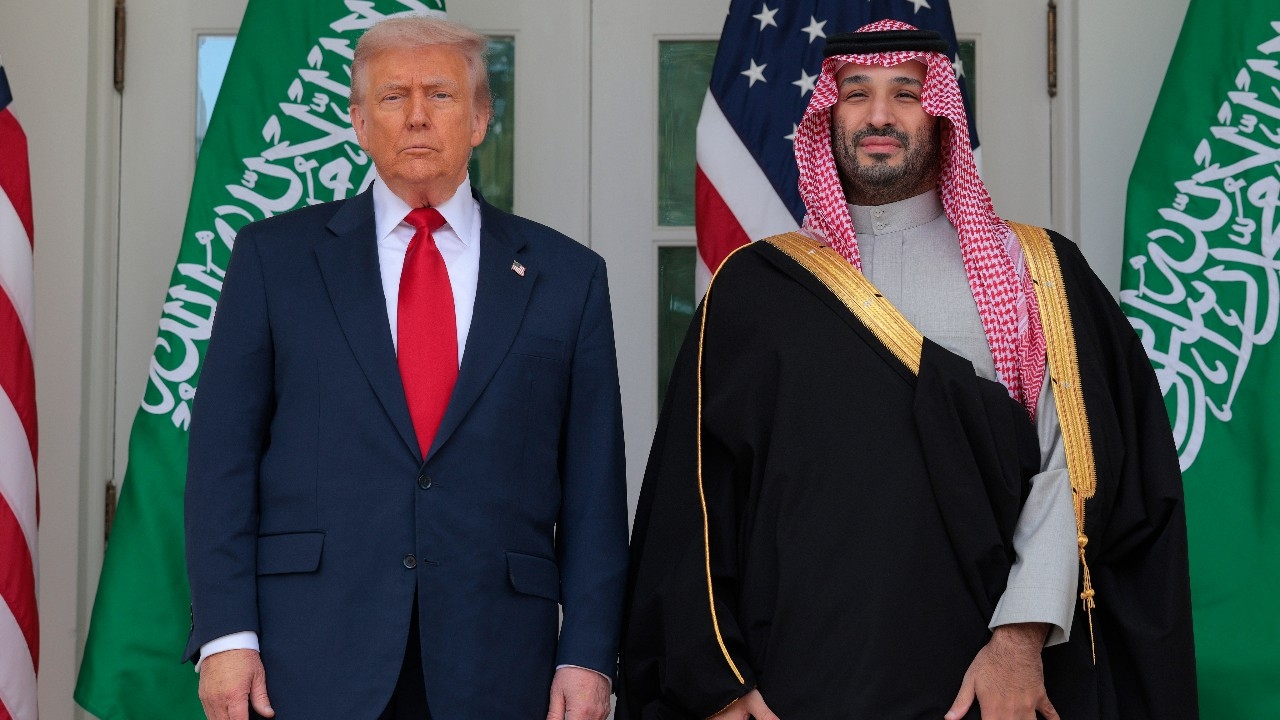
U.S. media report that President Donald Trump has approved a nuclear cooperation agreement with Saudi Arabia, potentially allowing the kingdom to enhance uranium enrichment capabilities for its civilian nuclear program for the first time. The 30-year agreement would permit American companies to participate in project development amid warnings it could trigger an accelerated nuclear arms race in the region.
Reports from the Associated Press, The Wall Street Journal, and The New York Times, citing insider sources, state that U.S. President Donald Trump has approved a nuclear cooperation agreement with Saudi Arabia, which may enable the kingdom to develop uranium enrichment capabilities for its civilian nuclear energy program.
An anonymous source authorized to speak on the matter indicated that the U.S. government might officially announce the agreement as early as 23 Jul 2020 GMT+7.
The agreement spans 30 years and is expected to open opportunities for U.S. companies to play a role in developing Saudi Arabia's nuclear energy projects, including the potential construction of domestic uranium enrichment facilities following joint feasibility studies between the U.S. and Saudi Arabia.
However, the agreement must undergo Senate review, where it is expected to face opposition from some legislators concerned that enabling Saudi Arabia to acquire uranium enrichment capabilities it has long sought could spark a nuclear arms race and proliferation in the region.
Although Saudi Arabia is a member of the International Atomic Energy Agency (IAEA), which promotes peaceful nuclear energy use and monitors member states' nuclear activities, sources say this agreement will exclude the IAEA's "Additional Protocol," which grants inspectors enhanced authority to rigorously oversee and monitor nuclear programs.
This development occurs amid ongoing U.S. and Israeli military operations targeting Iran, with a key objective of preventing Iran from developing nuclear weapons, while Iran maintains that its uranium enrichment program is solely for peaceful purposes.
So far, neither the White House nor the Saudi government has commented on these reports.
Previously, both the Trump administration and former President Joe Biden have sought to advance nuclear cooperation agreements with Saudi Arabia to transfer U.S. nuclear technology to the kingdom.
However, nuclear nonproliferation experts warn that allowing Saudi Arabia to possess domestic uranium enrichment centrifuges could be a first step toward future nuclear weapons development.
Earlier, Crown Prince Mohammed bin Salman, Saudi Arabia's de facto leader, stated that if Iran acquires nuclear weapons, Saudi Arabia might have to consider pursuing a similar path.
While uranium enrichment alone is insufficient for nuclear weapons production—requiring additional technologies and processes—experts view such capability as opening the door to weapon development, a longstanding concern for Western countries regarding Iran.
Previously, U.S. Energy Secretary Chris Wright visited Saudi Arabia to discuss the development of the kingdom’s commercial nuclear energy industry.
Moreover, Saudi Arabia signed a defense cooperation treaty with Pakistan, a nuclear-armed country. Following the signing, Pakistan's defense minister stated that Pakistan's nuclear program "would be ready to support Saudi Arabia if necessary," a message interpreted as a warning to Israel, believed to be the only nuclear-armed state in the Middle East.
As an example of regional nuclear cooperation, the United Arab Emirates signed a "123 Agreement" with the U.S. to build the Barakah nuclear power plant, assisted by South Korea. However, the UAE agreed not to develop domestic uranium enrichment capabilities, which experts praise as the "gold standard" for peaceful nuclear energy cooperation.