

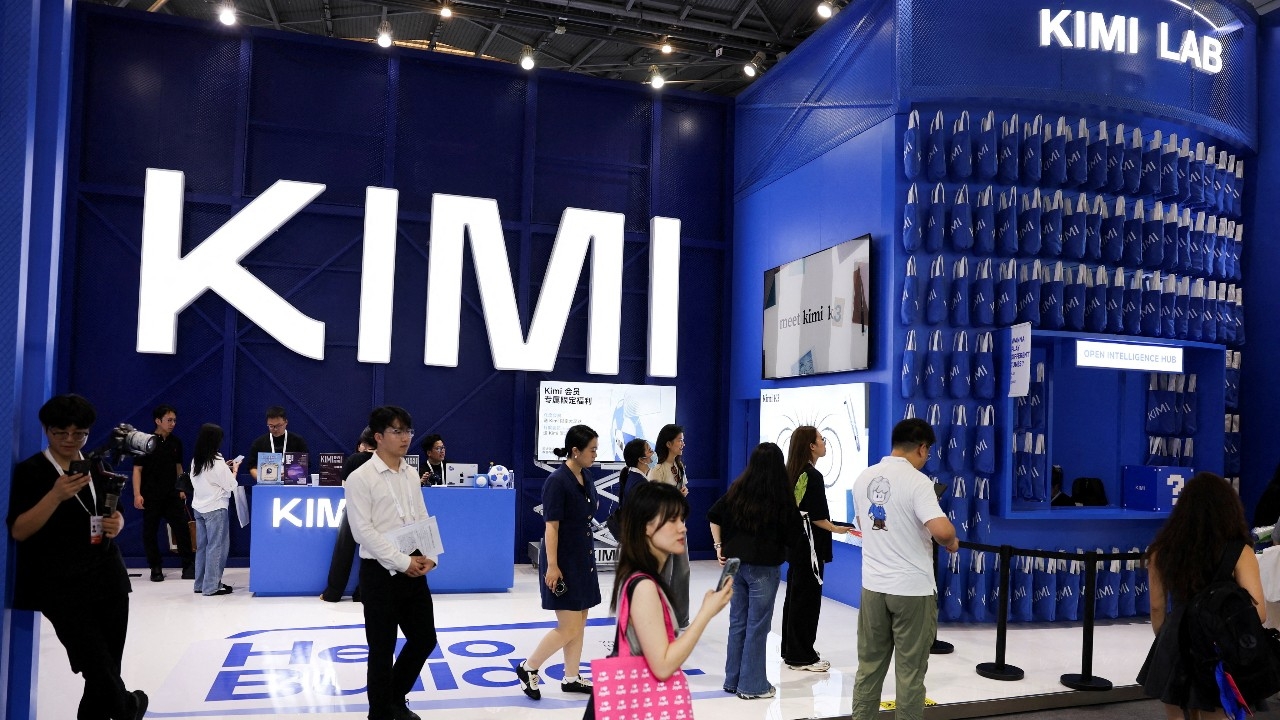
The U.S. government accuses Moonshot AI, a leading Chinese artificial intelligence company, of secretly using advanced AI model technology from the U.S. company Anthropic to develop its Kimi K3 model. It also states that the Chinese firm accessed high-end Nvidia AI chips subject to export restrictions. Meanwhile, the U.S. Treasury Department is preparing to consider blacklisting and imposing sanctions.
Michael Kratsios, science and technology advisor to former President Donald Trump, revealed on X that the U.S. government has evidence indicating that Moonshot AI used a method called "Model Distillation" to harness the capabilities of Fable, Anthropic’s latest large language model, to develop Kimi K3.
Kratsios stated that such actions constitute industrial-scale theft of technology to steal U.S. intellectual property and undermine American research efforts, which the U.S. government cannot accept.
Scott Bessent, U.S. Treasury Secretary, disclosed that the government is considering placing Moonshot AI on the trade blacklist and may impose sanctions if intellectual property violations against American companies are confirmed. Bessent emphasized that while the U.S. supports open-source AI development, "open source does not mean U.S. intellectual property can be used freely."
Kratsios also accused Moonshot AI of possessing servers equipped with Nvidia GB300 Grace Blackwell AI processing chips, high-end chips subject to U.S. export restrictions, which have been used in Thailand to train AI models. Since 2022, the U.S. has restricted exports of Nvidia’s advanced AI chips to China over concerns they might be used to enhance military capabilities.
These allegations come after earlier this year when Trump administration officials indicated that Chinese AI company DeepSeek might have used Nvidia’s advanced AI chips in developing its models, potentially violating U.S. export control regulations.
Sarah Heg, head of public policy at Anthropic, stated that the illicit use of U.S. AI models by Chinese companies poses a serious national security risk.
In February, Anthropic revealed that three Chinese AI companies—DeepSeek, Moonshot AI, and MiniMax—used over 24,000 fake user accounts to generate more than 16 million requests to access Anthropic’s Claude model, violating usage terms and regional restrictions.
Liu Chang, spokesperson for the Chinese Embassy in Washington, D.C., denied the U.S. government’s accusations, calling them "completely baseless." He affirmed China’s commitment to protecting intellectual property and urged U.S. officials to respect facts, abandon biases, and stop making allegations that undermine the progress of China’s AI industry.
Moonshot AI launched Kimi K3 last week, claiming it as an open-weight AI model with 2.8 trillion parameters—the largest in the world—and with performance comparable to Anthropic’s Fable model.
The company announced plans to make Kimi K3 available for open-source download and customization starting 27 July, making it the largest AI model freely accessible to developers and the public.
This accusation arises amid intensifying AI competition between the U.S. and China, with the U.S. government increasing scrutiny of Chinese AI firms over concerns that Model Distillation is being used to replicate leading U.S. AI models at much lower cost.
Analysts believe the Moonshot AI case could become a key issue in U.S.-China negotiations, especially as former President Donald Trump is scheduled to meet Chinese President Xi Jinping in September, potentially increasing pressure on future technology relations between the two countries.