

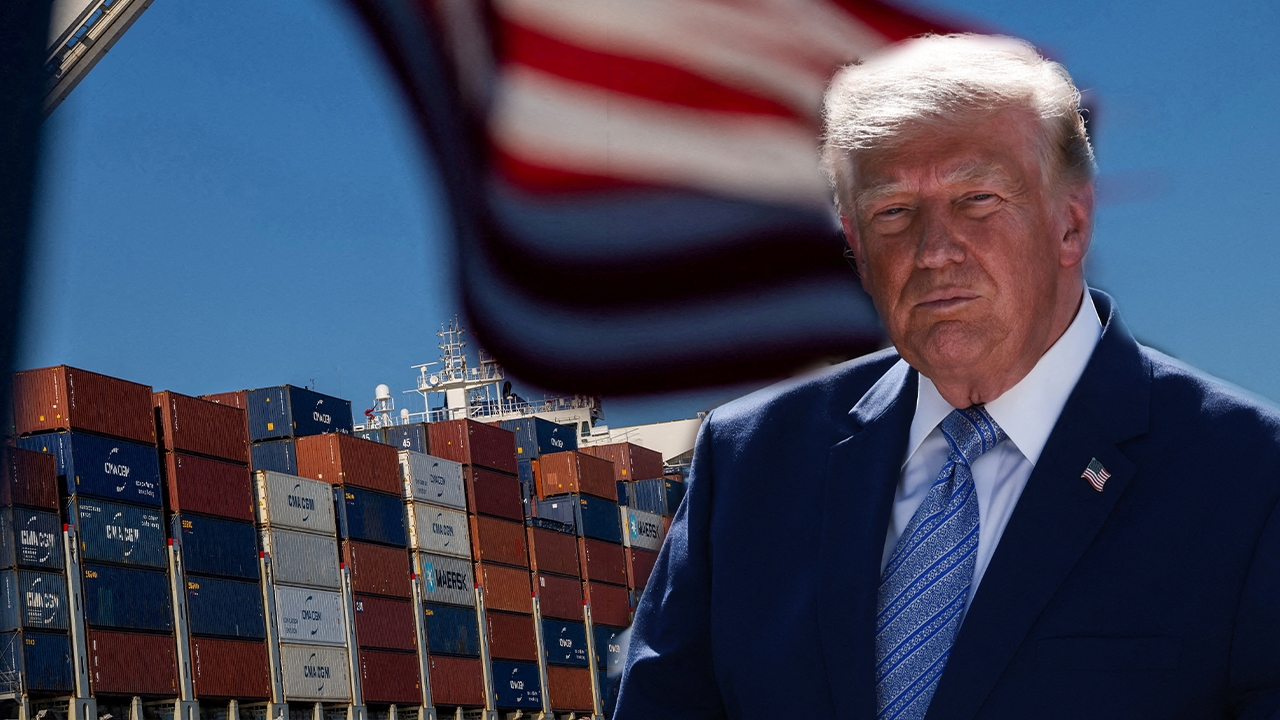
Decoding the Trump administration's plan from the emergency law to using trade law and the forced labor issue as legal grounds to uphold tariff policies and advance trade wars globally, even facing court scrutiny.
Although the U.S. Supreme Court ruled that President Donald Trump overstepped his authority in imposing import tariffs worldwide, subsequent events show that the White House did not abandon its trade war policy but simply switched to a different legal statute to maintain the tariffs.
CNN outlined three phases of the Trump administration's tariff strategy: Plan A relied on the International Emergency Economic Powers Act (IEEPA) to impose tariffs on several countries, which was struck down by courts; then Plan B used another trade law to maintain temporary tariffs for 150 days; after that expired, Trump launched Plan C, invoking a different trade law focused on forced labor issues in supply chains as a legal basis for a new round of tariffs.
In February 2025, Trump invoked the International Emergency Economic Powers Act (IEEPA) to impose tariffs on imports from several trade partners, citing that trade deficits and reliance on foreign goods threatened U.S. security. This raised average U.S. import tariffs to nearly 15%, affecting imports worth about one trillion U.S. dollars annually, until the Supreme Court ruled that the law did not authorize the president to broadly impose customs tariffs, leading to the measure's cancellation.
However, the Trump administration did not end the policy but turned to Section 122 of the Trade Act of 1974, allowing the president to impose temporary import tariffs for 150 days to address trade imbalances. Although the average tariff rate dropped to about 11.7%, this measure still covered imports valued at over 1.1 trillion dollars, expiring on 24 July.
After the temporary measure expired, the Trump administration announced a new tariff package, called Plan C by U.S. media. This time, rather than using emergency law, they used another trade law, citing investigations into unfair trade and forced labor in supply chains as legal justification for tariffs on trading partners from 60 countries worldwide, with rates from 10% to 12.5%, including Thailand at 12.5%.
Analysts see that the goal of the policy has not changed, only the legal tools used by the administration. Trump's main objective remains to maintain tariff barriers to reduce trade deficits, stimulate domestic production, and pressure trade partners to negotiate with the U.S. Jamieson Greer, U.S. Trade Representative, told the Senate that only the legal authority used has changed, not the trade strategy.
Nevertheless, some legal experts believe that although the administration changed the legal basis for the tariffs, they may face further court challenges if the courts find that the broad tariff measures exceed the legal authority granted. Economists warn that regardless of the law used, the import tariffs' costs are likely to be passed on to importers, businesses, and American consumers through higher prices.
Overall, developments over the past eighteen months show that Trump's tariff war did not stop due to court rulings but has shifted its approach from emergency powers to trade laws and new legal rationales to uphold the "America First" policy. If the new measures face lawsuits again, it would not be surprising if a Plan D emerges in the future.
Click to read more aboutInternational News