

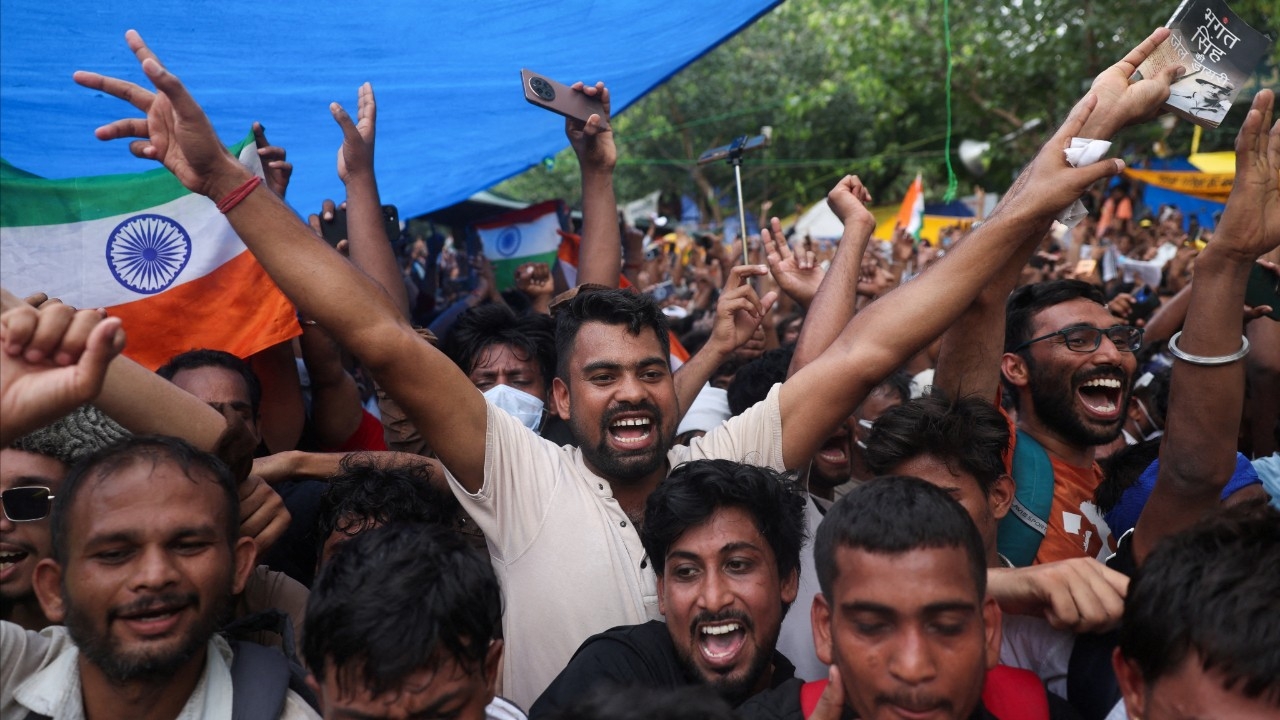
India's Education Minister has resigned following demands from youth protesters who had been demonstrating for several weeks to pressure the government into reforming a frequently corrupted examination system.
Youth protesters in India announced the end of their weeks-long demonstrations and celebrated their victory on the streets last Saturday (25 July) after the Education Minister resigned and Prime Minister Narendra Modi's government agreed to their demands to fix the flawed competitive exam system prone to corruption.
This represents the most severe political crisis since Modi began his third term as Prime Minister, occurring after clashes when thousands of protesters stormed the parliament building, prompting police to use tear gas to control the situation.
The protests began in late June after a nationwide medical college entrance exam was leaked in May, leading to the cancellation and rescheduling of the test, which affected over 2 million students and sparked widespread dissatisfaction about the future and employment prospects of young people.
The protesting youth formed a movement called the “Cockroach Janta Party” (CJP), which became the main leadership group of the demonstrations.
After several weeks of protests, Dharmatra, the Education Minister, decided to resign in response to the protesters' demands, stating he stepped down to prevent "anti-national elements" from exploiting the situation and expressing respect for the youth's intentions.
This resignation was highly surprising given Modi's reputation for not yielding to any pressure.
Following the resignation, the Health Minister and government representatives held a joint press conference with CJP spokespeople, confirming the government's acceptance of all demands: reforming the competitive exam system, withdrawing criminal charges against protesters, and providing compensation to families of students who committed suicide due to the exam leak crisis.
Apichit Dipke, founder of the CJP and his team, declared victory near the Jantar Mantar monument in Delhi and urged protesters to return home peacefully and safely amid an atmosphere of singing the national anthem and distributing celebratory sweets.
As the situation normalized, Indian authorities restored mobile internet signals around the protest areas after nearly a week-long blackout and reopened Delhi Metro stations that had been closed earlier.
Follow international news:https://www.thairath.co.th/news/foreign
Source:cna