

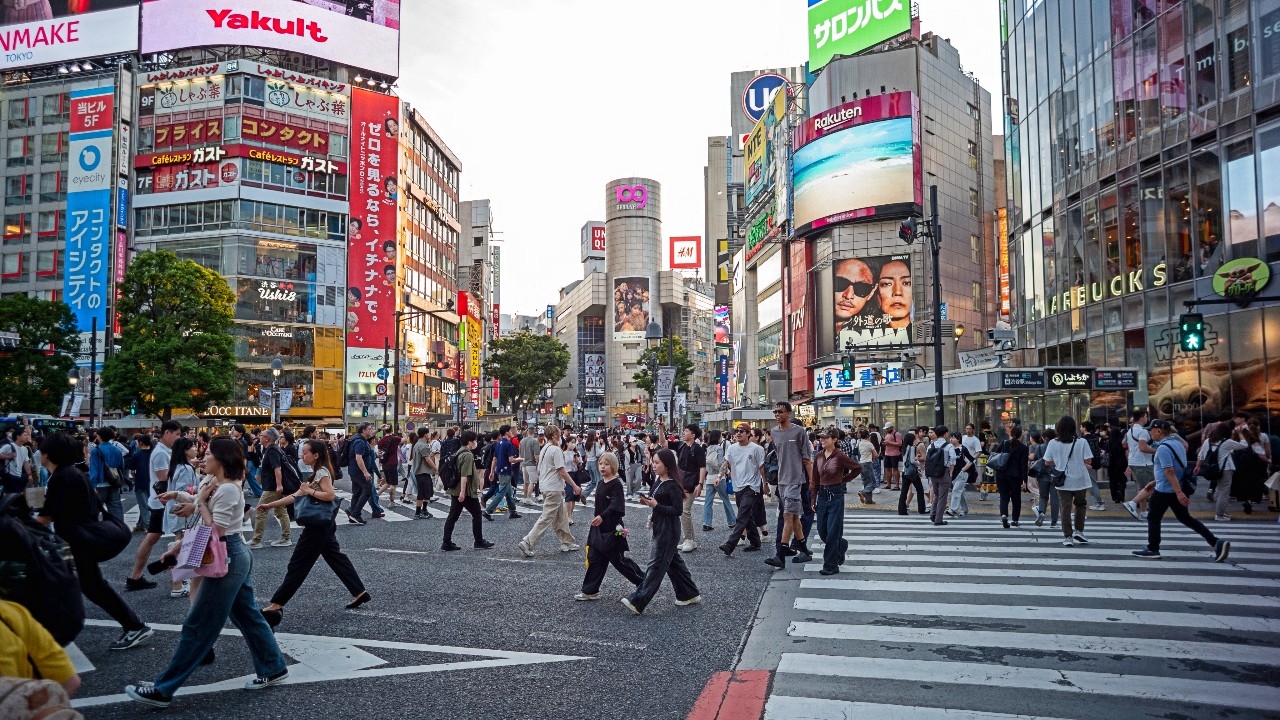
The Japanese government released the latest population data showing the Japanese population has fallen below 120 million for the first time in 42 years. This follows a record low birth rate, while deaths greatly outnumber births, resulting in a population decrease of nearly 920,000 in one year. Meanwhile, the foreign resident population has hit a record high, highlighting growing reliance on foreign labor to address workforce shortages.
Japan's Ministry of Internal Affairs and Communications revealed basic resident registration data as of 1 January, showing the Japanese population has dropped to 119,736,483 people. This marks the first time in 42 years that the Japanese population has fallen below 120 million.
This figure reflects a worsening demographic crisis, with the Japanese population declining by 916,744 people last year—the largest drop since record-keeping began in 1968.
Including all residents in Japan, both Japanese and foreign nationals, the total population stands at 123,767,642 people, a decrease of approximately 563,048 from the previous year.
The main cause of population decline is the 'natural decrease' phenomenon, where deaths exceed births. Among Japanese nationals, births hit a record low of about 670,467, while deaths reached 1,593,475. This led to a natural decrease of 923,008 Japanese people, marking the 18th consecutive year of decline despite government efforts to raise birth rates.
At the prefectural level, among all 47 prefectures, only Tokyo saw an increase in its Japanese population, rising by 0.09%. The remaining 46 prefectures all experienced population declines. Akita prefecture had the highest decline at 1.88%, followed by Yamagata and Aomori prefectures, each down by 1.62%.
Conversely, facing severe labor shortages, the Japanese government has gradually opened its doors to more foreign workers. As a result, the foreign resident population has increased for the fourth consecutive year, rising by 353,696 to a total of 4,031,159—the highest number since foreign resident statistics began in 2013.
Notably, the foreign resident population grew in every prefecture nationwide. The highest growth rates were in Hokkaido (14.89%), Okinawa (14.36%), and Oita (13.90%). Additionally, 86.17% of foreign residents are of working age.
At the same time, the number of foreign newborns in Japan rose to 22,835, a new record, while foreign deaths numbered 9,109.
This demographic shift is also affecting Japan's political system. According to Yomiuri Shimbun's assessment, disparities in population per parliamentary representative have widened to a maximum of 2.139 times in the House of Representatives elections, with 16 constituencies exceeding twice the average. In the House of Councillors elections, disparities reached up to 3.091 times, with three constituencies exceeding triple the average, potentially sparking future legal debates over electoral equality.